Every spring we get calls that start the same way. Someone turns on the garden hose for the first time, and a few minutes later there's water running down the inside of the basement wall. The outdoor faucet froze over the winter, split the pipe behind it, and nobody knew until the water came back on. It's one of the most avoidable plumbing repairs there is.
Winterizing outdoor faucets takes a few minutes per faucet, and the right time to do it is before the first hard freeze, usually sometime in October or early November in Saint Paul. This guide walks through how to tell what kind of faucet you have, the steps for each type, and the mistakes that cause most spring leaks.
The short version
- Winterize outdoor faucets before the first hard freeze, usually October or early November.
- Older hose bibs need the inside valve closed and the line drained every fall.
- Frost-free sillcocks still split if a hose stays connected.
- Drain irrigation backflow devices and lines to garages or porches too.
- Test each faucet in spring with someone watching the basement side.
Which kind of outdoor faucet do you have?
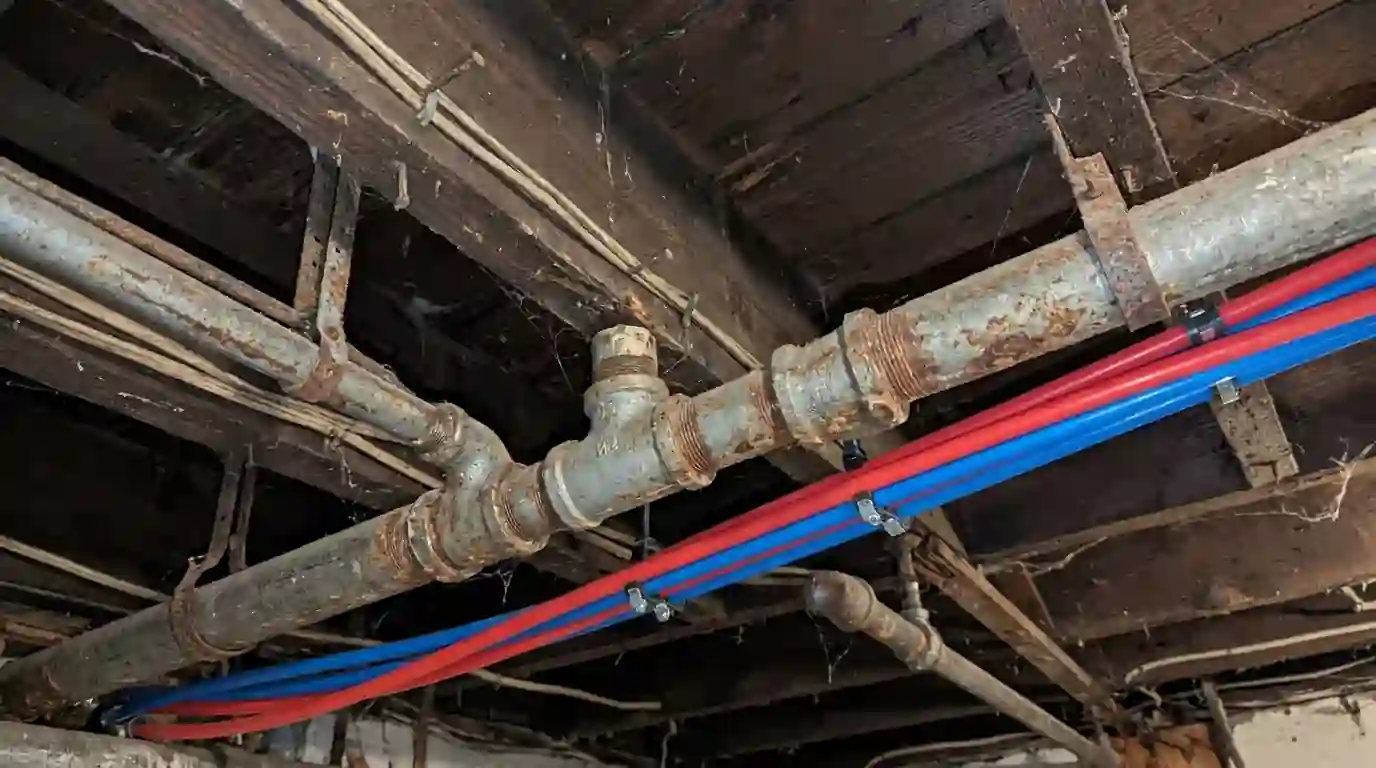
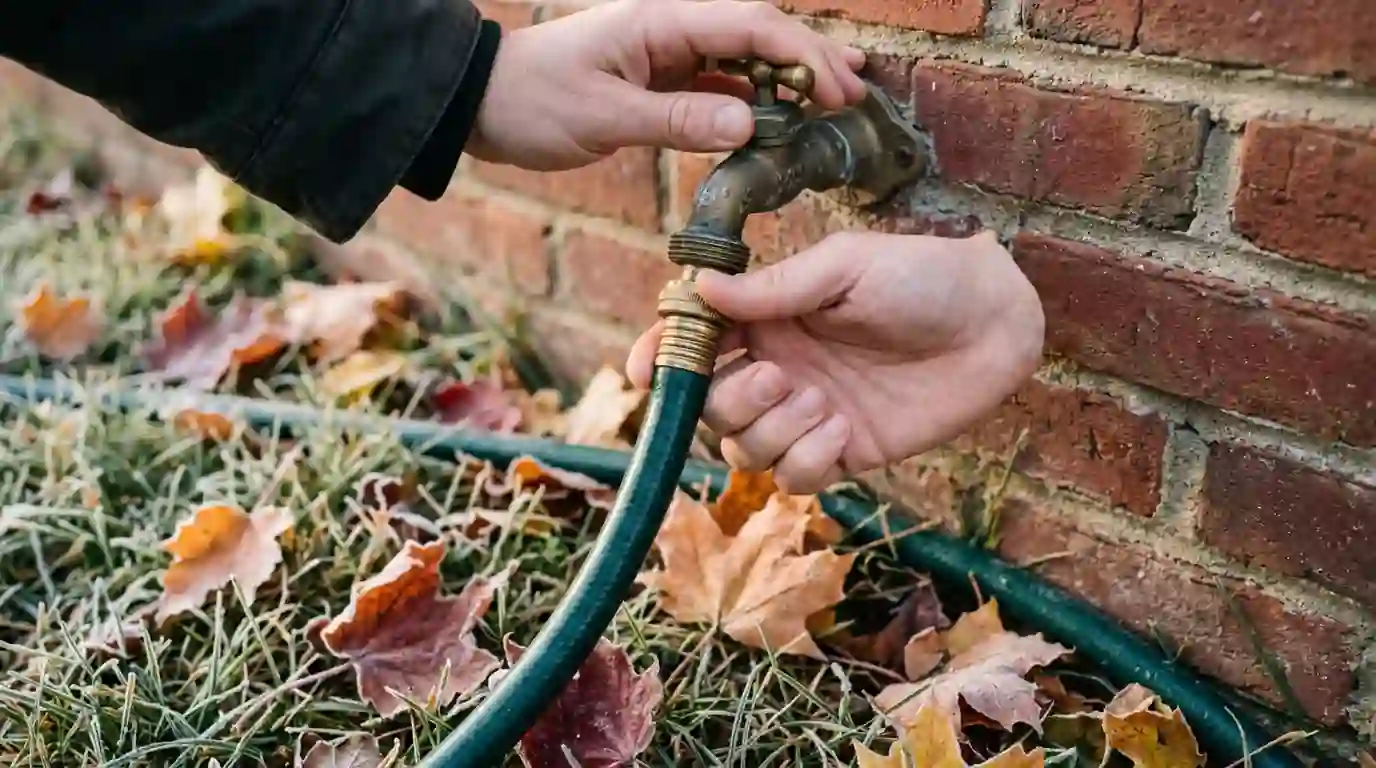
Outdoor faucets come in two main types. An older style hose bib has a short body, and the valve that shuts off water sits right at the outside wall. Water stays in the pipe all the way to the cold exterior, so these need an inside shutoff valve closed and the faucet drained every fall. Many older Saint Paul homes still have them.
A frost-free sillcock looks similar from outside, but its body runs a foot or more back into the house, and the valve seat sits inside where it stays warm. When you close the handle, water drains out of the long barrel. To spot the difference, look inside the basement where the pipe comes through the rim joist. A long pipe with the faucet body ending deep inside is usually frost-free.
Step by step for an older style hose bib
Find the shutoff valve for the outdoor faucet inside the basement. It's usually on the pipe a few feet back from the wall, often near the ceiling joists. Close it fully. If it's a gate valve with a round handle, turn it clockwise until it stops. If it's a ball valve with a lever, turn the lever so it's across the pipe.
Next, go outside and open the outdoor faucet all the way so the water left in the pipe can drain. Back inside, many shutoff valves have a small drain cap on the side. Put a bucket under it and loosen the cap to let the trapped water out, then snug it back. Leave the outdoor faucet open for the winter so any leftover water has room to expand.
- Close the inside shutoff valve fully
- Open the outdoor faucet to drain the line
- Open the small drain cap on the inside valve, if it has one
- Leave the outdoor faucet open for the winter
- Disconnect and drain every hose
Frost-free sillcocks still need attention
Frost-free faucets are a big step up, but they can still split. The most common reason is a garden hose left connected. The hose holds water in the barrel, so the faucet can't drain, and the water inside freezes right where the pipe meets the cold wall. In a Saint Paul January, that's enough to crack the barrel inside the house.
A frost-free sillcock also has to slope slightly down toward the outside so it can drain. If it was installed level or tipped back toward the house, water sits in the barrel. And some homes with frost-free faucets also have an inside shutoff valve; closing it in fall adds a second layer of protection on very cold walls.
- Always disconnect hoses, splitters and quick connect fittings
- Check that the faucet slopes slightly down toward the outside
- Close the inside shutoff too, if one exists
- Watch for a drip from the spout after shutoff, which can point to a worn seat
- Put an insulated faucet cover on very exposed walls
Don't forget irrigation and other outdoor lines
Lawn sprinkler systems need their own winterizing. The backflow preventer on most irrigation systems sits outside and holds water inside its brass body. If it isn't drained, it can crack in the first deep cold snap. Many homeowners have their sprinkler lines blown out with compressed air each fall, then the backflow device drained or removed for winter.
Look around for any other outdoor water lines too: a line to a detached garage, a frost-free hydrant in the yard, or a hose bib on a back porch. Porches and garages are common freeze spots in older Minnesota homes. Lines running through them should be shut off and drained, or protected with heat cable if they have to stay in use.
How to tell if a faucet split last winter
If you didn't winterize last year, or you're not sure, check before you use the faucet in spring. Turn it on with no hose attached, then go inside right away and watch the pipe and rim joist area behind the faucet. Any dripping, spraying or wet wood means the pipe or barrel split inside the wall.
Some splits only leak when a hose is attached and the spray nozzle is closed, since that's when the barrel is full of pressure. Test that way too, for a minute or two. If you see water inside, shut the faucet and close the inside valve if there is one, then call us. Typical Saint Paul ranges for frost-free sillcock replacement run about $287 to $527.
Upgrading an old hose bib before winter
If you have an older style hose bib, fall is a good time to think about swapping it for a frost-free sillcock. It's a common upgrade in Saint Paul homes, and it removes the yearly routine of closing and draining the inside valve. You still need to disconnect hoses, but the faucet itself handles the rest.
Typical Saint Paul ranges for converting an older hose bib to a frost-free sillcock run about $343 to $589. What moves the price: the length of the wall, access from inside the basement, siding or brick on the outside, the condition of the supply pipe, and whether a new shutoff valve or vacuum breaker is added. Call (651) 215-2087 and we'll set up a visit before the ground freezes.
Need a hand with this? Call (651) 215-2087. The line is answered 24/7.