Pressure reducing valve service in Saint Paul, MN
Banging pipes, a toilet that runs on its own or a relief valve that drips can all trace back to water pressure that's too high. We test it, then repair, adjust or install a pressure reducing valve.
- Phone answered 24/7
- Saint Paul office on E 7th Street
Tell us what you see and hear. We explain the visit and the likely cost on the phone. (651) 215-2087
The short answer
A pressure reducing valve, or PRV, sits near the main shutoff and lowers incoming water pressure to a safe level for your home, usually 50 to 70 psi. You need service if pressure tests high, fixtures leak or bang, or pressure suddenly drops. We test static pressure, then adjust, rebuild or replace the valve and add an expansion tank if needed. Typical Saint Paul PRV jobs run $187 to $743.
What a pressure reducing valve actually does
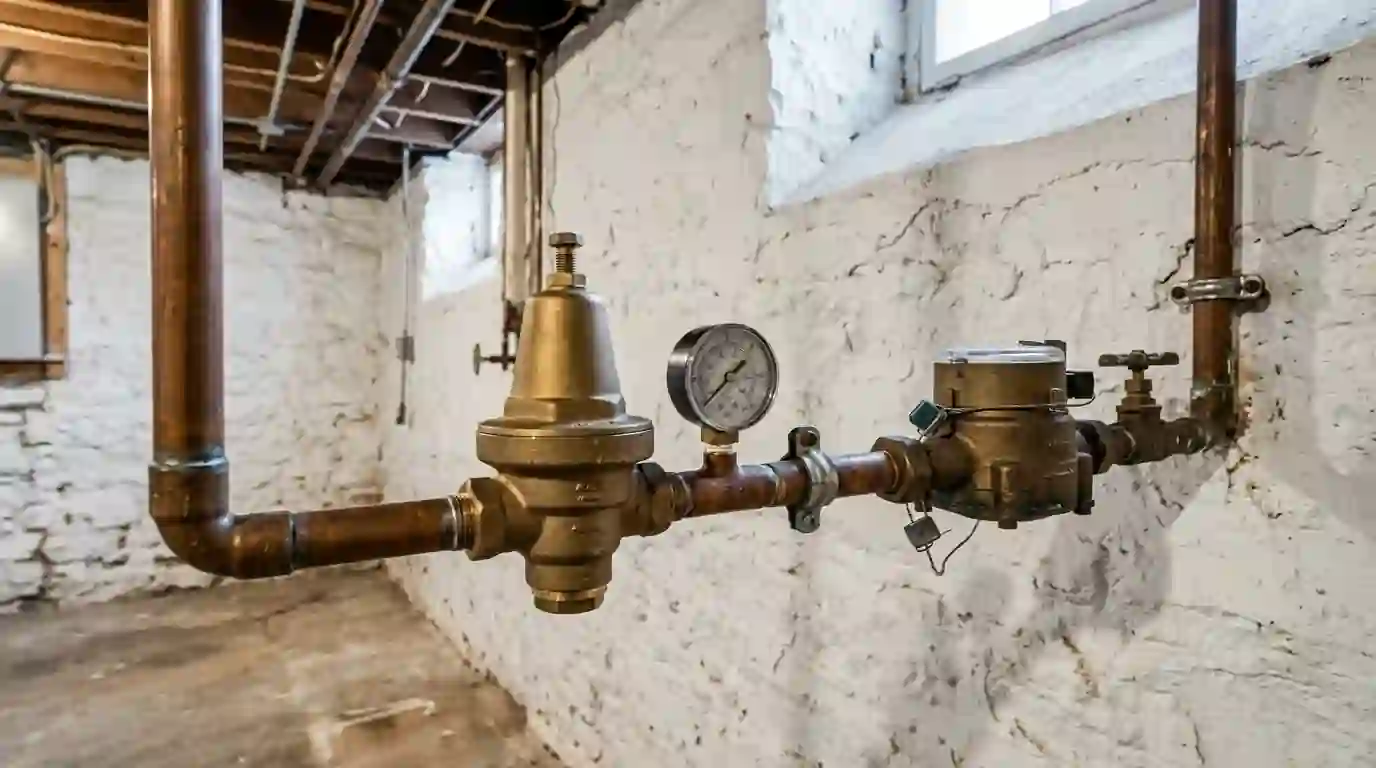
City water mains carry water at whatever pressure the system needs to reach every home on the line, and that can be higher than your plumbing likes. A pressure reducing valve, usually a bell shaped brass fitting just after the main shutoff, uses a spring and diaphragm to drop that pressure to a steady, safer level. An adjustment screw on top sets the target.
Not every Saint Paul home has one. Some houses sit where street pressure is moderate and never needed one. Others got one installed during earlier work, sometimes decades ago. Like any valve with moving parts, a PRV eventually wears out. The spring weakens, the diaphragm cracks or the seat collects debris, and the valve stops holding pressure where it should.
What pressure reducing valve service costs in Saint Paul
These are typical Saint Paul ranges for PRV and pressure work. We confirm cost after testing your pressure and checking the valve.
| Job | Typical range |
|---|---|
| Pressure test and PRV adjustmentIncludes strainer cleaning if accessible | $187 to $289 |
| PRV rebuild kit installedValve body must be sound | $267 to $438 |
| New PRV installedSize and pipe material affect price | $413 to $743 |
| Thermal expansion tank installedOften paired with PRV work | $283 to $517 |
What moves the price
- Rebuild versus full replacement
- Valve size to suit your service line
- Corroded or galvanized pipe at the connection
- Expansion tank needed or already present
- Main shutoff condition for the shutdown
- Tight space around the meter and valve
Typical Saint Paul ranges. We confirm your price after we see the job and before work starts. See every price on one page.
How pressure reducing valve service goes, start to finish
Measure static and peak pressure
We test pressure with nothing running and watch for overnight spikes with a max reading gauge.
Check flow at fixtures
We run several fixtures to see whether pressure holds or drops under use.
Inspect the PRV and strainer
We look at the valve's age and condition and clean the strainer if it has one.
Adjust, rebuild or replace
We set the valve, install a rebuild kit, or replace it with a new unit.
Check the expansion tank
We test or install a thermal expansion tank and set its air charge to match house pressure.
Retest and confirm
We recheck pressure throughout the house and show you the final readings.
How we test your water pressure
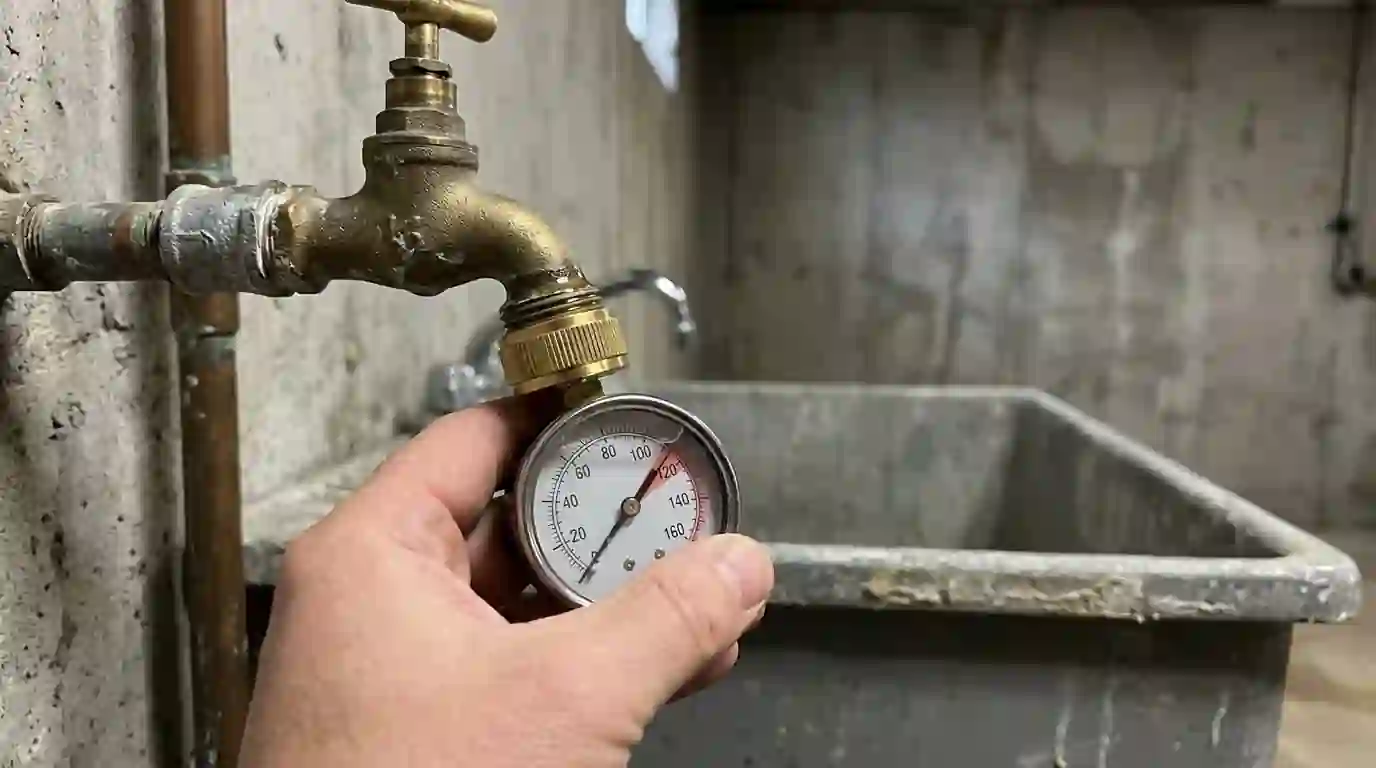
The first step is measuring. We thread a pressure gauge onto a hose bib, laundry tap or water heater drain and read the static pressure with nothing running. A gauge with a high reading needle also captures spikes overnight, when neighborhood demand drops and pressure climbs. That spike is often what causes running toilets and dripping relief valves.
We also check pressure with fixtures running, which tells us whether flow is restricted somewhere else. If static pressure is high, the PRV is either missing, set too high or failing. If pressure is low, the valve might be clogged, set too low or failed closed, or the problem may be elsewhere, like old galvanized pipe or a partly closed main.
- Static pressure with all fixtures off
- Overnight high reading with a max needle gauge
- Flowing pressure at several fixtures
- Check for thermal expansion when the water heater fires
Adjust, rebuild or replace?
Sometimes all a PRV needs is an adjustment. If the valve holds steady but is simply set too high or too low, we turn the adjustment screw and recheck. If it won't hold a setting, creeps up overnight or responds poorly, it usually needs a rebuild kit with a new diaphragm, seat and strainer, or a full replacement.
We rebuild when the valve body is sound and parts are available, which is common with brands like Watts. Older or heavily corroded valves, or ones with no parts available, get replaced. A new PRV comes with fresh internals and often a built in strainer that catches grit before it damages the seat.
Why an expansion tank often goes with a PRV
A PRV closes off your home's plumbing from the city main, creating a closed system. When the water heater heats water, that water expands. With nowhere to go, pressure rises sharply, sometimes past what the T&P relief valve tolerates, so it drips or opens. That's why the water heater relief valve often starts weeping after a PRV is installed.
A thermal expansion tank absorbs that extra volume. It's a small tank with an air cushion, mounted on the cold line near the water heater. We check its air charge and set it to match your house pressure. If you have a PRV without an expansion tank, or a tank that's waterlogged, we'll address it during the same visit.
When low pressure isn't the PRV's fault
We see plenty of homes where weak pressure gets blamed on the PRV but the real cause is somewhere else. Old galvanized supply pipe narrows with rust until a shower barely trickles. A partly closed main shutoff or a seized gate valve restricts flow. Clogged faucet aerators or a failing shower cartridge can make one fixture weak while the rest are fine.
That's why we test before we replace anything. If the PRV is fine and pressure at the meter is good, we'll track down the real restriction. Sometimes the fix is as simple as cleaning a strainer or opening a valve; other times it points to repiping. Either way, you'll know what's really happening.
Signs it is time for pressure reducing valve service
Pipes bang when a faucet shuts
Water hammer gets worse with high pressure. A sharp knock when the washer or dishwasher valve closes is a classic sign.
Toilets refill on their own
High pressure can push past fill valves and flappers, so the toilet hisses or refills with nobody using it.
Water heater relief valve drips
When pressure spikes as water heats, the T&P valve may let some out. That can mean high pressure or a missing expansion tank.
Faucets spray hard or drip constantly
Aerators that spit, washers that wear out quickly and drips that keep coming back often point to excess pressure.
Pressure suddenly drops all over the house
A PRV that fails closed or clogs with debris can starve the whole house of pressure at once.
Appliances fail early
Washers, dishwashers, icemakers and water heaters wear faster when they live under high pressure every day.
Water pressure in Saint Paul and east metro homes
Water pressure varies a lot across the area. Homes near the bottom of hills, like parts of the West Side, Lowertown and areas near the river flats, can see higher pressure than homes on high ground near Highland Park's ridge or Battle Creek. SPRWS serves Saint Paul and several neighboring suburbs, but your street's pressure depends on elevation and nearby mains, which is why testing each house matters.
Many east metro suburbs, including Woodbury and Cottage Grove, also have hard water, which can crust up PRV seats and strainers and shorten their life. A yearly check on pressure and the expansion tank keeps things steady. If you've just had a new service line installed, pressure may have jumped, so give us a ring to test it.
Where we do pressure reducing valve service
Saint Paul and the surrounding east metro. These are the busiest ZIP codes on our board; the full list has 55 neighborhoods, cities and counties.
Questions about pressure reducing valve service
What is normal water pressure for a Saint Paul home?
Most homes do well between about 50 and 70 psi static pressure. Above roughly 80 psi, fixtures and appliances wear faster and leaks become more likely. Below about 40 psi, showers and upstairs fixtures can feel weak. We measure your actual pressure and set the PRV to a comfortable, safe level.
How do I know if my pressure reducing valve is failing?
Common signs are pressure creeping higher overnight, banging pipes, toilets that run on their own, a dripping water heater relief valve, or a sudden drop in pressure throughout the house. A pressure test with a max reading gauge tells us quickly whether the PRV is holding its setting.
How long does a PRV last?
Many pressure reducing valves last somewhere between ten and fifteen years, though hard water, debris and high street pressure can shorten that. A valve that won't hold a setting, has a cracked body or leaks at the bonnet is due for a rebuild or replacement.
Why did my water heater relief valve start dripping after a PRV was installed?
A PRV creates a closed system, so when the water heater heats water, the expanded volume has nowhere to go and pressure spikes. The T&P valve then drips to relieve it. A thermal expansion tank on the cold line solves this. We install and size one to match your house pressure.
Can I adjust my pressure reducing valve myself?
Some homeowners do, using the adjustment screw on top. But without a gauge, it's hard to know where you're setting it, and an old valve can lose its setting or start leaking once disturbed. We suggest a quick test first, so we can set it correctly and confirm the valve is healthy.
Jobs that often go with pressure reducing valve service
Brands we work on in Saint Paul homes
- Kohler
- Moen
- Delta
- American Standard
- Rheem
- A. O. Smith
- Bradford White
- Navien
- Rinnai
- InSinkErator
- Zoeller
- Liberty Pumps
- Watts
- Weil-McLain
Call the Saint Paul office, day or night
A real person picks up at any hour. Tell us what you are seeing, and we will tell you what happens next and roughly what it costs.
(651) 215-2087- Phone
- Answered 24 hours a day, 7 days a week
- Office
- 289 E 7th Street, Saint Paul, MN 55101
- Headquarters
- 50666 229th Ave, Bemidji, MN 56601
- Coverage
- Saint Paul and the east metro, see all areas