Washer and laundry plumbing in Saint Paul, MN
Washing machines move a lot of water fast. When the standpipe overflows, the valves drip, or the laundry sink backs up onto the basement floor, we fix the plumbing so every load drains where it should.
- Phone answered 24/7
- Saint Paul office on E 7th Street
Tell us what you see and hear. We explain the visit and the likely cost on the phone. (651) 215-2087
The short answer
Laundry plumbing covers washer supply valves and hoses, the standpipe and trap, the laundry sink, and the drain line they empty into. You need it when the standpipe overflows, hoses leak, valves won't close, or you're moving the laundry upstairs. We test the drain under full flow, replace worn parts, and set things up to code. Typical Saint Paul repairs run $157 to $347, with relocations $1,280 to $3,470.
Why does the washer standpipe overflow?
Modern front loaders pump water out hard and fast, and many older standpipes weren't built for that flow. If the pipe is only an inch and a half across, or shorter than the height the washer pump needs, water backs up and spills over the top. The trap below the standpipe can also clog with lint, hair and the fabric softener residue that builds up over time.
Sometimes the standpipe is fine and the problem lies farther down the line. In basements, washers often drain into a laundry sink or a floor drain that ties into the main sewer. If roots or scale have narrowed the sewer lateral, the washer's surge is the first thing to show it. We test the standpipe on its own and with the washer running to find which part is choking.
What washer and laundry plumbing costs in Saint Paul
These are typical Saint Paul ranges for washer and laundry plumbing. We confirm the price after we've seen the setup and the drain.
| Job | Typical range |
|---|---|
| Washer valve replacement and new hosesQuarter turn valves, braided stainless hoses | $157 to $273 |
| Standpipe or laundry sink drain clearingIncludes lint and soap buildup removal | $173 to $347 |
| New recessed washer boxValves, drain and trap set in the wall | $437 to $785 |
| Laundry sink pump service or replacementFor sinks below the sewer line | $463 to $893 |
| Laundry relocation to a main or upper floorNew supply, drain and vent with permit | $1,280 to $3,470 |
What moves the price
- Standpipe diameter and height and whether it has a vent
- Clog location: trap, floor drain or main sewer line
- Wall finish and access around the washer box
- Whether a laundry pump is needed
- Distance to the nearest stack and supply lines for a relocation
- Gas line or dryer vent work added to the job
Typical Saint Paul ranges. We confirm your price after we see the job and before work starts. See every price on one page.
How washer and laundry plumbing goes, start to finish
Look at the setup
We check the valves, hoses, standpipe height, trap, laundry sink and where the drain ties into the sewer line.
Run a full drain test
We send a full flow of water down the standpipe or run the washer drain cycle to see where it backs up.
Clear the line
We snake the trap and drain line, pulling out lint, soap buildup and debris, and clear the floor drain if it's involved.
Repair or upgrade parts
We swap seized valves, install braided hoses, lengthen or widen the standpipe, or put in a new washer box.
Vent and protect
We add a vent or air admittance valve where allowed, and a pan or leak sensor on upper floor laundry.
Test with the washer running
We run a real cycle, watch the standpipe and valves, and confirm nothing drips or overflows.
What a solid washer hookup looks like
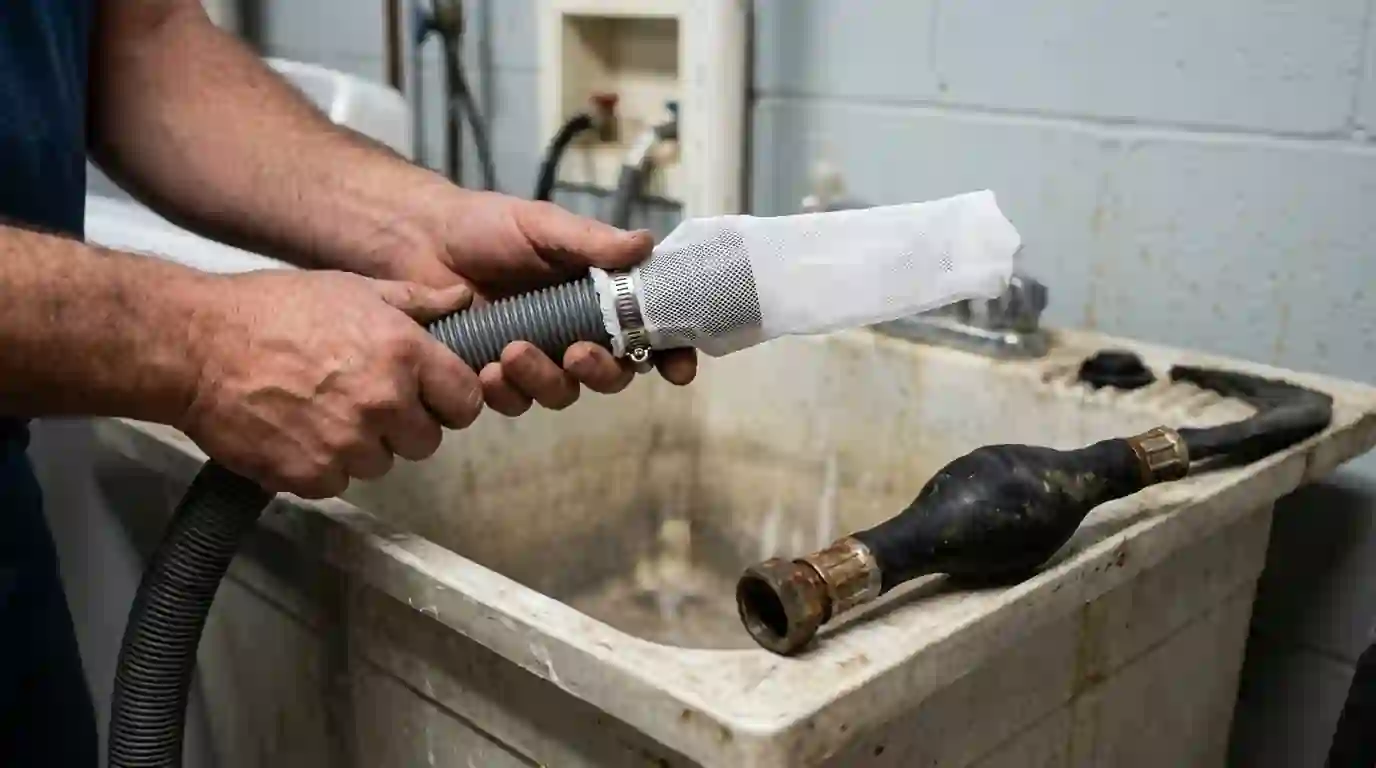
A good hookup starts with a recessed washer box in the wall: hot and cold quarter turn valves, a two inch drain opening, and a trap below. The box keeps hoses neat and the valves easy to reach. Braided stainless fill hoses replace the old rubber ones, and a single lever shutoff lets you close both valves at once when you leave for a trip.
The standpipe should rise high enough to stop siphoning but not so high that the washer pump struggles. It needs a vent so it drains quietly and keeps the trap full. On an upper floor laundry, we add a drain pan under the machine piped to a drain, and we suggest a water sensor or auto shutoff valve that closes the supply if a leak is detected.
- Recessed washer box with quarter turn valves
- Two inch standpipe with a proper trap and vent
- Braided stainless fill hoses in place of rubber
- Drain pan and leak sensor for upper floor laundry
- Single lever shutoff for quick closing
Laundry sinks that drain, and drain fast
Basement laundry sinks catch washer water, paint brushes, mop water and whatever else the house throws at them. Over time, lint and grit settle in the trap and the line beneath. A lint trap on the washer discharge hose catches a lot of that before it reaches the sink. We clear the existing line and can replace the trap or faucet if they're corroded.
When the laundry sink sits below the sewer line, which is common in older basements, the sink drains into a small pump basin that lifts water up to the main drain. Those laundry pumps wear out and clog with lint. We service or replace them, and we make sure the check valve stops water from flowing back into the basin after each cycle.
Moving the laundry upstairs: what's involved
A second floor or main floor laundry saves a lot of stairs, but it changes the stakes for leaks. We run new hot and cold lines from the nearest supply, a two inch drain that ties into the stack with a vent, and a dryer vent route if the dryer moves too. A gas dryer also needs a gas line run to the new spot, which we can handle on the same visit.
We open walls and floors from the cleanest side, often a closet or the basement ceiling, and plan the drain route so it has proper slope back to the stack. The city plumbing permit covers the new drain and supply work, and we pull it. Expect the laundry to be out of service for a few days while the rough in and inspection happen.
Signs it is time for washer and laundry plumbing
Water spilling from the standpipe
If water comes out the top of the drain pipe during the spin cycle, the standpipe is too short, too narrow, or the line past it is clogged with lint.
Rubber hoses with bulges or cracks
Old rubber fill hoses swell and split with age, and a burst hose can release a huge amount of water before anyone notices.
Valves that drip or won't turn
Washer valves left open for years often seize or start dripping at the stem, leaving rust streaks on the wall below.
Laundry sink draining slowly
A utility sink that fills up when the washer drains into it has lint and soap buildup in its trap or the floor drain line.
Gurgling or sewer smell near the washer
Bubbling from the floor drain or a sour odor during the drain cycle points to a dry trap or a missing vent on the standpipe.
Planning a laundry move
Moving the washer from the basement to a main floor or second floor closet needs new supply, drain and vent lines plus a drain pan.
Laundry plumbing in Saint Paul basements
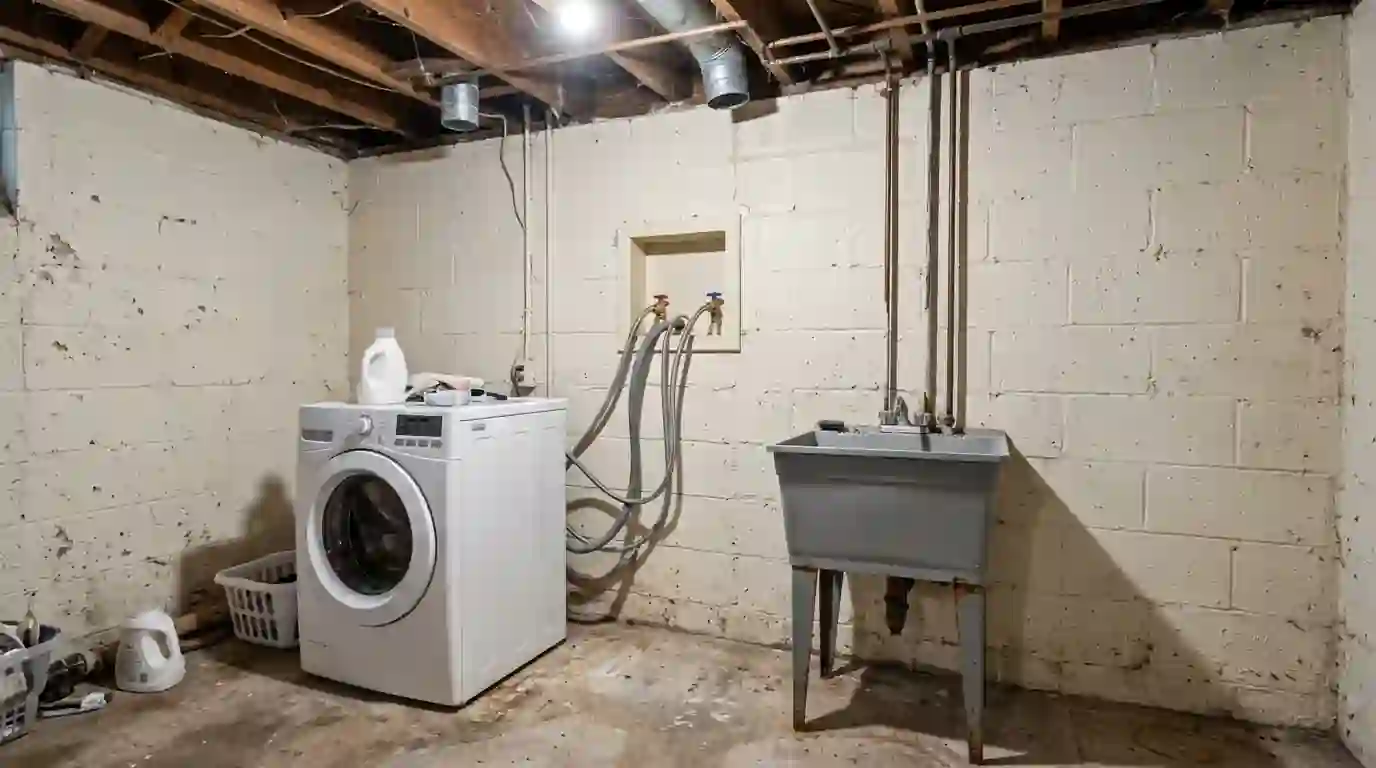
Most older Saint Paul homes keep the washer in the basement, often tucked next to a stone or block wall, a cast iron floor drain, and a deep concrete or plastic laundry sink. In West Seventh, the West Side and Battle Creek, we often find galvanized supply pipes feeding the washer with low flow, and floor drains that take every load straight to a clay or cast iron sewer lateral.
That means a washer that overflows may be the first sign of a sewer problem, especially during spring snowmelt when groundwater pushes into the system. We look at the whole path. In homes along exterior walls, the washer valves can freeze during a deep cold snap if the basement is cool and drafty. Insulating the wall and keeping the laundry area warm helps prevent split valves and burst hoses.
Where we do washer and laundry plumbing
Saint Paul and the surrounding east metro. These are the busiest ZIP codes on our board; the full list has 55 neighborhoods, cities and counties.
Questions about washer and laundry plumbing
How often should I replace washing machine fill hoses?
Rubber fill hoses should be replaced every five years or sooner if you see bulges, cracks or rust at the fittings. Braided stainless hoses last longer but still wear. When we replace hoses, we also check the valves, since a seized valve can make a simple hose swap turn into a leak. Turning off the valves during long trips helps too.
Why does my basement floor drain gurgle when the washer drains?
Gurgling usually means air is being pushed or pulled through a trap, often because the washer drain lacks a vent or the line past the floor drain is partly blocked. If water rises in the floor drain during the spin cycle, the main sewer line may be narrowed by roots or scale. We test both and clear what's needed.
Is it safe to put a washing machine on a second floor in an older Saint Paul house?
Yes, with the right setup. We run a properly sized and vented drain, set a pan under the washer piped to a drain, and suggest a leak sensor that shuts off the water. The floor should be checked for stiffness too, since a front loader's spin can shake older joists. We'll point out anything you should look at first.
Can my washer drain into a laundry sink instead of a standpipe?
It can, as long as the sink drains fast enough to handle the washer's surge. Many older basements do this. A lint trap on the discharge hose keeps the sink drain clearer. If the sink fills and overflows during the drain cycle, the trap or line needs clearing, or the washer needs its own standpipe.
Jobs that often go with washer and laundry plumbing
Brands we work on in Saint Paul homes
- Kohler
- Moen
- Delta
- American Standard
- Rheem
- A. O. Smith
- Bradford White
- Navien
- Rinnai
- InSinkErator
- Zoeller
- Liberty Pumps
- Watts
- Weil-McLain
Call the Saint Paul office, day or night
A real person picks up at any hour. Tell us what you are seeing, and we will tell you what happens next and roughly what it costs.
(651) 215-2087- Phone
- Answered 24 hours a day, 7 days a week
- Office
- 289 E 7th Street, Saint Paul, MN 55101
- Headquarters
- 50666 229th Ave, Bemidji, MN 56601
- Coverage
- Saint Paul and the east metro, see all areas