Water softener installation in Saint Paul, MN
White crust on faucets, spotty dishes and a water heater that rumbles are signs of hard water. We test what comes out of your tap and install a softener sized for your house.
- Phone answered 24/7
- Saint Paul office on E 7th Street
Tell us what you see and hear. We explain the visit and the likely cost on the phone. (651) 215-2087
The short answer
A water softener removes the calcium and magnesium that leave scale in pipes, fixtures and water heaters. It matters most in east metro suburbs with hard water. We test your water, size the unit to your household, install it with a bypass valve and a proper drain, and set the regeneration. Typical Saint Paul area installs run $1,290 to $2,870.
Do you actually need a softener at your address?
It depends on where your water comes from. Saint Paul Regional Water Services treats the water it supplies to Saint Paul and several neighboring suburbs, and its hardness is moderate. Many Saint Paul homes get by without a softener, though some homeowners still add one to cut spotting and protect a new water heater.
In many east metro suburbs, the story changes. Woodbury, Cottage Grove, Oakdale and other cities that draw from their own wells often have notably hard water, and homes on private wells can be harder still. That's where a softener makes the biggest difference. We test your tap water on site, so the decision is based on your house and not a guess.
What water softener installation costs in Saint Paul
Typical Saint Paul and east metro ranges for softener work. We confirm the price after the water test and a look at your piping.
| Job | Typical range |
|---|---|
| Softener supply and installationMetered unit, bypass and drain | $1,290 to $2,870 |
| Replace an existing softenerReuses the drain and loop when sound | $1,170 to $2,430 |
| Add an iron filter ahead of the softenerFor iron-heavy well water | $987 to $2,140 |
| Softener service and repairValve, injector or setting issues | $163 to $389 |
What moves the price
- Water hardness and iron levels
- Household size and unit capacity
- Whether a softener loop already exists
- Drain and outlet locations
- Piping changes in older basements
- Extra treatment such as an iron filter
Typical Saint Paul ranges. We confirm your price after we see the job and before work starts. See every price on one page.
How water softener installation goes, start to finish
Test your water
We check hardness and look for iron at a tap, then talk about what you're seeing at the fixtures.
Pick the size and placement
We size the unit to your household and find a spot near the main line, a drain and an outlet.
Cut in the bypass
We shut the water, install a bypass valve on the main line, and leave outdoor taps on hard water when possible.
Plumb the drain with an air gap
The regeneration line goes to a floor drain or standpipe with a proper air gap to block backflow.
Set and start the unit
We load salt, program hardness and regeneration, run a manual cycle and check for leaks.
Show you the basics
You learn the bypass, the salt routine and what to watch for, plus when to call us.
How we size a softener so it isn't too big or too small
A softener's capacity has to match how hard your water is and how much your household uses. An undersized unit regenerates constantly, wasting salt and water. An oversized one sits so long between cycles that the resin can channel and lose efficiency. We look at your test results, the number of people in the house and your fixture count.
We also consider iron. Some well water in the east metro carries iron that stains fixtures orange and fouls standard resin. If we see it in the test, we'll talk through whether a softener alone can handle it or whether you need a separate iron filter in front.
- Household size and daily water use
- Measured hardness and any iron in the water
- Metered regeneration so it only cycles when needed
- Space in the utility area for the brine tank
- Drain and outlet locations near the unit
What goes into a clean softener installation
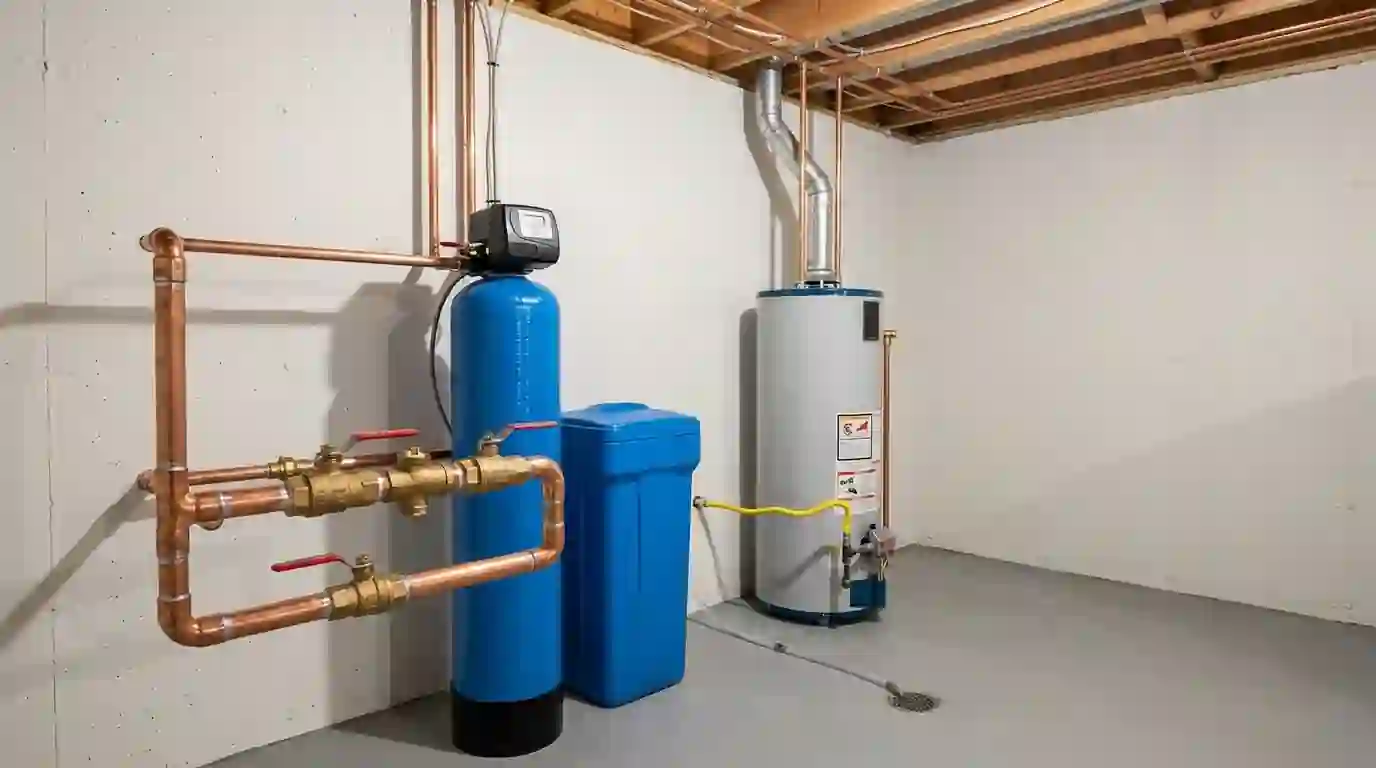
A softener goes on the main line after the meter and before the water heater. We cut in a bypass valve so you can take the softener offline without shutting off the house. Most installs also leave the outdoor faucets on hard water, since there's no reason to soften water for the lawn.
The unit needs a drain for its regeneration water with an air gap, so wastewater can't be siphoned back. It also needs a nearby outlet. In older basements we sometimes reroute piping or add a standpipe for a clean drain connection. We set the regeneration schedule and hardness setting before we leave.
Keeping your softener working for years
Check the salt level monthly and keep the brine tank about half full. If the salt looks full but the tank isn't using it, you may have a salt bridge, a hard crust that leaves a gap above the water. Break it up gently with a broom handle. Use clean pellets made for softeners, not rock salt.
Every few years, the resin bed and control valve may need attention. If you start seeing scale again or the unit runs nonstop, give us a ring. Many problems are a stuck valve, a clogged injector or a setting that got reset after a power outage, and those are quick fixes.
Signs it is time for water softener installation
White crust on faucets and shower heads
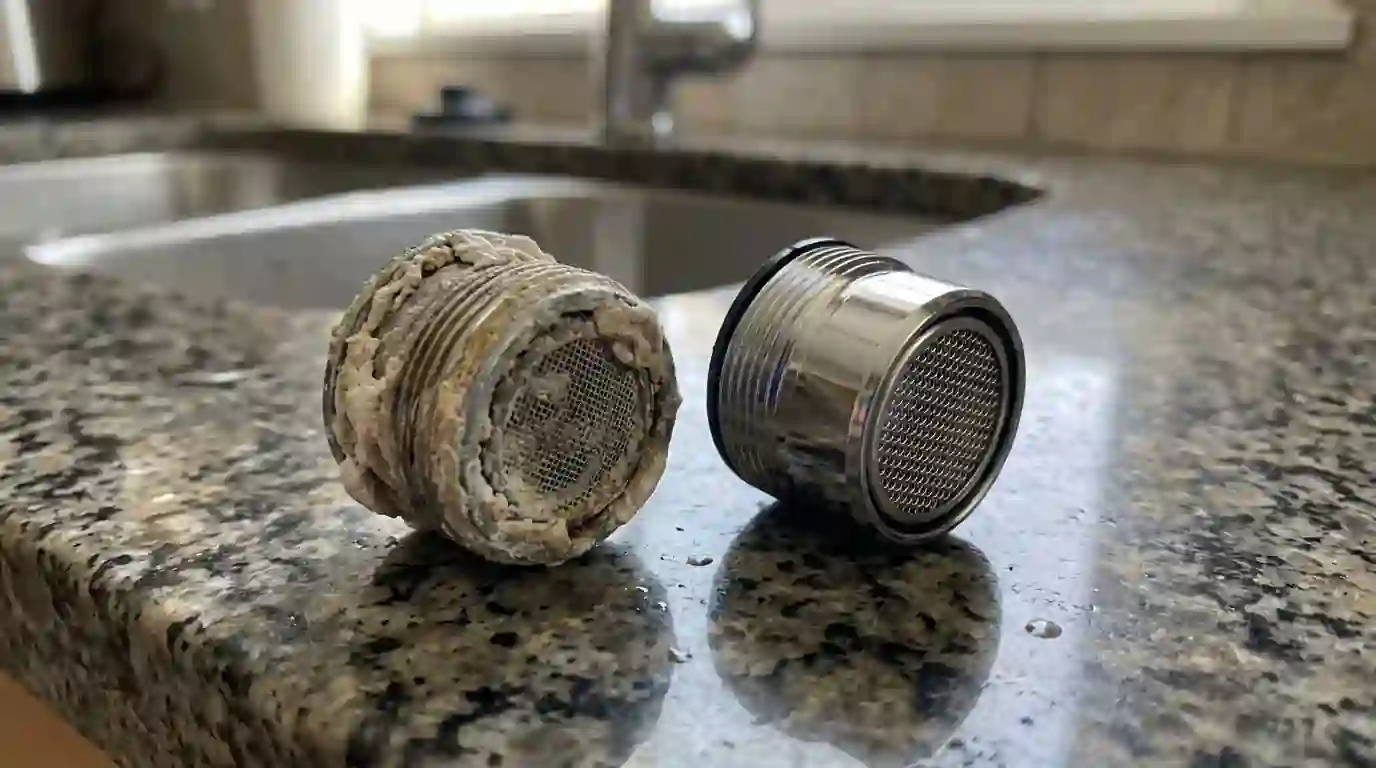
Scale buildup around aerators and spray holes is the clearest sign of hard water. It returns soon after you clean it.
Spots on glasses and dishes
Cloudy spots that stay after the dishwasher runs come from minerals left behind as the water dries.
Water heater popping or rumbling
Scale settles at the bottom of a tank heater and hardens. Water trapped under it boils and pops, and efficiency drops.
Soap and shampoo don't lather
Hard water fights soap, so you use more of it and still feel a film on your skin and the tub.
Your old softener stopped working
If scale is coming back, the resin may be worn out, the valve may be stuck, or the brine tank may have a salt bridge.
You're installing a tankless heater
Tankless heaters scale up fast on hard water. A softener protects the heat exchanger and the manufacturer warranty terms.
Hard water in the east metro and moderate water in Saint Paul
Inside Saint Paul, homes on SPRWS water get treated water that is moderately hard to soft depending on the source and season. Many owners in Highland Park or Como Park run no softener at all, while others add one to protect a new tankless heater or cut down on spots. We'll give you an honest read on whether it's worth it at your address.
Head east to Woodbury, Cottage Grove or Oakdale, and the water tends to be notably harder, with scale building fast on fixtures and water heaters. Homes on private wells around Stillwater and the outer edges of Washington County can be harder still and sometimes carry iron. Those are the homes where a properly sized softener pays for itself in fixtures and heaters that last.
Where we do water softener installation
Saint Paul and the surrounding east metro. These are the busiest ZIP codes on our board; the full list has 55 neighborhoods, cities and counties.
Questions about water softener installation
Does Saint Paul city water need a water softener?
Many Saint Paul homes on SPRWS water get by fine without one, since the water is treated and moderately hard to soft depending on the source. Some homeowners still add a softener to reduce spotting or protect a tankless heater. We test your tap water and tell you honestly whether it's worth it.
Why is water so much harder in Woodbury and Cottage Grove than in Saint Paul?
Many east metro suburbs draw from their own wells in mineral-rich groundwater, and that water carries more calcium and magnesium. Saint Paul's supply comes from a different source and is treated. The result is that softeners matter much more in suburbs like Woodbury, Cottage Grove and Oakdale.
Should the outdoor faucets be on softened water?
Usually not. There's no benefit to softening lawn and garden water, and it uses salt and softener capacity for nothing. When piping allows, we leave the hose bibs on the hard water side of the softener. Kitchen cold water can go either way, and we'll talk through the options with you.
How long does a water softener installation take?
A straight replacement on an existing loop often takes two to three hours. A new install with a bypass, drain line and some piping changes is usually a half day. Adding an iron filter or rerouting old galvanized piping in the basement can stretch it further. Water is off for part of that time.
Will a water softener help my water heater last longer?
On hard water, yes. Scale settles in tank heaters and coats the heat exchanger in tankless units, which cuts efficiency and shortens their life. Softened water slows that buildup a lot. On moderately hard Saint Paul water the benefit is smaller, but it still helps tankless heaters especially.
Brands we work on in Saint Paul homes
- Kohler
- Moen
- Delta
- American Standard
- Rheem
- A. O. Smith
- Bradford White
- Navien
- Rinnai
- InSinkErator
- Zoeller
- Liberty Pumps
- Watts
- Weil-McLain
Call the Saint Paul office, day or night
A real person picks up at any hour. Tell us what you are seeing, and we will tell you what happens next and roughly what it costs.
(651) 215-2087- Phone
- Answered 24 hours a day, 7 days a week
- Office
- 289 E 7th Street, Saint Paul, MN 55101
- Headquarters
- 50666 229th Ave, Bemidji, MN 56601
- Coverage
- Saint Paul and the east metro, see all areas