Backflow testing and repair in Saint Paul, MN
A backflow device keeps sprinkler water and boiler water out of the pipes you drink from. When the yearly test notice shows up, or the device starts dripping, we test it and fix what fails.
- Phone answered 24/7
- Saint Paul office on E 7th Street
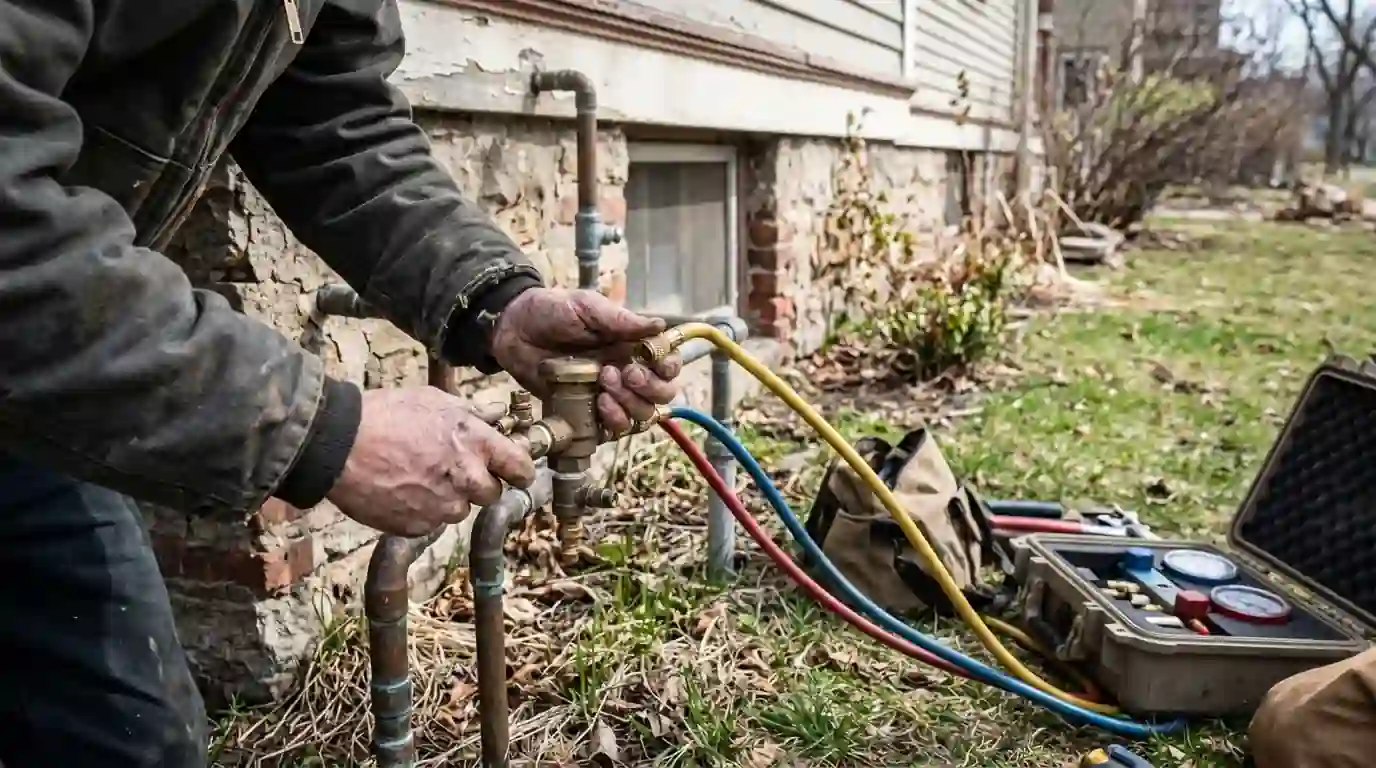
Tell us what you see and hear. We explain the visit and the likely cost on the phone. (651) 215-2087
The short answer
Backflow testing checks the valve that stops dirty water from running backward into your drinking supply. Lawn irrigation systems and many boiler fill lines have one. We hook a test kit to the device, read each check and relief point, and rebuild or replace parts that fail. A typical Saint Paul test runs $97 to $173, with repairs priced after we open it.
What a backflow preventer actually does at your house
Your water supply is under pressure, and that pressure normally pushes water one direction: into your fixtures. If pressure drops on the street side, say during a water main break or a hydrant flush, water can get pulled backward. A backflow preventer is a set of spring-loaded checks that slam shut when that happens, so whatever is in the branch line stays there.
On a lawn system, the worry is fertilizer, pet waste and soil sitting in the sprinkler lines. On a boiler, it's heating water that has sat in iron pipe for years and may carry treatment chemicals. Neither belongs in the kitchen faucet. The device is a cheap part guarding a big problem, which is why it gets tested every year instead of assumed to work forever.
When to book backflow testing and repair
A test notice came in the mail
Many cities and water utilities track testable devices and send a reminder each year. We test it and give you the results to turn in.
Water spitting from the relief port
An RPZ that dumps water from its relief valve is telling you a check is fouled or a spring is weak. It needs a look before the season starts.
Cracked body after winter
Irrigation devices left full of water through a Minnesota winter can split. You often find out on the first spring startup when water sprays from the brass.
Low sprinkler pressure
A partly closed test cock or a stuck check can choke flow to the zones. Heads that barely pop up are worth a backflow check.
Boiler fill valve trouble
If the boiler keeps losing pressure or the fill line drips, the backflow preventer beside the fill valve may be leaking through.
You just bought the house
New owners often have no idea when the device was last tested, or if it was drained last fall. A baseline test settles it.
What a backflow testing and repair visit includes
Look over the setup
We find the device, note its type and size, and check that it's mounted where it should be and protected from freezing.
Hook up the test kit
A differential gauge goes on the test cocks. We close the shutoffs in the right order so each check can be read on its own.
Read each check and relief point
We record the pressure each check holds and, on an RPZ, when the relief valve opens. Those numbers show pass or fail.
Clean or rebuild what fails
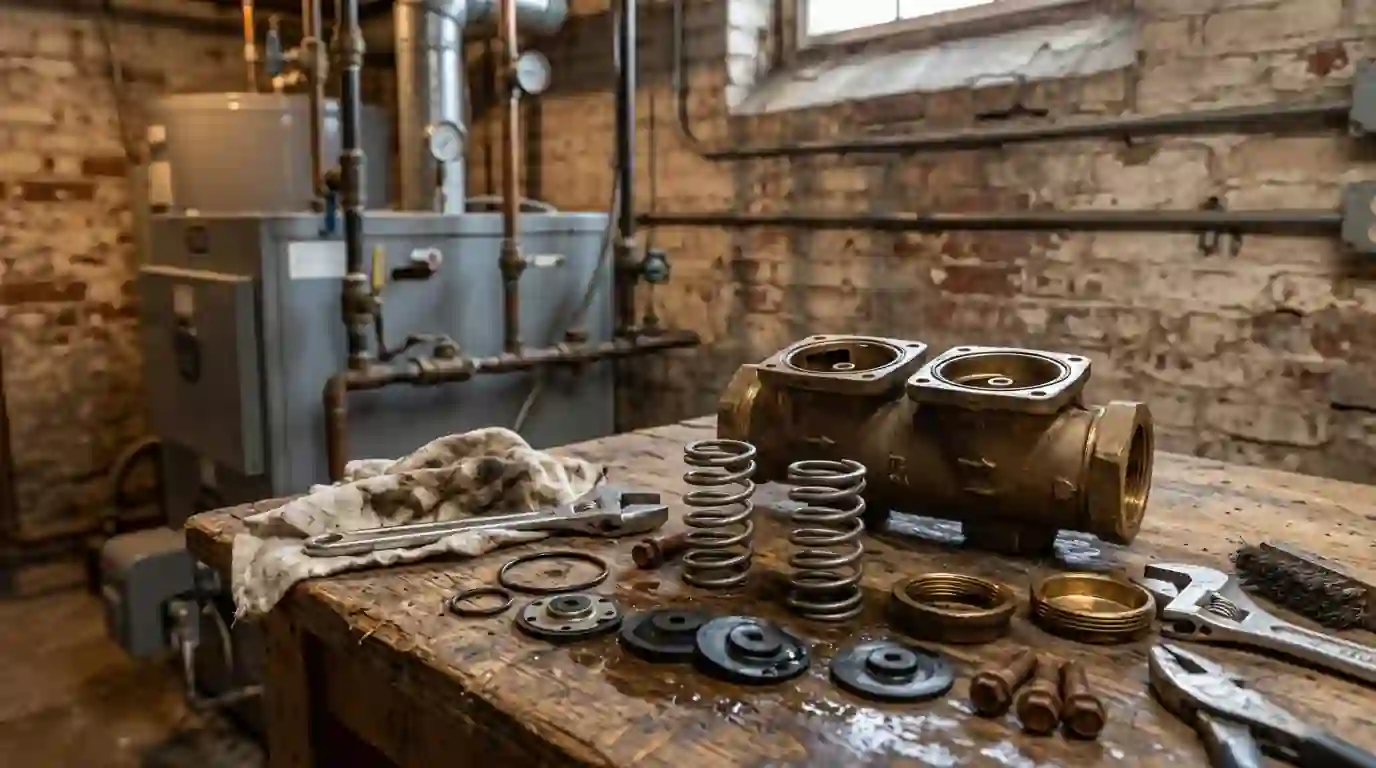
If a check leaks through, we open it, clear debris, replace discs and springs as needed, then reassemble.
Retest and restore water
Every repair gets tested again before we open the valves back up and confirm the zones or boiler fill work.
Hand over the results
You get the readings, date and device details, ready to submit if your city or water utility asks for them.
Which type do you have, and why does it matter?
Residential systems in the east metro mostly use three styles. The type sets how we test it, what usually fails, and how it has to be protected from freezing. If you're not sure what's on your system, a phone photo of the brass assembly helps us bring the right rebuild kit on the first trip.
Older irrigation systems sometimes have a device that was never meant to be tested, or one installed too low for its type. We'll tell you plainly if what you have doesn't fit the job it's doing.
- Pressure vacuum breaker (PVB): common on lawn systems, mounted above the highest sprinkler head, usually outdoors
- Reduced pressure zone (RPZ): two checks plus a relief valve, used where the hazard is higher, including many boiler feeds with treatment
- Double check valve assembly: two checks in a row, often in a basement or pit, with test cocks on the side
- Dual check on a boiler fill line: a small device next to the pressure reducing fill valve, not always testable
How a Minnesota winter wrecks a sprinkler backflow device
Water expands when it freezes, and brass bodies don't. A PVB or RPZ that still holds water in November will often crack along the body or pop a bonnet by March. The damage hides until spring, when the system gets turned on and the device sprays across the side of the house.
The fix is simple and cheap compared with replacement. Each fall the supply valve gets shut in the basement, the device is drained through its test cocks, and the ball valves are left half open so nothing traps water. If your irrigation contractor blows out the lines, ask whether they also drain the backflow. We see plenty that were missed.
What happens when a device fails its test
A failed test is usually a rebuild, not a new device. Most failures come from a bit of grit or scale holding a check open, a rubber disc that has gone hard, or a weak spring. We shut the water, open the device, clean the seats, swap in a rebuild kit and retest right away so you leave with a passing result.
Replacement makes sense when the body is cracked, the threads are corroded, parts are no longer made, or the device is the wrong type for where it sits. On boilers we also check that the fill valve beside it is holding pressure, since the two often get replaced together on systems that are twenty or more years old.
What backflow testing and repair costs in Saint Paul
These are typical Saint Paul ranges for residential devices. We confirm the price once we've seen the device and know what it needs.
| Job | Typical range |
|---|---|
| Annual test of one devicePVB, RPZ or double check, results included | $97 to $173 |
| Rebuild after a failed testKit, labor and retest | $137 to $289 |
| Replace a cracked irrigation PVB or RPZSize and type drive the spread | $389 to $847 |
| Boiler fill valve and backflow replacementOften done as a pair | $279 to $563 |
What moves the price
- Device type and pipe size
- Whether it's outdoors, in a pit or in a tight mechanical room
- Freeze damage to the body or nearby piping
- Availability of parts for older models
- Testing more than one device on the same visit
Typical Saint Paul ranges. We confirm your price after we see the job and before work starts. See every price on one page.
Backflow devices on Saint Paul lawns and older boiler systems
Saint Paul's older neighborhoods, like Summit Hill and Macalester-Groveland, have a lot of homes still heated by hot-water or steam boilers. Many of those boilers had their fill lines updated over the decades, and the backflow device beside the fill valve is easy to forget. It sits in a dim corner of the basement, slowly scaling up, until the boiler starts losing pressure or the relief valve drips.
Out in Woodbury, Shoreview and other suburbs with newer lots, in-ground irrigation is far more common, and so are cracked vacuum breakers each spring. Saint Paul Regional Water Services supplies Saint Paul and several neighboring suburbs, and like most utilities it wants contamination kept out of the mains. A tested, drained and properly mounted device keeps your lawn water on your lawn.
Where we do backflow testing and repair
Saint Paul and the surrounding east metro. These are the busiest ZIP codes on our board; the full list has 55 neighborhoods, cities and counties.
Questions about backflow testing and repair
How often does a lawn sprinkler backflow device need testing in Saint Paul?
Testable irrigation devices are usually tested once a year, often at spring startup after the system is pressurized. Some cities and water utilities send a reminder with a deadline. If yours hasn't, a yearly test is still the simple way to know the checks are holding and the body made it through winter.
Can I drain my irrigation backflow preventer myself before winter?
Yes, as long as you're comfortable with it. Shut the irrigation supply valve inside, open the test cocks slowly with a flat screwdriver, and leave the ball valves at a half-open angle. Don't leave the supply on with the device closed. If you're not sure which valves are which, give us a ring and we'll show you once.
Why is my boiler backflow preventer dripping from the bottom?
A drip from the vent on a boiler fill line device usually means a check isn't seating, often from scale or a worn disc. It can also show up when system pressure swings too high. We test the device, check the fill valve and expansion tank, and rebuild or replace whichever part is causing it.
Does a failed backflow test mean I need a brand new device?
Usually not. Most failures are a dirty check seat or tired rubber parts, and a rebuild kit fixes them for well under the cost of new brass. We replace the whole device when the body is cracked, threads are corroded, parts aren't available, or the type is wrong for the hazard it protects against.
What do I get after a backflow test, and who needs it?
You get a record with the device make, size, location, the readings for each check and the date. If your city or water utility asked for a test, that record is what you turn in. If nobody asked, keep it with your house papers so the next owner or tester has a starting point.
Brands we work on in Saint Paul homes
- Kohler
- Moen
- Delta
- American Standard
- Rheem
- A. O. Smith
- Bradford White
- Navien
- Rinnai
- InSinkErator
- Zoeller
- Liberty Pumps
- Watts
- Weil-McLain
Call the Saint Paul office, day or night
A real person picks up at any hour. Tell us what you are seeing, and we will tell you what happens next and roughly what it costs.
(651) 215-2087- Phone
- Answered 24 hours a day, 7 days a week
- Office
- 289 E 7th Street, Saint Paul, MN 55101
- Headquarters
- 50666 229th Ave, Bemidji, MN 56601
- Coverage
- Saint Paul and the east metro, see all areas