Water heater maintenance in Saint Paul, MN
Sediment, a spent anode rod and a sticky relief valve quietly shorten the life of most tank water heaters. A yearly service visit catches all three before they turn into a cold shower or a wet basement.
- Phone answered 24/7
- Saint Paul office on E 7th Street
Tell us what you see and hear. We explain the visit and the likely cost on the phone. (651) 215-2087
The short answer
Water heater maintenance is a scheduled service visit where we drain and flush sediment from the tank, pull and inspect the anode rod, test the temperature and pressure relief valve, and check the burner, venting or elements. Most homes benefit once a year, more often with hard water. A typical Saint Paul visit runs $147 to $263, with anode or valve replacement priced separately.
What a yearly flush actually does for your tank
Every gallon of water that comes into your heater carries a little dissolved mineral. When it heats, some of that mineral drops out and settles on the bottom. Over a few years it can build into a crusty layer several inches deep. On a gas heater, the burner has to push heat through that layer, which wastes fuel and overheats the steel. On an electric heater, the lower element can get buried and burn out.
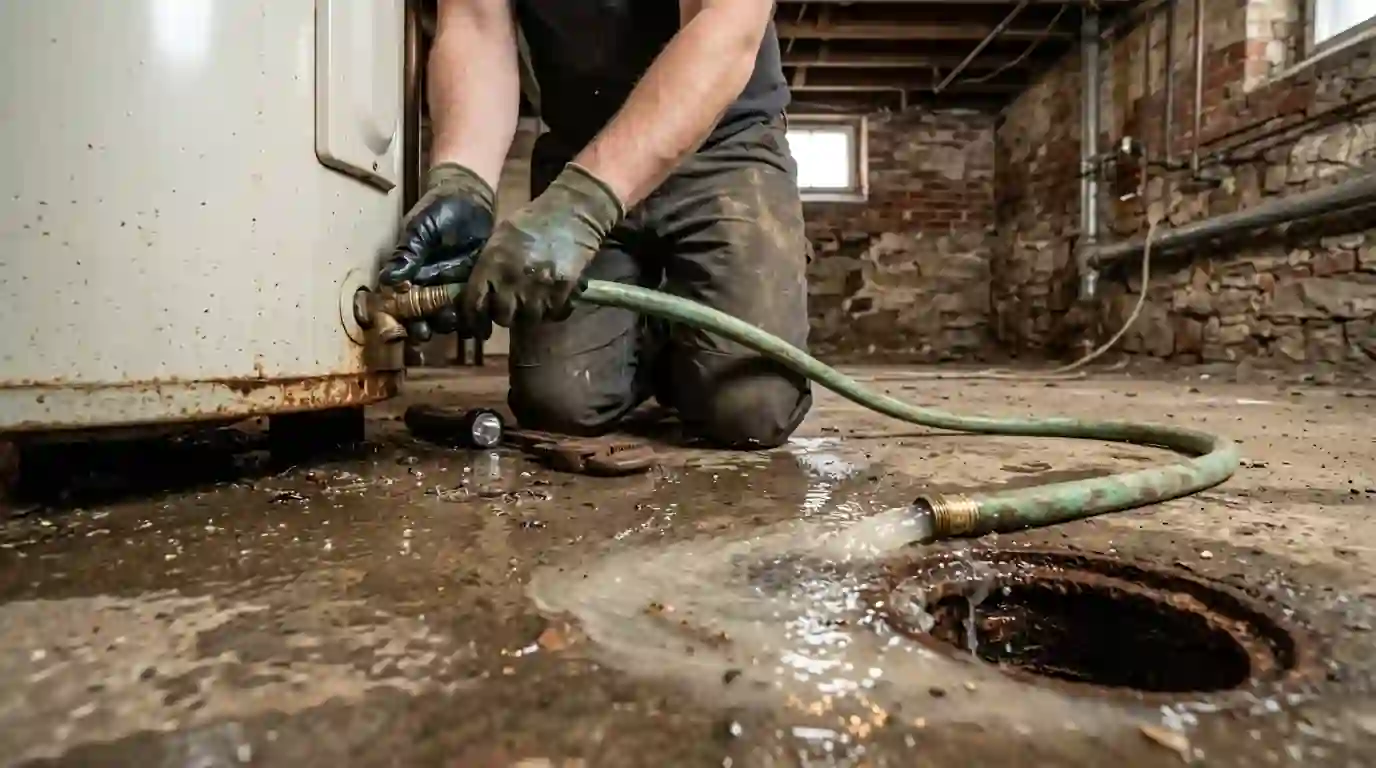
A proper flush isn't just opening the drain for a minute. We shut off the fuel or power, close the cold supply, let the tank drain, then open the cold valve in short bursts to stir up and push out the settled material. We keep going until the water runs clear. On older tanks with hardened scale, we'll tell you honestly if a flush will help or if it's past that point.
When to book water heater maintenance
Popping or rumbling while it heats
That sound is water trapped under a layer of sediment flashing to steam. The tank is working harder and the bottom is running hotter than it should.
Hot water runs out sooner than it used to
Sediment takes up space and insulates the water from the burner. A 40 gallon tank can start acting like a much smaller one.
Rusty or cloudy hot water
Discolored water only on the hot side often points to an anode rod that has worn down and is letting the steel tank corrode.
Rotten egg smell from the hot tap
Some anode rods react with minerals in the water and produce a sulfur odor. Swapping the rod type usually clears it up.
A drip or crust at the relief valve pipe
Mineral crust or a slow drip from the discharge tube means the T&P valve is weeping or has been stuck. It needs a test or a new valve.
It's been more than a year, or never
If nobody has drained the tank since it went in, sediment is almost certainly there. Getting ahead of it is cheaper than a new heater.
What a water heater maintenance visit includes
Look before we touch
We check the age plate, look for leaks or corrosion, and listen to the heater fire so we know what we're working with.
Shut down safely
We turn the gas valve to pilot or off, or kill the breaker on electric units, and close the cold supply.
Drain and flush
We run a hose to your floor drain, empty the tank and flush in bursts until the water runs clear.
Pull and inspect the anode
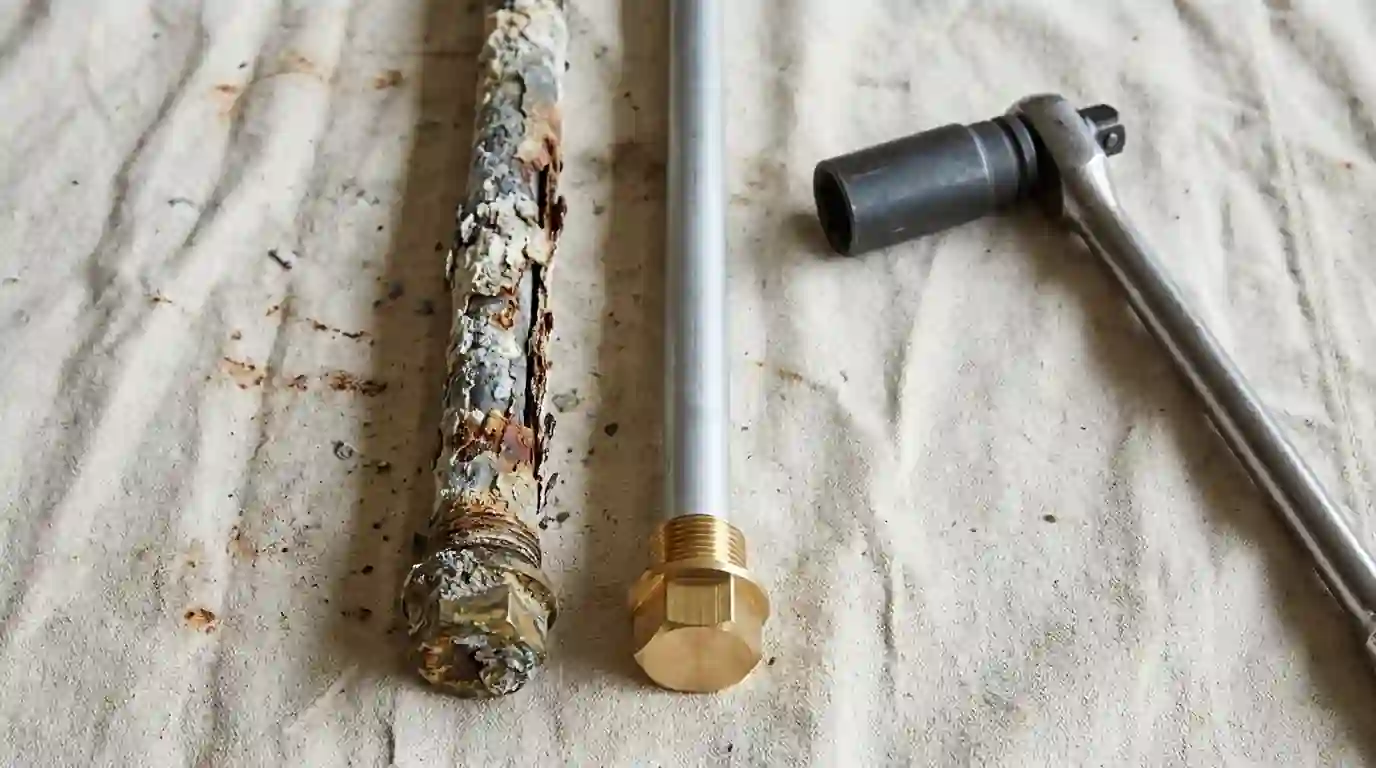
We remove the rod, show you what's left of it and replace it if it's worn past the core.
Test the relief valve and controls
We operate the T&P valve, check the discharge pipe, and test the burner, draft or electric elements.
Refill, relight and set temperature
We bleed air out at a hot tap, bring the heater back online, and set a safe, comfortable temperature.
Why the anode rod decides how long your heater lasts
Inside nearly every tank water heater is a metal rod, usually magnesium or aluminum, screwed into the top. It's there to corrode so the tank doesn't. Water attacks the rod first, and as long as there's metal left on it, the glass lining and steel shell stay protected. Once the rod is down to bare core wire, the tank itself starts to rust from the inside.
Most rods are spent somewhere between three and six years, sooner with softened water, which is more aggressive. Replacing a rod costs a small fraction of a new heater and can add years to a tank that's otherwise sound. We pull it, show it to you, and if it's thin or pitted, we install a new one. If you've had a sulfur smell, we can fit a different rod type that won't feed it.
Is your relief valve ready to do its one job?
The temperature and pressure relief valve is the safety device that opens if the tank ever gets too hot or overpressurized. It can sit untouched for years, and minerals can freeze it shut or keep it from seating properly. A valve that won't open is a real hazard. A valve that won't close leaks water down the discharge pipe and wastes energy.
During maintenance we lift the test lever and watch it open and reseat. We also check that the discharge pipe runs down to within a few inches of the floor, isn't capped or threaded shut, and is the right size. If the valve drips after testing or doesn't move, we replace it on the spot. It's a small part with a big job.
The rest of the checklist on a maintenance visit
A water heater is more than a tank. On gas models, the venting carries combustion gases out of the house, and a poorly drafting flue can push them back into the basement. We check draft at the hood, look at the vent connector for rust or gaps, and make sure the burner flame looks clean and blue. On electric models we test the elements and thermostats.
We also look at the things around the heater that tend to fail and cause damage later. That means the shutoff valve on the cold line, the gas valve and flex connector, the expansion tank if you have one, and the drain valve, which on many tanks is a cheap plastic part that can crack.
You'll get a plain summary at the end:
- Sediment flushed and how much came out
- Anode rod condition, replaced or not
- T&P valve tested and discharge pipe checked
- Venting, burner or elements inspected
- Water temperature set, usually near 120 degrees F
- Our honest read on how much life the tank has left
When maintenance isn't worth it anymore
We'd rather tell you the truth than sell a service that won't help. If the tank is already leaking from the shell, if the anode rod is seized and the tank is well past ten years, or if heavy rust is coming from the bottom seams, maintenance won't buy much time. In those cases we'll explain the options for a replacement and what it would cost, and you decide.
For tanks that are a few years old, or newer units still covered by a manufacturer warranty, regular maintenance is the cheapest thing you can do to keep it running. Some manufacturers also expect the tank to have been looked after, so keeping a record of service can help if you ever need to make a claim.
What water heater maintenance costs in Saint Paul
These are typical Saint Paul ranges for water heater upkeep, not a fixed price. We confirm the cost after we've seen your heater and talked it through.
| Job | Typical range |
|---|---|
| Annual flush and inspection, standard tankIncludes T&P test, draft check and temperature set | $147 to $263 |
| Anode rod replacement with flushSegmented or powered rods cost more | $238 to $417 |
| T&P relief valve replacementOften done during the same visit | $163 to $289 |
| Tankless descaling servicePump and vinegar or descaler loop through the heat exchanger | $212 to $376 |
What moves the price
- How much sediment or hardened scale is in the tank
- Whether the anode rod is seized and needs extra work to remove
- Low ceiling clearance that calls for a segmented rod
- A cracked or plugged drain valve that has to be swapped first
- Gas, electric or tankless, and the size of the unit
- Distance to a usable floor drain for the discharge hose
Typical Saint Paul ranges. We confirm your price after we see the job and before work starts. See every price on one page.
Water heater upkeep in Saint Paul basements
Most Saint Paul homes keep the water heater in an unfinished basement, often next to an old floor drain and a stone or block foundation wall. That's convenient for flushing, but basements in neighborhoods like Hamline-Midway and the North End were never built with a heater stand or drip pan in mind. A slow leak can run unnoticed into the drain for months. A yearly check is a cheap way to spot the early signs.
SPRWS water is treated and moderate in hardness, but many families in Woodbury and Cottage Grove are on harder water and run a softener, which can eat anode rods faster. Older homes in Merriam Park and Highland Park also tend to have tight basement stairs and low joists, so we come ready with segmented rods and a long drain hose. Winter is our busiest stretch for no-hot-water calls, which makes fall a good time for maintenance.
Where we do water heater maintenance
Saint Paul and the surrounding east metro. These are the busiest ZIP codes on our board; the full list has 55 neighborhoods, cities and counties.
Questions about water heater maintenance
How often should a Saint Paul water heater be flushed?
Once a year suits most homes on city water. If you're on harder water, or if you hear popping when the burner runs, every six to nine months is better. If a tank has never been flushed and is more than five or six years old, we'll check how much scale is present before draining it, since heavy buildup can clog the drain valve.
Can I replace my water heater anode rod myself?
Some handy homeowners do, but the rod is usually tightened very hard and the tank can twist if you lean on it. You also need clearance above the tank to pull it straight out. If the rod is seized or the ceiling is low, call us. We have impact tools, segmented rods, and a way to hold the tank steady while we work.
Does water heater maintenance help with a sulfur smell in hot water?
Often, yes. The rotten egg smell usually comes from a reaction between certain bacteria in the water and a magnesium anode. We flush the tank, may raise the temperature briefly to knock back the bacteria, and swap the rod for an aluminum zinc type. That combination clears the odor in most homes.
Is a tankless water heater maintenance visit different from a tank flush?
Yes. A tankless unit has no tank to drain. Instead we isolate it with the service valves, connect a small pump, and circulate a descaling solution through the heat exchanger for a while. We also clean the inlet screen and check venting and error codes. Hard water areas usually need this every year.
Brands we work on in Saint Paul homes
- Kohler
- Moen
- Delta
- American Standard
- Rheem
- A. O. Smith
- Bradford White
- Navien
- Rinnai
- InSinkErator
- Zoeller
- Liberty Pumps
- Watts
- Weil-McLain
Call the Saint Paul office, day or night
A real person picks up at any hour. Tell us what you are seeing, and we will tell you what happens next and roughly what it costs.
(651) 215-2087- Phone
- Answered 24 hours a day, 7 days a week
- Office
- 289 E 7th Street, Saint Paul, MN 55101
- Headquarters
- 50666 229th Ave, Bemidji, MN 56601
- Coverage
- Saint Paul and the east metro, see all areas