Boiler replacement in Saint Paul, MN
When a boiler has a cracked section, constant leaks or parts nobody makes anymore, replacement makes more sense than another repair. We swap old boilers for new ones sized to your home and radiators.
- Phone answered 24/7
- Saint Paul office on E 7th Street
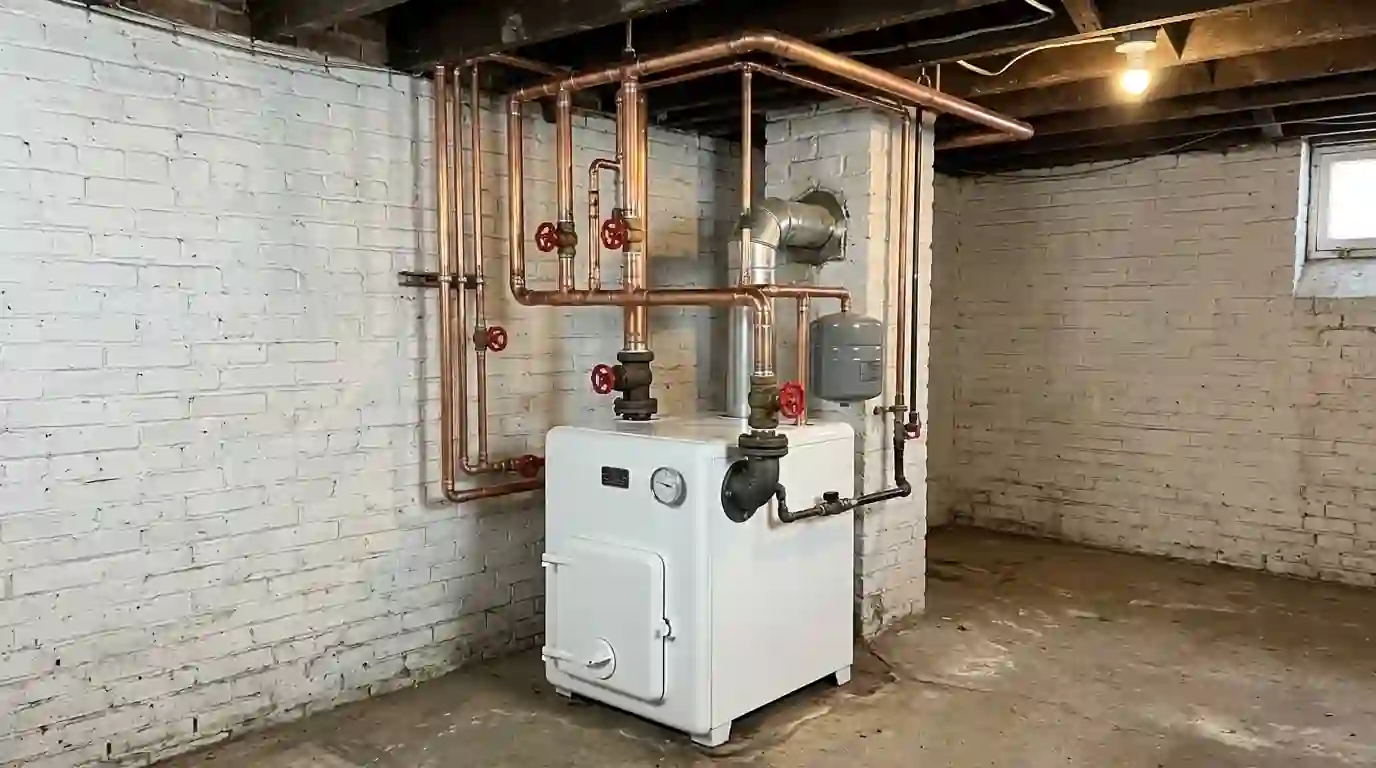
Tell us what you see and hear. We explain the visit and the likely cost on the phone. (651) 215-2087
The short answer
Boiler replacement means removing an old hot-water or steam boiler and installing a new one sized to your home's radiators and heat loss, with new near-boiler piping, controls and venting. It's worth it when the heat exchanger is cracked or repairs keep stacking up. Typical Saint Paul replacements run $7,840 to $16,370, depending on boiler type and how much piping changes.
Repair or replace: how we help you decide
Not every old boiler needs to go. A sound cast iron boiler with a bad pump or control is worth fixing, and we'll say so. We look at a few things: the heat exchanger and sections for cracks or leaks, the condition of the flue passages, whether controls and parts are still available, how often it has needed service, and how it's piped. We also check the venting and chimney liner.
If the boiler has a cracked section, if it's leaking into the combustion chamber, or if a repair would cost a large share of a new boiler on a unit well past its normal life, replacement is usually the smarter money. We'll show you what we found and give you the numbers for both, so the decision is yours.
What boiler replacement costs in Saint Paul
Boiler replacement varies a lot by system. These typical Saint Paul ranges help you plan; we confirm a price after a site visit.
| Job | Typical range |
|---|---|
| Cast iron hot-water boiler replacementStandard efficiency, existing chimney | $7,840 to $11,960 |
| High-efficiency condensing boilerIncludes new venting and condensate drain | $10,470 to $16,370 |
| Steam boiler replacementIncludes near-boiler piping to spec | $8,690 to $14,280 |
| Indirect water heater added to new boilerTank size and piping change the price | $2,140 to $3,870 |
What moves the price
- Steam or hot water, and the boiler size the radiators need
- Condensing versus standard efficiency equipment
- Chimney liner or new vent route required
- Removal difficulty on tight basement stairs
- Gas line upsizing or relocation
- Zoning, outdoor reset or extra controls
Typical Saint Paul ranges. We confirm your price after we see the job and before work starts. See every price on one page.
How boiler replacement goes, start to finish
Measure the house and radiators
We size every radiator, check the existing piping and note venting, gas supply and clearance.
Go over options and pricing
You'll see the boiler choices that fit your system, with typical costs and what each involves.
Pull the permit and stage parts
We file for the city permit and get the boiler, controls and piping materials ready before demolition.
Remove the old boiler
We drain, disconnect and haul away the old unit, protecting floors and stairs on the way out.
Install, pipe and vent
We set the new boiler, build near-boiler piping to the manufacturer's spec, and connect gas, venting and controls.
Start up and walk through
We fire it, test combustion, balance heat and show you how to check pressure or the sight glass.
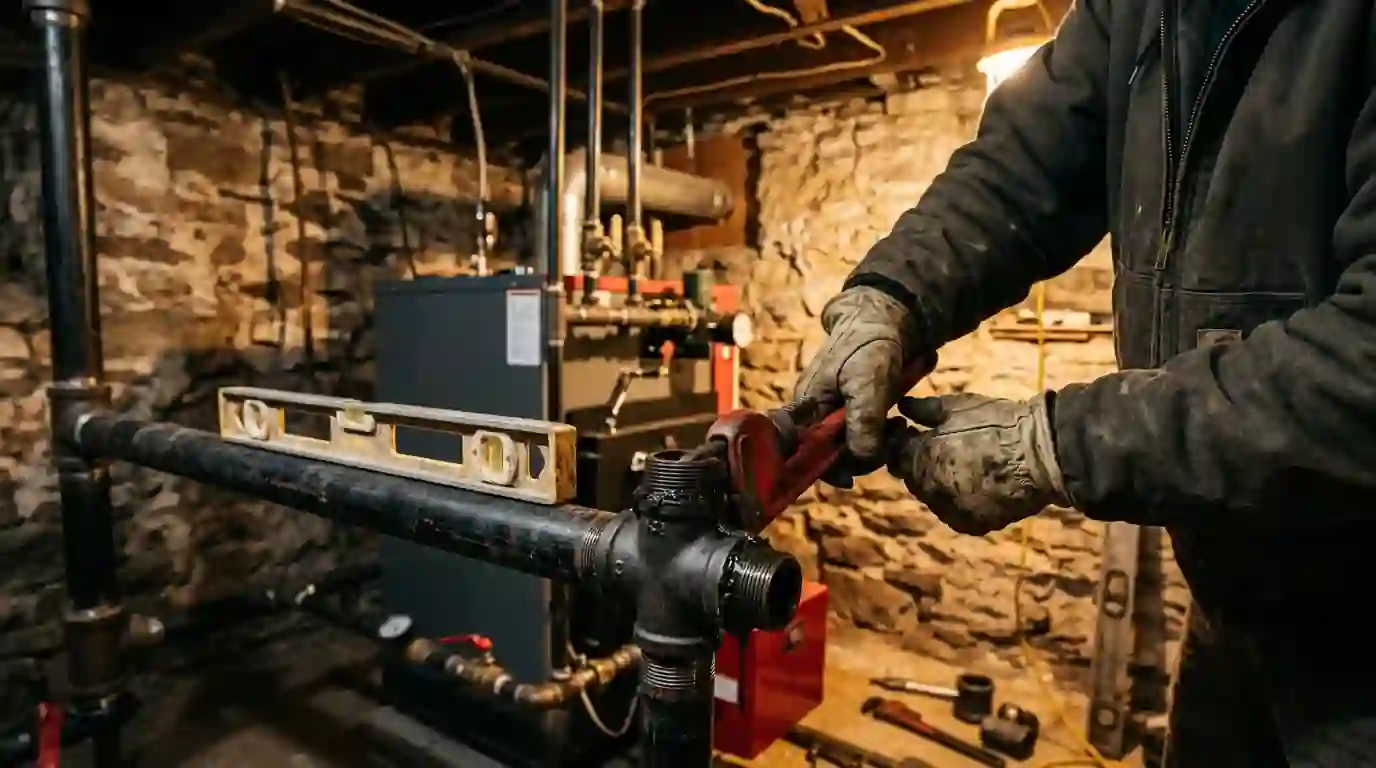
Choosing the right new boiler for steam or hot water
If your home has steam heat, the new boiler has to be a steam boiler. You can't drop a high-efficiency hot-water boiler onto a steam system. Steam boilers are sized by the total radiation in the house, so we measure every radiator rather than guessing from square footage. Oversizing a steam boiler is a common mistake that leads to short cycling, banging and wet steam.
Hot-water systems give you more options. A modern cast iron boiler is simple and durable. A high-efficiency condensing boiler, often wall hung, uses less gas and can modulate its flame to match the weather, but it needs a different vent and a condensate drain. Some homeowners also pair a new boiler with an indirect water heater so the boiler makes domestic hot water too. We'll walk through the tradeoffs.
- Cast iron steam boilers for one-pipe and two-pipe steam
- Cast iron hot-water boilers for simple, long life systems
- Condensing hot-water boilers with outdoor reset
- Combination boilers or indirect tanks for domestic hot water
Why near-boiler piping matters as much as the boiler
On steam systems, the piping in the first few feet above the boiler decides whether you get dry steam or a wet, noisy mess. Manufacturers publish specific header heights, riser sizes and equalizer details for each boiler. When an installer reuses old piping or takes shortcuts, the new boiler can bang and surge from day one. We follow the manufacturer's piping drawing every time.
Hot-water systems need their own care. Condensing boilers often need primary and secondary piping or a hydraulic separator to keep flow right through the heat exchanger. We add new isolation valves, a properly sized expansion tank, air separator, fill valve and backflow device, so the next service visit is simple and the system holds pressure.
Venting, chimneys and gas supply
An old boiler often vents up a masonry chimney that also served a water heater. When the boiler goes, the chimney may be too large for the water heater alone, which can cause condensation and poor draft. We look at that during planning and may recommend a liner, a new vent path or a direct vent water heater.
Condensing boilers vent through plastic pipe out a side wall or the roof, which frees up the chimney but needs a good exit location away from windows and snow drifts. We also confirm the gas line can supply the new boiler's input. Any gas work is pressure tested before the boiler is fired.
What to expect on installation day
Most boiler swaps take one to three days depending on the system. We drain the old boiler, disconnect it and remove it, which in an older basement can mean breaking it into sections to get it up narrow stairs. We set the new boiler, build the near-boiler piping, connect gas and venting, wire controls and fill the system.
Then we fire it, check combustion, set pressures or water levels and walk the house to confirm every radiator is heating. Steam boilers get skimmed to remove oil from new piping. We pull the city permit and schedule the inspection, and we show you how to operate and check your new boiler before we leave.
Signs it is time for boiler replacement
A cracked section or leaking heat exchanger
Water dripping inside the cabinet, wet burners or a steam boiler that loses water every day usually means the cast iron has failed.
Repairs every winter
When you're replacing a control, then a pump, then a valve season after season, that money is better put toward a new boiler.
Parts are hard to find
Some older boilers use controls and burners that are no longer made, which turns a simple repair into a long wait.
Fuel bills keep creeping up
An oversized, decades old boiler with a standing pilot cycles inefficiently and wastes a lot of gas.
Heavy rust, soot or flue corrosion
Rust flakes on the burners, soot at the draft hood or a corroded flue connector point to combustion and venting problems.
It's well past 25 years old
Many cast iron boilers run a long time, but at this age a failure in deep winter is more likely and harder to fix quickly.
Replacing boilers in Saint Paul's older housing
A large share of Saint Paul houses were built before World War II, and many still heat with the boiler and radiators they were built around, or a replacement installed decades ago. In Summit Hill, St. Anthony Park and around Lake Phalen, we often find boilers squeezed into old coal rooms with low ceilings and narrow stairs. Planning removal and placement carefully keeps the job clean and avoids surprises.
Because Minnesota heating seasons are long, the smart time to replace a boiler is before it fails, ideally in late spring through early fall when you can live without heat for a day or two. Emergency winter swaps can be done, but you may need space heaters, and pipes along exterior walls need watching. If your boiler is aging, call us in summer and we'll plan it calmly.
Where we do boiler replacement
Saint Paul and the surrounding east metro. These are the busiest ZIP codes on our board; the full list has 55 neighborhoods, cities and counties.
Questions about boiler replacement
Can I switch my Saint Paul steam boiler to a hot-water boiler?
It's possible, but it's a bigger job than a boiler swap. Steam pipes and radiators aren't always suited to pressurized water, and many one-pipe systems need new supply and return piping. Old radiators also need to be pressure tested. For most homes, a new steam boiler is the simpler choice, but we'll go over a conversion if you want it.
How long does a boiler replacement take?
A straightforward replacement usually takes one to two days. Steam systems with near-boiler piping rebuilt to spec, or condensing boilers that need new venting and a condensate drain, can take two to three days. We'll give you a realistic time frame during the estimate visit and keep heat downtime as short as we can.
Do I need a permit to replace my boiler in Saint Paul?
Yes. Boiler replacement needs a city permit, and the gas and venting work gets inspected. We pull the permit, schedule the inspection and meet the inspector, so you don't have to handle the paperwork yourself.
Is a condensing boiler a good fit for an old house with radiators?
Often, yes. Large cast iron radiators heat well with lower water temperatures, which lets a condensing boiler run in its most efficient range for much of the winter. On the coldest days it will run hotter. The key is good piping, an outdoor reset control and proper venting, all of which we plan for.
Brands we work on in Saint Paul homes
- Kohler
- Moen
- Delta
- American Standard
- Rheem
- A. O. Smith
- Bradford White
- Navien
- Rinnai
- InSinkErator
- Zoeller
- Liberty Pumps
- Watts
- Weil-McLain
Call the Saint Paul office, day or night
A real person picks up at any hour. Tell us what you are seeing, and we will tell you what happens next and roughly what it costs.
(651) 215-2087- Phone
- Answered 24 hours a day, 7 days a week
- Office
- 289 E 7th Street, Saint Paul, MN 55101
- Headquarters
- 50666 229th Ave, Bemidji, MN 56601
- Coverage
- Saint Paul and the east metro, see all areas