Gas line installation in Saint Paul, MN
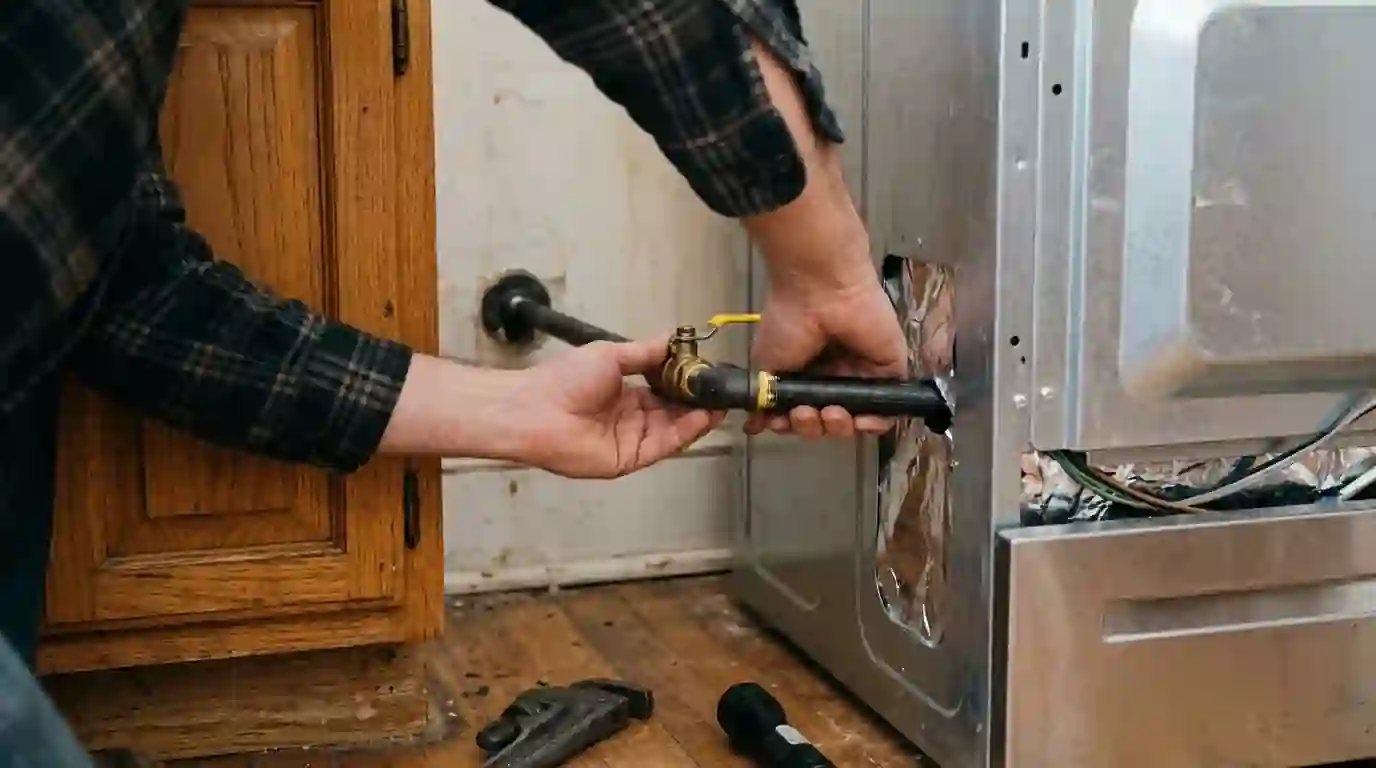
Going from electric to a gas range, adding a gas dryer, or running a line to the patio grill means new pipe from the meter or an existing branch. We size it, route it, pull the permit, and test it before anything lights.
- Phone answered 24/7
- Saint Paul office on E 7th Street
Tell us what you see and hear. We explain the visit and the likely cost on the phone. (651) 215-2087
The short answer
Gas line installation means running new natural gas piping to an appliance such as a range, dryer, grill, fireplace, garage heater or generator. You need it when an appliance location has no gas or the existing line is too small. We size the pipe for the total load, run black iron or flexible stainless line, pressure test it, and get the city inspection. Typical Saint Paul ranges run $487 to $1,385 for one appliance.
Why pipe size matters more than pipe length
Every gas appliance has a rated input in BTUs, and the pipe feeding it has to carry enough gas at the right pressure for everything that might run at once. A furnace, water heater, range and dryer all running on a cold January evening can starve a line that was sized decades ago for a furnace and water heater alone. Undersized pipe leads to weak burner flames, lockouts and poor appliance performance.
Before we run any new line, we add up the load on the whole system and measure the distance from the meter. That tells us whether we can tee off an existing branch or whether a new run back to the meter header is needed. On some older homes, adding a tankless water heater or a generator means upsizing the main line, and we'll work with Xcel Energy if the meter itself needs attention.
What gas line installation costs in Saint Paul
Typical Saint Paul ranges for new gas line installs are below. The price is confirmed after we've seen the meter, the route and the appliance location.
| Job | Typical range |
|---|---|
| Gas range or dryer line, short basement runTee off an existing branch with a new shutoff | $487 to $863 |
| Line to a fireplace insert or upstairs applianceOften flexible stainless through finished walls | $743 to $1,385 |
| Outdoor grill or fire table lineBuried or wall mounted, with quick disconnect | $893 to $1,965 |
| Detached garage heater lineLong buried run sized for the heater | $1,340 to $2,870 |
| Upsized main line for tankless or generatorNew run from the meter header | $1,180 to $3,240 |
What moves the price
- Distance from the meter or nearest suitable branch
- Total gas load and whether the main line needs upsizing
- Finished walls and ceilings along the route
- Outdoor trenching, depth and yard obstacles
- Number of appliances added on the same visit
- Permit and inspection scheduling
Typical Saint Paul ranges. We confirm your price after we see the job and before work starts. See every price on one page.
How gas line installation goes, start to finish
Add up the load
We list every gas appliance in the house, measure the run from the meter, and size pipe for the total demand.
Plan the route
We pick the path with the least wall or ceiling damage, and call in utility locates for any outdoor digging.
Pull the permit
We file the city permit for the new gas piping before work begins.
Run and bond the pipe
We install black iron, flexible stainless or buried line, add shutoffs and sediment traps, and bond any flexible stainless to the grounding system.
Pressure test and inspect
We cap and test the new line under air pressure, then the city inspector signs off before gas flows.
Connect and light
We purge the line, hook up the appliance with a new connector, leak check every joint, and confirm a clean flame.
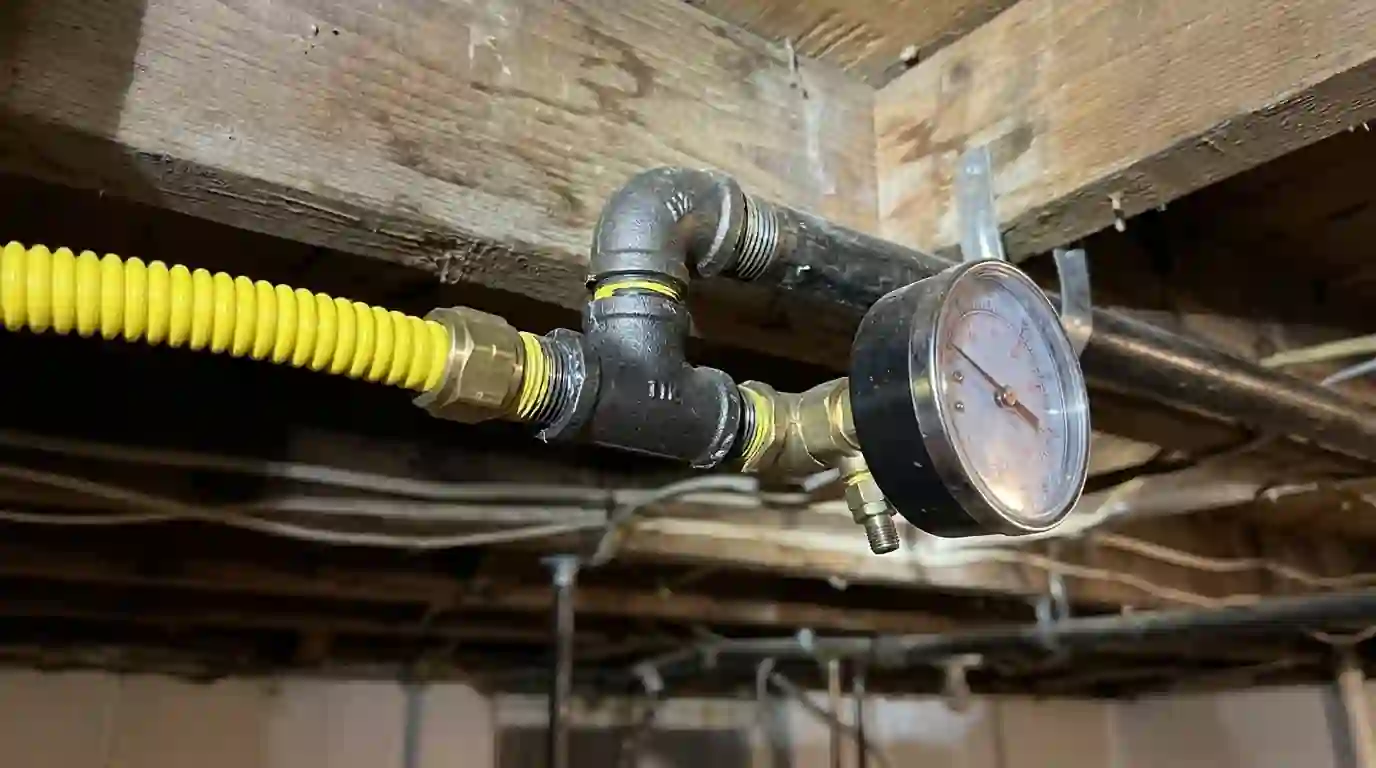
Black iron, flexible stainless, or both?
Black iron pipe is the traditional choice. It's rigid and durable, and it's still the standard for basement headers and long straight runs. Corrugated stainless steel tubing, often called CSST, comes in coils with a yellow jacket and can snake through finished walls and joist bays with fewer joints. That makes it handy when we're running to a kitchen or a second floor fireplace without tearing up ceilings.
CSST must be electrically tied to the home's grounding system to protect against lightning damage, and we bond it as part of the install. For outdoor runs to a grill or fire pit, we use buried polyethylene pipe with a tracer wire or protected rigid pipe along the house. Each appliance gets its own shutoff valve within reach, plus a sediment trap where the appliance calls for one.
- Black iron for headers, basements and long straight runs
- Flexible stainless for finished walls and tight routes
- Buried polyethylene for runs out to a patio or detached garage
- A shutoff valve and sediment trap at every appliance
- Electrical bonding on every flexible stainless run
Running a line to a grill, fire table or garage
Outdoor gas lines need more planning than indoor ones. A buried line has to sit deep enough to avoid damage and away from other buried utilities, so we have Gopher State One Call mark the yard before any digging. Lines that run along the house wall are protected from lawn mowers and snow shovels. At the grill, a quick disconnect lets you move the grill for cleaning without leaving pipe exposed.
Detached garages and workshops in Saint Paul often need a long run across the yard for a unit heater. We size that line for the heater's full load at that distance, which often means a larger pipe than people expect. Frost heave in Minnesota soil can stress shallow pipe, so we take care with depth and transitions where the line rises out of the ground.
Permits, testing and the first light
New gas piping in Saint Paul needs a permit, and we pull it. After the line is installed, we cap the ends and pressure test the system with air for a set period to make sure there's no drop. The city inspector checks the work and the test before the line is put in service. Only then do we purge the air and connect the appliance.
At the appliance, we use a new flexible appliance connector, never the old one from a previous range or dryer. We check each joint with leak detection solution, light the appliance, and look at flame color and burner operation. If the new range or dryer needs a conversion kit or orifice change, the appliance installer usually handles that, and we'll confirm the gas side is ready for it.
Signs it is time for gas line installation
Switching from electric to gas cooking
A new gas range or cooktop needs a dedicated line with a shutoff valve behind the appliance and enough capacity for every burner.
Adding a gas dryer
Gas dryers dry faster and cost less to run in many homes, but the laundry spot needs its own gas stub and shutoff.
A grill or fire pit on the patio
A permanent line to the grill or fire table means no more propane tanks, and it has to be buried or run on the house safely.
A fireplace insert or garage heater
Gas inserts and unit heaters need correctly sized pipe and often a longer run from the meter or basement header.
A bigger furnace, boiler or tankless heater
High demand appliances like tankless water heaters often need a larger main gas line than an older home has.
A standby generator
Whole house generators draw a lot of gas and usually need a dedicated line from near the meter.
Running gas lines in Saint Paul houses and yards
Xcel Energy supplies natural gas across Saint Paul, and most older homes have their meter on the side or back of the house with a black iron header running along the basement ceiling. In Highland Park, Macalester-Groveland and St. Anthony Park, those headers were often sized for a coal conversion furnace and a water heater. Adding a gas range, dryer and fireplace on top of that frequently means checking the sizing before we tee in.
Finished basements and plaster walls change the route. In older homes we look for chases, closets and laundry chutes to carry new pipe upward. Out in the yard, Minnesota frost heaves soil every winter, so buried lines to a grill or garage need careful depth and solid transitions. In newer suburbs like Woodbury or Shoreview, the meter is often closer to the garage, which shortens outdoor runs.
Where we do gas line installation
Saint Paul and the surrounding east metro. These are the busiest ZIP codes on our board; the full list has 55 neighborhoods, cities and counties.
Questions about gas line installation
Do I need a permit to add a gas line in Saint Paul?
Yes. New gas piping in Saint Paul needs a permit and an inspection before the line is put in service. We pull the permit, pressure test the line, and schedule the inspection. Having the work documented also matters when you sell the house, since unpermitted gas work can come up during a buyer's inspection.
Can I convert my electric dryer or range to gas?
Yes, if there's gas service to the house and a reasonable route to the appliance. We run a new line with a shutoff valve behind the appliance. You'll also need a gas model of the dryer or range. For dryers, the laundry area needs a proper exhaust vent. We'll check capacity on your existing system before we start.
How deep does a buried gas line to my grill need to be?
Depth requirements depend on the pipe material and the local code. We follow the city and utility rules for depth and protection, have the yard marked by Gopher State One Call first, and add a tracer wire so the line can be located later. We'll explain the route and depth on your specific job before we dig.
Is flexible stainless gas line safe in my house?
Yes, when it's installed and grounded correctly. Flexible stainless needs a bonding wire to the home's electrical grounding system to protect it from lightning surges, and it should be protected where it passes through framing. We follow the installation rules for the product and bond every run. Black iron remains the choice for many basement runs.
Will my gas meter handle a new tankless water heater or generator?
Sometimes not. Tankless water heaters and standby generators draw a lot of gas. We add up the total load and compare it to what your meter and main line can supply. If the meter needs an upgrade, Xcel Energy handles that side. We'll coordinate the timing so the new piping is ready when the meter is swapped.
Brands we work on in Saint Paul homes
- Kohler
- Moen
- Delta
- American Standard
- Rheem
- A. O. Smith
- Bradford White
- Navien
- Rinnai
- InSinkErator
- Zoeller
- Liberty Pumps
- Watts
- Weil-McLain
Call the Saint Paul office, day or night
A real person picks up at any hour. Tell us what you are seeing, and we will tell you what happens next and roughly what it costs.
(651) 215-2087- Phone
- Answered 24 hours a day, 7 days a week
- Office
- 289 E 7th Street, Saint Paul, MN 55101
- Headquarters
- 50666 229th Ave, Bemidji, MN 56601
- Coverage
- Saint Paul and the east metro, see all areas