Leak detection in Saint Paul, MN
A water bill that jumped, a stain that keeps spreading, or a meter that won't sit still all point to a leak you can't see. We find it before we open anything up.
- Phone answered 24/7
- Saint Paul office on E 7th Street
Tell us what you see and hear. We explain the visit and the likely cost on the phone. (651) 215-2087
The short answer
Leak detection locates hidden water leaks inside walls, ceilings, floors, slabs or the buried service line without tearing things apart to guess. You need it when your bill rises, the meter moves with everything off, or a stain or musty smell appears. We isolate the system, test pressure, and use thermal and acoustic tools to mark the spot. Typical Saint Paul visits run $243 to $587.
When leak detection cannot wait
A water bill that jumped for no reason
If usage climbed and nothing changed at home, something is running, often a toilet flapper or a hidden supply leak.
The meter moves with every tap closed
Turn off all fixtures and watch the small leak indicator on the meter. If it spins, water is going somewhere.
Warm spot on a basement or bathroom floor
A patch of floor that feels warm can mean a hot water line is leaking under tile or concrete.
Stains, bubbling paint or loose tile
Moisture working through plaster or grout shows up as brown rings, blistered paint or tiles that sound hollow.
Musty smell in a closed room
A damp, earthy odor in a closet or behind a vanity often means slow water has been feeding mold for a while.
Sound of running water at night
A faint hiss in a quiet house, with nothing turned on, is one of the clearest clues of a pressurized leak.
How can you tell if you have a hidden leak?
Start with the meter, which in most Saint Paul homes sits in the basement where the service line comes in. Turn off every faucet, the dishwasher, the washer and the ice maker. Then look at the dial. Most meters have a small triangle or star that spins with even a tiny flow. If it moves, you have a leak on the house side of the meter.
Next, rule out toilets, since they're the most common silent leak. Put a few drops of food coloring in each tank, wait fifteen minutes without flushing, and check the bowl. Color in the bowl means a leaking flapper, which is a simple fix. If toilets pass and the meter still moves, the leak is in the piping, and that's where our tools come in.
How we handle leak detection once we arrive
Confirm the leak
We read the meter with every fixture off and run a toilet dye test to make sure water is truly escaping.
Isolate the system
We shut valves to separate hot from cold and branch from branch, then watch which section loses pressure.
Scan the suspect area
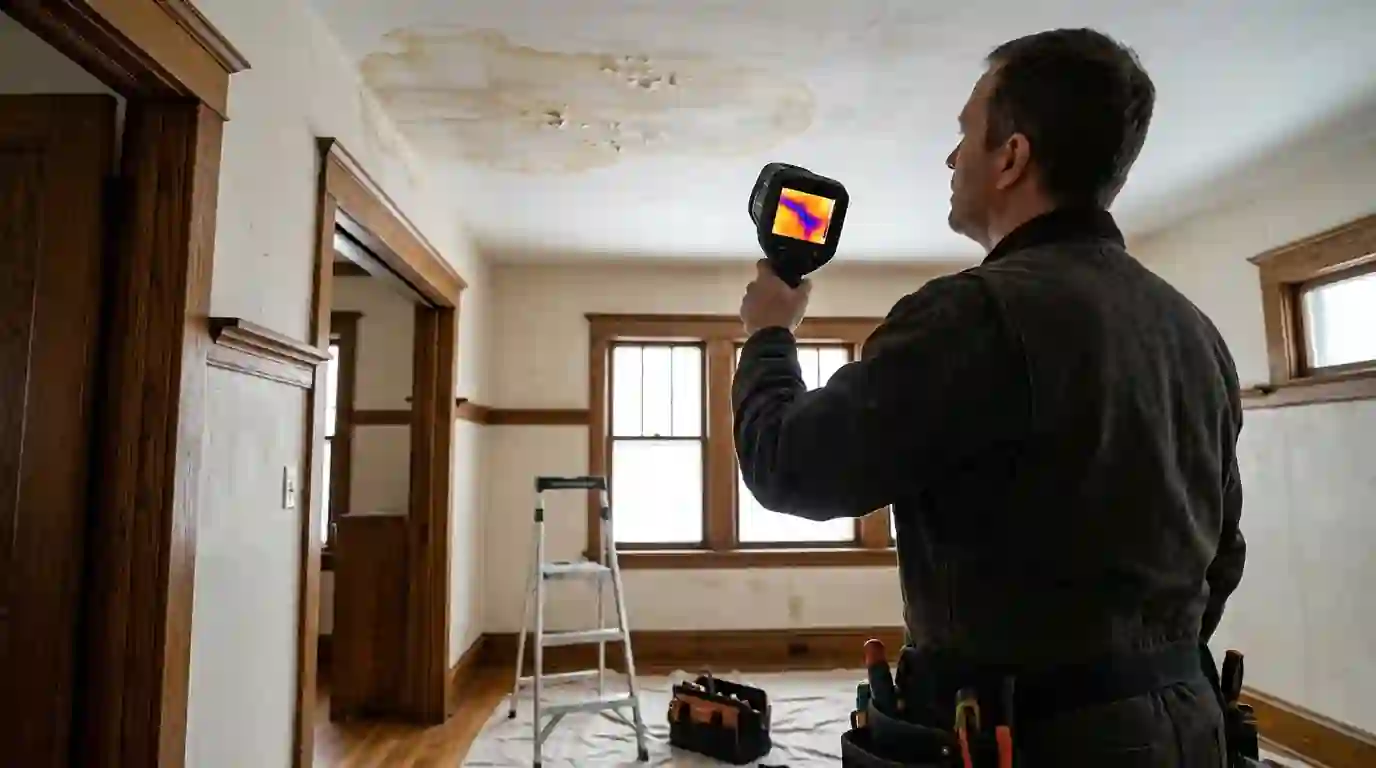
We use thermal imaging, moisture readings and acoustic listening to narrow the leak to a small zone.
Mark the spot
We mark the location on the wall, floor or yard and show you the readings that point to it.
Explain the repair
We tell you what likely failed, how we'd reach it, and the price before anything is opened.
Repair and verify
If you want, we make the repair and recheck the meter to confirm the leak is gone.
What leak detection costs in Saint Paul
These are typical Saint Paul ranges for leak detection. Repair is priced separately once we know what failed, and we confirm every price after we see the job.
| Job | Typical range |
|---|---|
| Leak check with meter, pressure and dye testsConfirms a leak and which part of the system it's in | $167 to $287 |
| Full electronic leak location inside the homeThermal, acoustic and moisture tools to pinpoint the spot | $243 to $587 |
| Slab or buried service line leak locationAcoustic and pressure work over concrete or yard | $389 to $763 |
| Small accessible repair after locatingFitting, compression nut or short pipe section | $187 to $443 |
What moves the price
- How many branches and fixtures have to be isolated and tested
- Whether the leak is in an open basement, a finished wall, under a slab or in the yard
- Pressurized supply leaks versus drain leaks that need camera work
- Pipe material and age, since old galvanized often leaks in more than one place
- Whether you want the repair done on the same visit
Typical Saint Paul ranges. We confirm your price after we see the job and before work starts. See every price on one page.
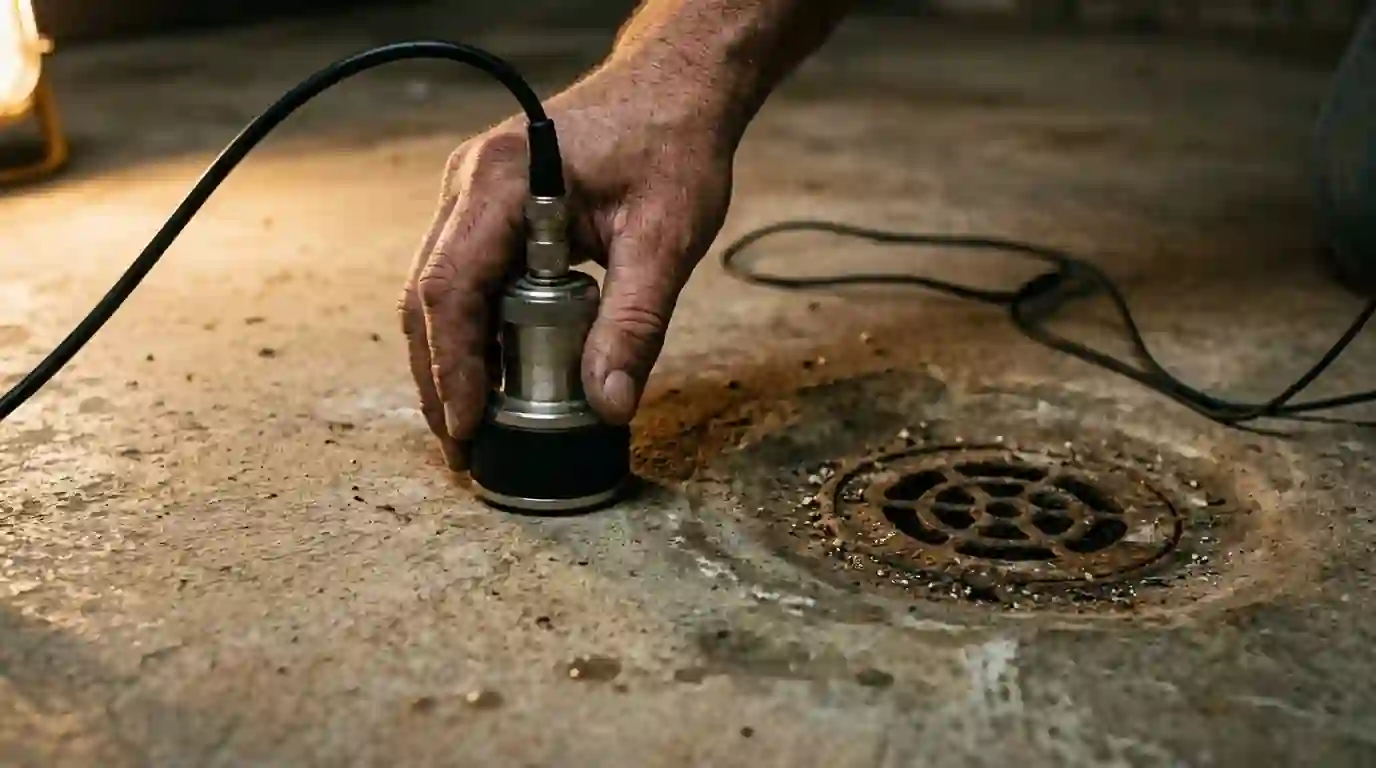
The tools we use to find a leak without guessing
Opening walls at random costs you twice: once for the plumbing and again for the plaster. We narrow it down first. A pressure test on isolated sections tells us whether the leak is on the hot side, the cold side, or a particular branch. That alone can cut the search area from the whole house to one wall.
Then we use a thermal camera to spot the temperature change a leaking hot line or evaporating water leaves on a wall or floor. An acoustic listening device picks up the hiss of pressurized water through concrete and plaster. Moisture meters confirm wet framing and drywall. Together they let us mark a spot within a foot or two before anything gets cut.
For drain leaks, which aren't under pressure, we use a camera inside the pipe and dye testing to find where water escapes during use.
- Meter and pressure tests to isolate the leaking branch
- Thermal imaging for hot line leaks and wet areas
- Acoustic listening through floors, slabs and walls
- Moisture meters to map wet framing and drywall
- Drain camera and dye tests for waste line leaks
Leaks in walls, ceilings, slabs and the service line
Each location calls for a different approach. A leak in a second floor bathroom usually shows up as a stain on the ceiling below, but the water may have traveled along a joist before dripping, so the stain isn't always under the leak. We trace back from the stain to the actual fixture, supply line or drain connection.
Under a basement slab, a leaking line can run for months and only show up as a damp floor or a rising bill. Acoustic tools work well here. Outside, a leak on the water service between the curb stop and the house can soften the yard or show up as water seeping through the foundation wall. That buried line is often old, so finding the leak also tells us about its overall condition.
What happens after we find the leak
Once the spot is marked, we explain what failed and what the repair involves, with a price, before any cutting. Many leaks are small fixes: a corroded fitting, a loose compression nut behind a toilet, a pinhole in an old copper line. We can often repair those the same visit.
Bigger findings, such as a failing galvanized branch, a cracked cast iron drain, or a leaking service line, get a plain explanation of your options. You'll leave knowing exactly where the water is going, how urgent it is, and what each choice costs. If you need documentation for an insurance claim, we'll give you photos and notes from the visit.
Why hidden leaks are common in older Saint Paul homes
Many Saint Paul houses carry a mix of plumbing from several eras: original galvanized steel, copper added during a 1960s kitchen update, and PEX from a recent bathroom. Every place two materials meet is a spot where corrosion or a poor transition can start a slow leak. In Summit-University, Frogtown and Hamline-Midway, we often find leaks right at those old transitions inside walls.
Water quality plays a part too. Hard water in east metro suburbs like Woodbury and Cottage Grove builds scale in valves and fixtures, and worn valve seats start to weep. And because so many homes here have finished basements, a slow leak can soak carpet and drywall for weeks before anyone notices. A meter check every few months is a simple habit that catches most of these early.
Where we do leak detection
Saint Paul and the surrounding east metro. These are the busiest ZIP codes on our board; the full list has 55 neighborhoods, cities and counties.
Questions about leak detection
How accurate is electronic leak detection in a Saint Paul home?
With pressure isolation, thermal imaging and acoustic listening together, we can usually mark a pressurized leak within a foot or two. Plaster walls, deep slabs or very slow drips can widen that a bit. We show you the readings so you can see why we picked the spot before we open anything.
Can a hidden water leak raise my Saint Paul water bill without any visible damage?
Yes. A running toilet or a leak under a slab can waste a lot of water without leaving a stain anywhere you'd look. If your bill climbs and nothing at home has changed, check the meter with everything off. Movement means a leak, even if every wall and ceiling looks dry.
Will leak detection damage my walls or floors?
The detection itself is non-invasive. We use meters, cameras and listening tools from the surface. Once the leak is located, reaching it may take a small, neat opening in drywall or a patch of concrete. Because we've pinpointed it first, that opening is far smaller than guessing would require.
Do you find leaks in the water line between the street and my house?
Yes. Signs include a soggy patch in the yard, water seeping through the foundation where the line enters, or a meter that moves when the house side tests dry. We use acoustic tools and pressure tests on the service line, then explain repair options if the line is old or failing.
Brands we work on in Saint Paul homes
- Kohler
- Moen
- Delta
- American Standard
- Rheem
- A. O. Smith
- Bradford White
- Navien
- Rinnai
- InSinkErator
- Zoeller
- Liberty Pumps
- Watts
- Weil-McLain
Call the Saint Paul office, day or night
A real person picks up at any hour. Tell us what you are seeing, and we will tell you what happens next and roughly what it costs.
(651) 215-2087- Phone
- Answered 24 hours a day, 7 days a week
- Office
- 289 E 7th Street, Saint Paul, MN 55101
- Headquarters
- 50666 229th Ave, Bemidji, MN 56601
- Coverage
- Saint Paul and the east metro, see all areas