Cast iron drain stack replacement in Saint Paul, MN
A rusty streak down the basement stack, a sewer smell in the bathroom or a stain on the ceiling below can mean the old cast iron drain is cracking. We replace failing stacks before they leak into your walls.
- Phone answered 24/7
- Saint Paul office on E 7th Street
Tell us what you see and hear. We explain the visit and the likely cost on the phone. (651) 215-2087
The short answer
Cast iron drain stack replacement removes the vertical drain pipe that carries waste from upper floor bathrooms down to the main sewer and replaces it with PVC, ABS or new no hub cast iron. You need it when the stack is cracked, rusted through or leaking at joints. We support the stack, remove sections safely, and reconnect every branch. Typical Saint Paul replacements run $2,870 to $8,460.
Why old cast iron drains crack and rust
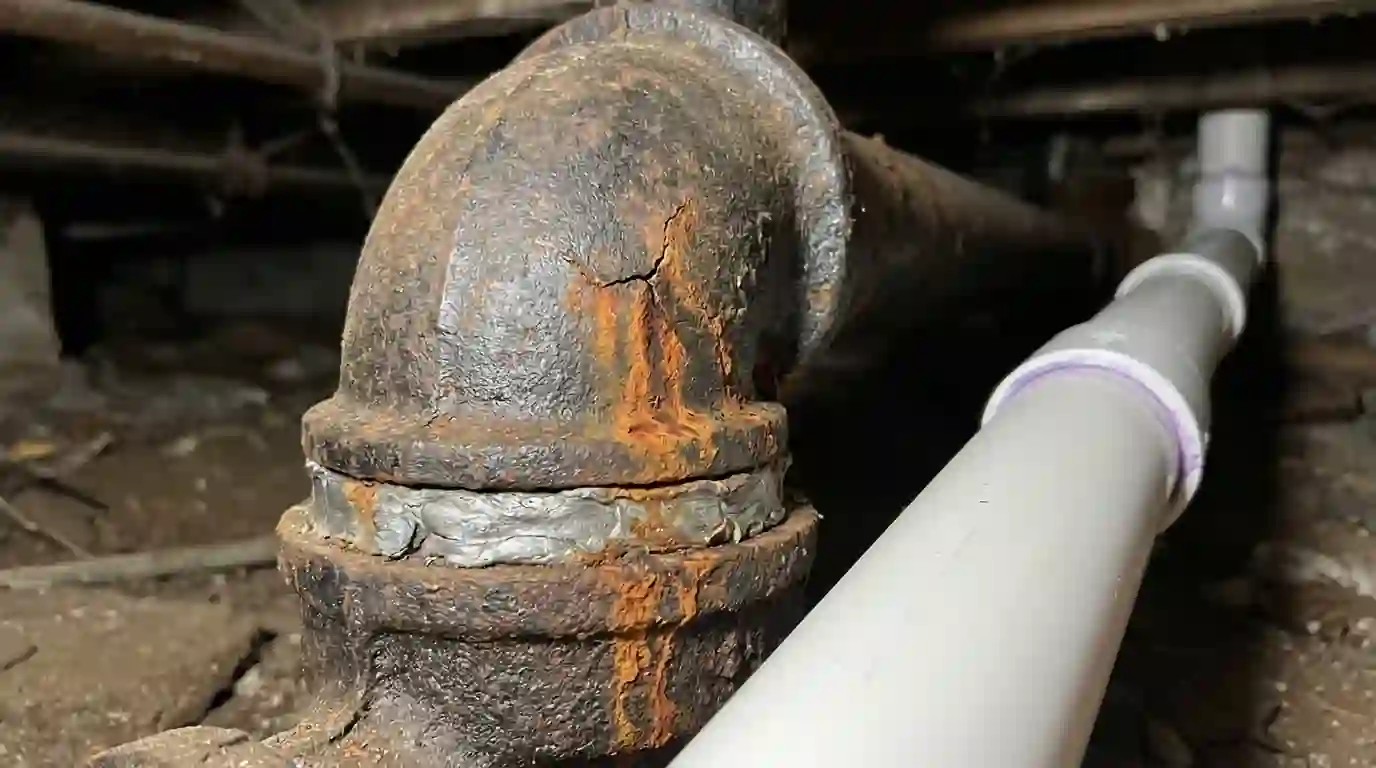
Cast iron was the standard drain pipe for decades and lasts a long time, but not forever. Sewer gases and moisture inside the pipe slowly corrode it, while condensation and humidity attack it from outside. Over time the walls thin, scale builds up inside, and cracks open up, often along the top of horizontal runs where the pipe is thinnest from the original casting.
Joints are a weak spot too. Older stacks were joined with hubs packed with oakum and sealed with poured lead. Building settling, freeze cycles and vibration can loosen them. In older houses, we also see stacks that have been patched with rubber couplings or epoxy over the years. Patches can buy time, but when rust is widespread, replacement is the real fix.
What cast iron drain stack replacement costs in Saint Paul
These are typical Saint Paul ranges for cast iron stack work. The exact price depends on height, access and materials, and we confirm it after inspecting.
| Job | Typical range |
|---|---|
| Section repair with no hub couplingsOne cracked section, good access | $687 to $1,840 |
| Basement to first floor stack replacementPVC, one bathroom tied in | $2,870 to $4,960 |
| Full stack, basement to roofTwo story home, multiple branches | $4,740 to $8,460 |
| Camera inspection of stack and drainsCredited when we do the work | $187 to $345 |
What moves the price
- Height of the stack and number of floors
- Number of branch drains and vents to reconnect
- PVC or ABS versus no hub cast iron
- Plaster versus drywall and how easy the stack is to reach
- Wall patching and finishing included
- Condition of the building drain where the stack ties in
Typical Saint Paul ranges. We confirm your price after we see the job and before work starts. See every price on one page.
How cast iron drain stack replacement goes, start to finish
Inspect and camera the stack
We look at the outside condition and run a camera inside to see cracks, scale and joints.
Plan access and materials
We decide which walls to open and choose PVC, ABS or cast iron with you.
Support the stack
We install riser clamps on each floor so the old pipe can't drop when cut.
Remove the old pipe in sections
We cut the stack into manageable lengths and carry it out, protecting your home.
Install and reconnect
We run the new stack, tie in every branch and vent, and connect to the building drain.
Test, inspect and close up
We water test the new system, meet the inspector and patch the openings.
Can a cracked stack be repaired instead?
Sometimes. If the stack is mostly sound with one cracked section, we can cut out the bad piece and splice in new pipe with heavy duty no hub couplings. That's a smaller, cheaper job. A camera inspection helps us judge the inside of the pipe, since the outside can look worse or better than it really is.
When rust is spread along the whole stack, when scale has narrowed the pipe significantly, or when several joints are leaking, a spot repair just shifts the next failure a few feet away. In those cases we recommend replacing the stack from the basement to the roof, or at least the section through the living space, so you aren't opening walls again in two years.
How we replace a stack safely
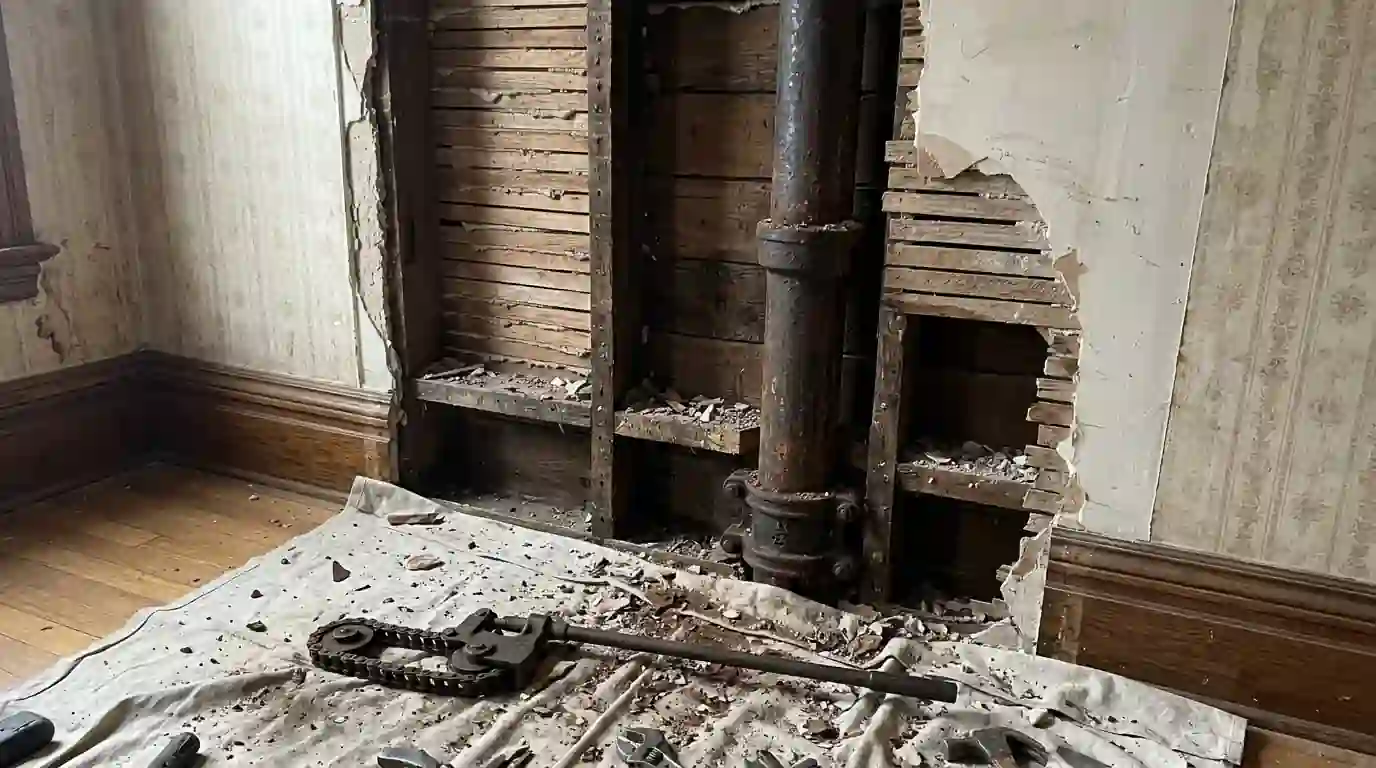
A full cast iron stack is extremely heavy. Cutting it without support can send sections crashing down inside the wall or tearing loose from fittings upstairs. Before any cutting, we install riser clamps on each floor to hold the pipe in place. Then we cut and remove the pipe in short, manageable sections using a snap cutter.
New pipe goes in from the bottom up. We tie into the existing building drain in the basement with a proper transition fitting, then run new PVC, ABS or no hub cast iron up through the house. Each branch drain from tubs, toilets and sinks is reconnected, and vents are tied in so drains flow correctly and traps don't siphon.
- Camera inspection to confirm condition
- Riser clamps installed on every floor
- Old stack cut and removed in sections
- New stack installed with proper transitions
- Branch drains and vents reconnected
- Water test before walls are closed
PVC or new cast iron: what goes back in
Most stack replacements in homes use PVC or ABS plastic. It's light, doesn't rust and installs quickly. The main drawback is noise. Water rushing through plastic is louder than through cast iron, which you may notice if the stack runs next to a bedroom or dining room. Wrapping the pipe with insulation helps a lot.
New no hub cast iron is quieter and very durable, but costs more in materials and labor. Some homeowners choose cast iron for the vertical stack in living areas and PVC in the basement where noise doesn't matter. We'll talk through your house layout and which rooms the stack passes, and help you choose the material that suits it.
Opening walls in an older home
Stacks usually run inside a wall, often behind a bathroom, in a closet, or in a chase beside the chimney. To replace one, we need access along its length, which means opening some plaster or drywall. We plan cuts carefully and use the least visible wall when possible, like the back of a closet instead of a hallway.
We protect floors and furniture, contain dust, and remove all debris. After replacement and testing, we patch the openings with drywall ready for paint, or leave them neat if you've hired a plasterer. If you're remodeling a bathroom, replacing the stack during the remodel saves money and avoids opening walls twice.
Signs it is time for cast iron drain stack replacement
Rust streaks or flaking on the stack
Orange stains or scaly rust running down the pipe in the basement mean corrosion is working through the wall of the pipe.
A vertical crack or split seam
Cast iron often cracks lengthwise along the top of horizontal runs or down a vertical stack. Even a hairline crack can leak sewer gas.
Sewer smell in a bathroom or basement
A persistent odor with no clogged drain can mean gas escaping through a crack or a failed joint in the stack.
Water stains on the ceiling below a bathroom
Stains or damp plaster under a tub or toilet may be the stack or its branch leaking inside the wall or floor.
Leaking oakum and lead joints
Old hub joints sealed with oakum and lead can loosen, dripping or weeping during heavy drain use.
Repeated slow drains on several fixtures
Heavy internal scale in old cast iron narrows the pipe and causes slow drains or clogs on multiple fixtures.
Cast iron stacks in Saint Paul houses
Older Saint Paul homes almost all have cast iron drain stacks, many of them original. Victorian homes in Dayton's Bluff and along Summit Avenue, foursquares in Merriam Park and bungalows in Hamline-Midway commonly have one or two stacks running from the basement through plaster walls to the roof. After many decades, cracks along horizontal runs and rusted hubs in the basement are among the most common things we find.
Saint Paul's seasons add stress. Humid basements in summer speed up outside rust, and in houses where the stack exits through a cold attic, frost can build inside the vent in deep winter. Homeowners often notice trouble during a bathroom remodel when walls are already open. If you're planning a remodel in Highland Park or anywhere else in the city, give us a ring to look at the stack first.
Where we do cast iron drain stack replacement
Saint Paul and the surrounding east metro. These are the busiest ZIP codes on our board; the full list has 55 neighborhoods, cities and counties.
Questions about cast iron drain stack replacement
How long does cast iron stack replacement take in a Saint Paul home?
A section repair can be finished in a few hours. Replacing a stack from the basement to the first floor usually takes a day. A full stack from basement to roof in a two story home typically takes two to three days, including opening walls, installation, testing and patching. We'll lay out the schedule before starting.
Can I use my bathroom during a drain stack replacement?
Not while the stack is disconnected. Fixtures that drain into the stack can't be used during that stretch, usually a day or two for a full replacement. We plan the work so you have the least time without a bathroom, and if you have a basement toilet on a separate line, it may stay usable.
Is PVC louder than cast iron for a drain stack?
Yes, water flowing through PVC is noticeably louder, especially for toilets flushing upstairs. If the stack runs near a bedroom or dining room, we can wrap the pipe with sound insulation or use cast iron for that section. Many homeowners find insulated PVC quiet enough, but it's worth discussing.
What does a sewer smell from my cast iron stack mean?
A sewer smell without a clogged drain often points to a crack, a loose hub joint or a failed vent connection letting sewer gas escape. It can also come from a dry trap on an unused drain. We check traps first, then inspect the stack. Avoid ignoring the smell, as gas leaks tend to grow.
Jobs that often go with cast iron drain stack replacement
Brands we work on in Saint Paul homes
- Kohler
- Moen
- Delta
- American Standard
- Rheem
- A. O. Smith
- Bradford White
- Navien
- Rinnai
- InSinkErator
- Zoeller
- Liberty Pumps
- Watts
- Weil-McLain
Call the Saint Paul office, day or night
A real person picks up at any hour. Tell us what you are seeing, and we will tell you what happens next and roughly what it costs.
(651) 215-2087- Phone
- Answered 24 hours a day, 7 days a week
- Office
- 289 E 7th Street, Saint Paul, MN 55101
- Headquarters
- 50666 229th Ave, Bemidji, MN 56601
- Coverage
- Saint Paul and the east metro, see all areas