Trenchless sewer replacement in Saint Paul, MN
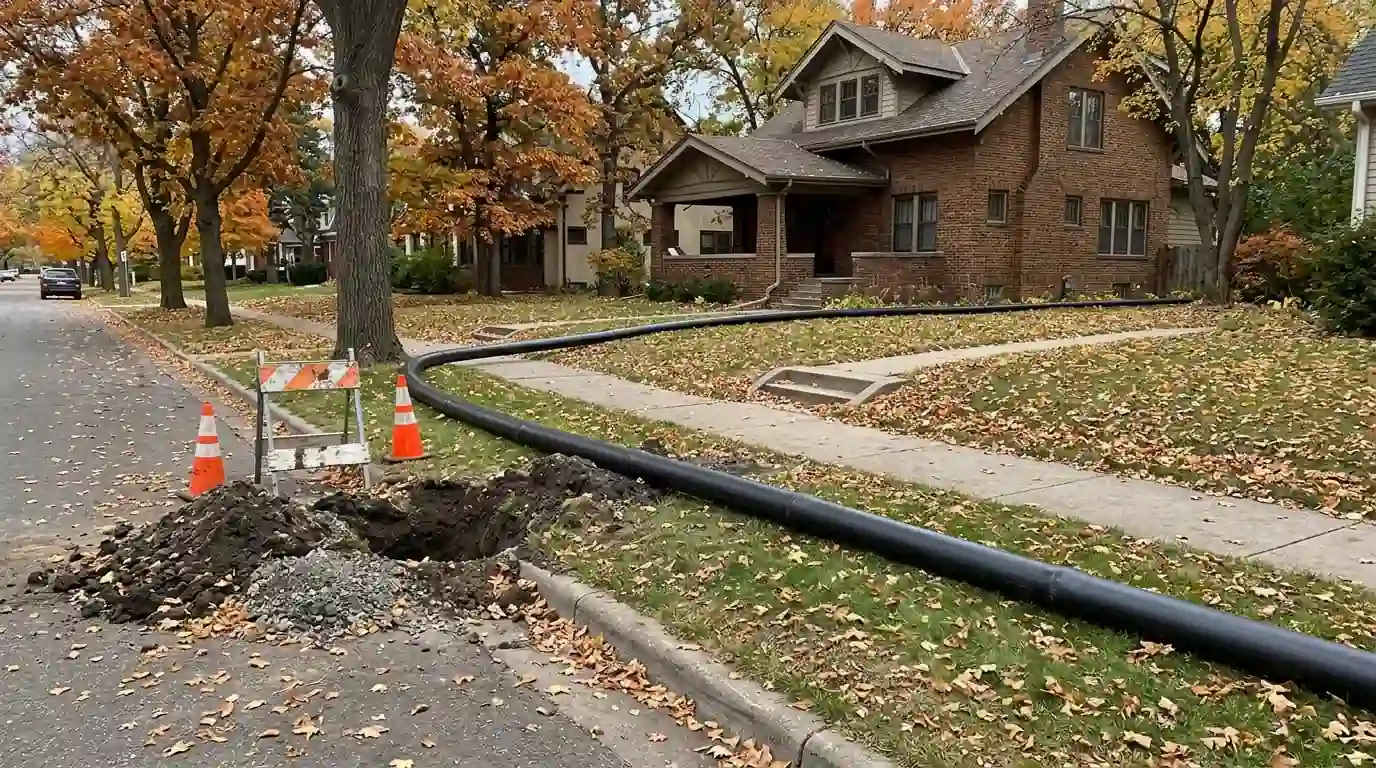
When the camera shows cracks, roots and sags along most of your sewer lateral, patching stops making sense. Trenchless replacement puts in a whole new line without trenching the yard, driveway or boulevard.
- Phone answered 24/7
- Saint Paul office on E 7th Street
Tell us what you see and hear. We explain the visit and the likely cost on the phone. (651) 215-2087
The short answer
Trenchless sewer replacement swaps out an entire failing lateral without digging a trench. Pipe bursting pulls new HDPE pipe through the old one, breaking it outward. Full lining cures a new resin pipe inside the old one. You need it when damage runs the whole length. Most jobs take one to two days. Typical Saint Paul range: $8,740 to $18,960.
How pipe bursting replaces a sewer line with two small pits
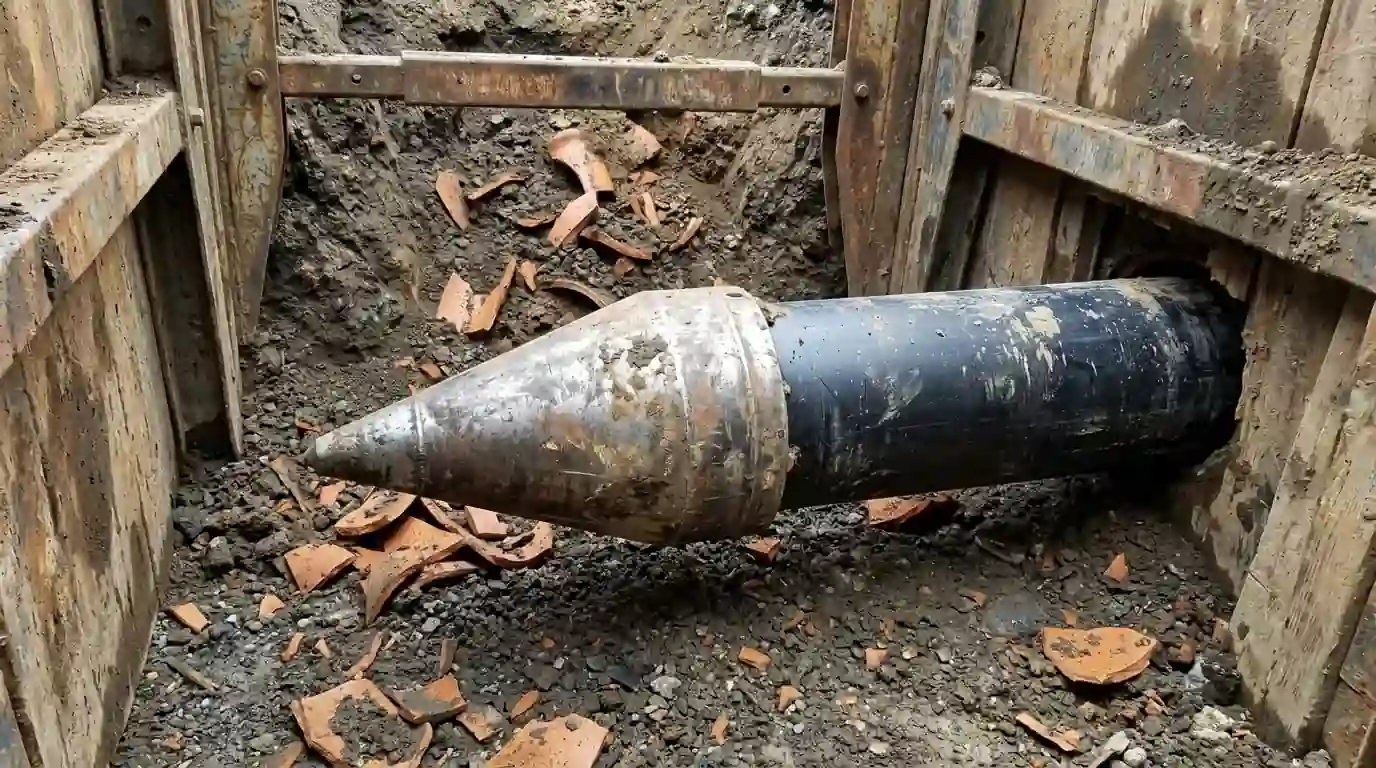
Pipe bursting needs one pit near the house and one near the city connection, usually at the boulevard or property line. We thread a steel cable through the old pipe from one pit to the other. On the house end, we attach a cone-shaped bursting head, and behind it a continuous length of new high-density polyethylene pipe, fused into one piece with no joints.
A hydraulic puller draws the head through the old line. The head cracks the clay, cast iron or Orangeburg outward into the surrounding soil, and the new pipe follows right behind it in the same path. The new line can be the same size as the old one or a size larger, which helps older 4 inch laterals carry modern flows.
Because the new pipe is fused into one piece, there are no joints for roots to find. Once it's through, we connect each end with proper fittings, camera the full run, and backfill only the two pits.
What trenchless sewer replacement costs in Saint Paul
Typical Saint Paul ranges for replacing a full residential sewer lateral without a trench. We confirm your price after the camera, locate and site check.
| Job | Typical range |
|---|---|
| Pipe bursting, typical 40 to 70 foot lateralTwo pits, new fused HDPE pipe | $8,740 to $14,860 |
| Full-length cured-in-place liningOften no outside pit needed | $9,270 to $16,430 |
| Hybrid: bursting plus open repair at a bellyFixes the grade at the low spot | $11,640 to $18,960 |
| New cleanout added at the house during the jobEasier access for future service | $487 to $1,130 |
What moves the price
- Length and depth of the lateral
- Pipe material and condition, including collapsed sections
- Whether the line is upsized from 4 inch to 6 inch
- Pit location under concrete, pavers or the boulevard
- Work at the city main connection and the permit and inspection
- Frozen ground in winter for any pit digging
Typical Saint Paul ranges. We confirm your price after we see the job and before work starts. See every price on one page.
How trenchless sewer replacement goes, start to finish
Camera and locate the whole lateral
We record the line from the house to the city main, mark its route and depth, and check for crossing utilities.
Choose bursting, lining or a hybrid
Based on the footage, we explain which method fits your pipe and show you where any pits would go.
Pull the permit and prep the site
We pull the city plumbing permit, have utilities located, and dig the entry and exit pits or prepare the cleanout.
Install the new line
We burst new fused HDPE pipe through the old path, or clean the line and cure a full-length liner inside it.
Reconnect and camera the result
Both ends are tied in with proper fittings, and a final camera run confirms smooth flow from the house to the main.
Inspect, backfill and restore
After the city inspection, we backfill the pits in layers, tamp them, and put back sod or surface material.
When full-length lining makes more sense than bursting
Cured-in-place lining builds a new pipe inside the old one. We clean the lateral thoroughly with a jetter and descaling heads, then pull or invert a long felt tube soaked in resin from the cleanout to the city main. The tube is inflated against the old pipe wall and cured with hot water, steam or light until it hardens into a smooth, jointless pipe.
Lining often needs no outside pit at all, which is why it suits lines running under a finished basement, a garage slab or a large tree. It does reduce the inside diameter slightly, and it needs the old pipe to still hold its shape. A line that's collapsed, deeply sagged or badly offset can't be lined well, because the liner follows those flaws.
Bursting handles collapsed and misshapen pipe better, and it can upsize. Lining causes the least disturbance on the surface. After the camera run, we tell you which one your line can take and why.
Is trenchless replacement right for every sewer line?
No, and we'll say so when it isn't. Trenchless methods depend on the existing path of the pipe. A line with a deep belly will get a new pipe with the same belly, because the new pipe follows the old route. In that case an open dig at the low spot, combined with trenchless work on the rest, is often the right plan.
A few other conditions push us toward a conventional dig or a hybrid approach. We check for each of them on camera and with a locate before we give you a price.
- A belly deep enough to hold several inches of standing water
- Pipe collapsed so badly the cable can't pass through
- Several sharp bends or fittings along the run
- Gas, water or electric lines crossing very close to the sewer
- A connection at the city main that also needs rebuilding
What a trenchless sewer job looks like from start to finish
Most residential trenchless replacements take one to two days. On day one we dig the pits, or set up at the cleanout for lining, and pull the city permit beforehand. The bursting or lining happens that day or the next. Your house can't drain while the old line is open, so we'll tell you when to stop using water and when it's safe again.
When the new line is in, we camera it end to end so you can see the result: smooth pipe, clean transitions, no joints. The city inspects the work where required, then we backfill and restore the pits. Compared with a trench across the lawn, you're left with two patches of soil to reseed instead of a long scar from the house to the street.
Signs it is time for trenchless sewer replacement
Damage at joint after joint
A camera run that shows cracks, offsets or roots every few feet means the pipe as a whole is worn out, not just one spot.
Repeat spot repairs on the same line
If you've paid for a second or third patch in a few years, the remaining old pipe is likely failing the same way.
Cast iron with rotted-out bottoms
When the camera shows soil where the bottom of a cast iron pipe used to be, the line is collapsing from the inside.
Orangeburg pipe under the yard
Tar-paper sewer pipe from the 1950s and 1960s deforms with age, and it can't be repaired in sections with much success.
Backups that jetting no longer fixes
When a freshly cleaned line clogs again within weeks, there's too much damage for cleaning to keep up.
A driveway, patio or mature tree over the line
If an open trench would mean tearing out concrete or cutting major roots, trenchless avoids most of that restoration cost.
Why trenchless often fits Saint Paul lots and boulevards
Many older Saint Paul blocks have mature boulevard trees, tight side yards, alley garages and front steps sitting right over the path of the sewer. A full trench from the foundation to the street can mean cutting big roots, removing a sidewalk section, and rebuilding steps. In neighborhoods like Summit Hill, Macalester-Groveland and St. Anthony Park, that restoration can cost almost as much as the pipe itself.
Trenchless work keeps the disturbance to two small pits, or none with lining. It also suits the clay and cast iron laterals common under prewar homes, which tend to fail along their whole length once they reach a certain age. On hilly lots in Highwood and along the bluffs, a jointless new line also resists the slow ground movement that pulls old joints apart.
Where we do trenchless sewer replacement
Saint Paul and the surrounding east metro. These are the busiest ZIP codes on our board; the full list has 55 neighborhoods, cities and counties.
Questions about trenchless sewer replacement
How long does a trenchless sewer replacement last compared with a dug-in pipe?
Fused HDPE pipe from bursting and a properly cured liner are both built to last many decades. Neither has joints, so roots have nowhere to get in, which is the main reason old clay laterals fail. A well-installed trenchless line should outlast the house's original sewer pipe by a wide margin.
What's the difference between pipe bursting and sewer pipe lining?
Bursting pulls a new pipe through the old one and breaks the old pipe apart into the soil. It needs two small pits and can install a larger pipe. Lining cures a new resin pipe inside the old one, often with no digging, but the old pipe must still hold its shape. The camera tells us which suits your line.
Can you do trenchless sewer replacement under a driveway or big tree?
Yes, and that's where trenchless saves the most. The new pipe follows the old path underground, so a driveway, patio or large tree above it stays in place. We only need access at each end, and lining can often be done entirely from the basement cleanout.
Will I have to leave my house during a trenchless sewer replacement?
Usually not. You'll be without drains for part of a day or two while the old line is open, so you'll need to hold off on flushing, showering and laundry during those hours. We tell you when to stop and when it's safe to start again. Most people stay home and plan around it.
Does a trenchless sewer job need a Saint Paul permit?
Yes. Replacing a sewer lateral needs a plumbing permit, and the work is inspected before backfill. We pull the permit, schedule the inspection, and handle the paperwork as part of the job, so you don't have to deal with the city yourself.
Jobs that often go with trenchless sewer replacement
Brands we work on in Saint Paul homes
- Kohler
- Moen
- Delta
- American Standard
- Rheem
- A. O. Smith
- Bradford White
- Navien
- Rinnai
- InSinkErator
- Zoeller
- Liberty Pumps
- Watts
- Weil-McLain
Call the Saint Paul office, day or night
A real person picks up at any hour. Tell us what you are seeing, and we will tell you what happens next and roughly what it costs.
(651) 215-2087- Phone
- Answered 24 hours a day, 7 days a week
- Office
- 289 E 7th Street, Saint Paul, MN 55101
- Headquarters
- 50666 229th Ave, Bemidji, MN 56601
- Coverage
- Saint Paul and the east metro, see all areas