Water filtration systems in Saint Paul, MN
If your tap water tastes like chlorine, smells off, or you just want cleaner drinking water, a filter matched to your supply fixes it without guesswork or a stack of bottles.
- Phone answered 24/7
- Saint Paul office on E 7th Street
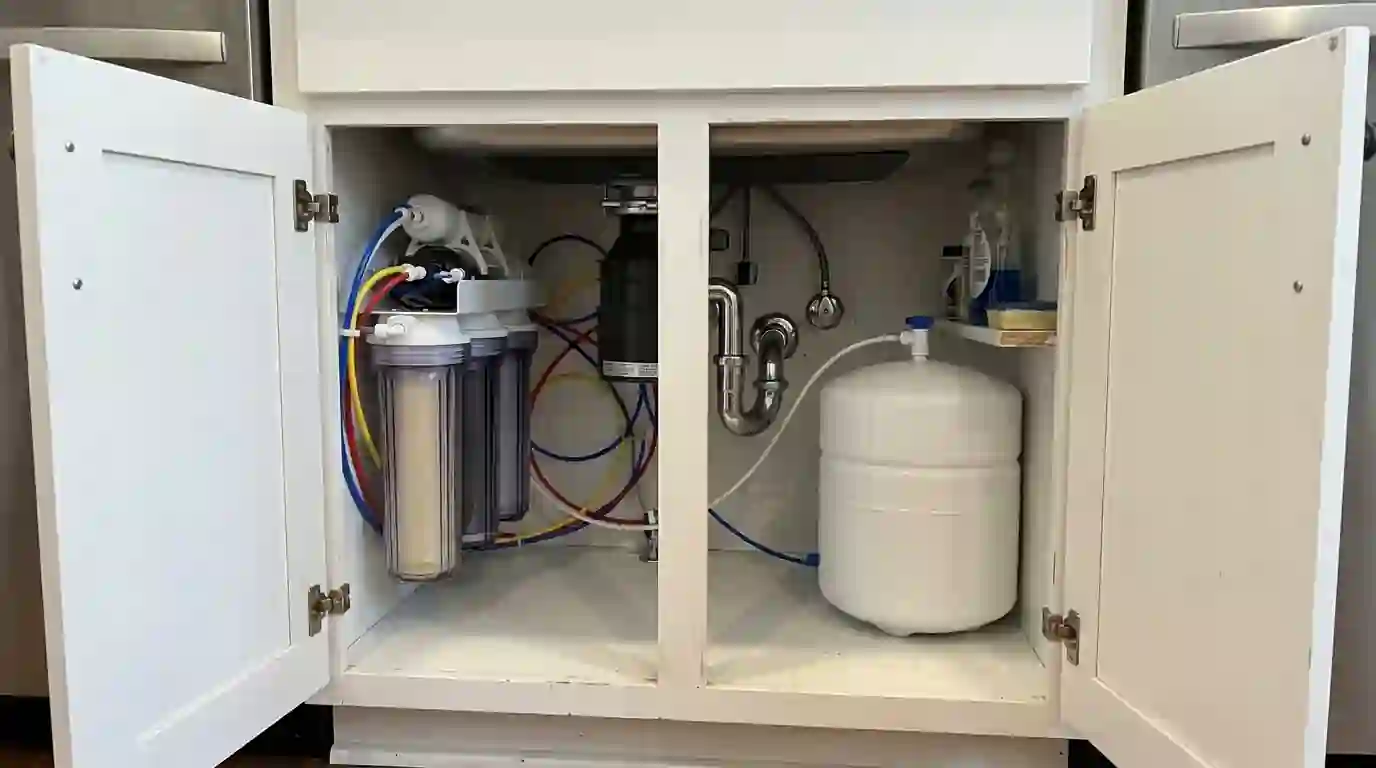
Tell us what you see and hear. We explain the visit and the likely cost on the phone. (651) 215-2087
The short answer
Water filtration removes taste, odor, chlorine, sediment and other contaminants from your water. Under-sink reverse osmosis gives very clean drinking water at one tap, and whole-house carbon filters treat every faucet. We look at your water source, recommend a system, install it with proper shutoffs and a drain, and show you filter changes. Typical Saint Paul installs run $437 to $2,190.
Under-sink reverse osmosis or whole-house carbon?
These two systems solve different problems. Reverse osmosis forces water through a very fine membrane and removes a wide range of dissolved contaminants. It's slow, so it feeds one faucet, usually a small dedicated tap at the kitchen sink, plus the fridge if you want. It also sends some water to the drain as it works.
A whole-house carbon system sits on the main line and treats every faucet, shower and appliance. It's great for chlorine taste and odor and for sediment, but it doesn't remove as much as an RO membrane. Many homes do well with both: carbon for the house and RO for drinking water.
- Under-sink RO: very clean drinking water at one tap, filters every 6 to 12 months, membrane every few years
- Whole-house carbon: better taste and smell everywhere, protects fixtures from sediment
- Sediment prefilter: catches grit before it reaches finer filters
- Faucet or pitcher filters: fine as a stopgap, but small and slow
What water filtration systems costs in Saint Paul
Typical Saint Paul ranges for filtration systems. We confirm the price after a look at your water, piping and cabinet space.
| Job | Typical range |
|---|---|
| Under-sink reverse osmosis installedIncludes dedicated faucet and drain | $437 to $963 |
| RO line to the refrigeratorAdded to an RO install | $147 to $293 |
| Whole-house carbon and sediment systemHousings, valves and bypass | $987 to $2,190 |
| Filter change servicePlus cartridges or membrane | $97 to $213 |
What moves the price
- System type and number of stages
- Cabinet space and drain layout under the sink
- Main line pipe size and material
- Bypass and shutoff valves needed
- Water source and testing required
Typical Saint Paul ranges. We confirm your price after we see the job and before work starts. See every price on one page.
How water filtration systems goes, start to finish
Talk through the problem
We ask what you're noticing, check your water source, and look at the piping where a system would go.
Test the water
Basic on-site tests come first, with a lab test recommended for wells or specific concerns like lead.
Recommend a system
We match RO, carbon, sediment or a combination to the results, and explain what each one will and won't do.
Install with shutoffs
Whole-house housings get valves and a bypass; RO units get a cold feed, drain saddle and dedicated faucet.
Flush and check
We flush new cartridges, check for leaks and confirm good pressure at the fixtures.
Show you the changes
You see how to swap cartridges, what to buy, and how often each stage needs it.
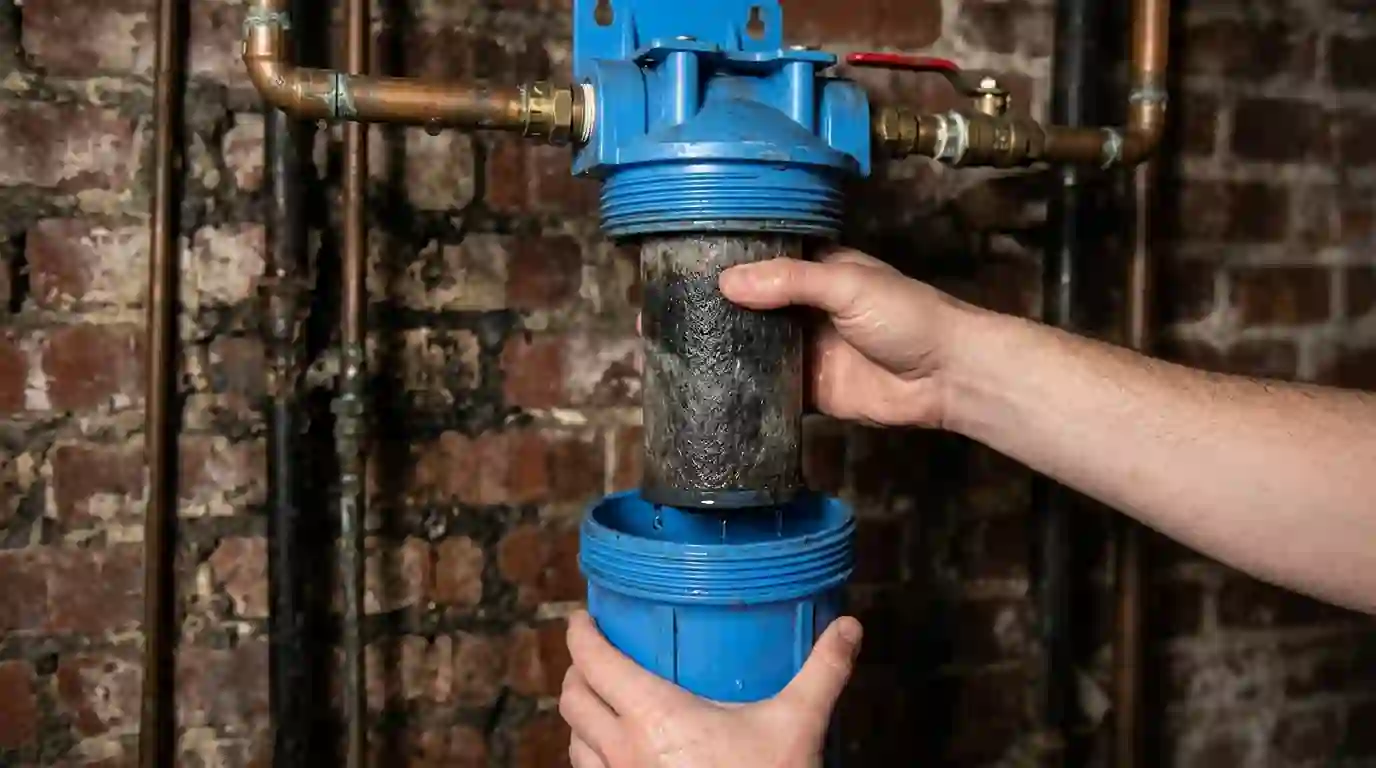
Testing comes before buying any filter
A filter should be chosen for what's actually in your water. On SPRWS water in Saint Paul, the main concerns are usually taste and chlorine, plus lead from older service lines or solder in some homes. On private wells, it might be iron, sulfur, hardness or bacteria. Those all need different equipment.
We'll do basic tests on site and point you to a state-accredited lab when a fuller analysis makes sense, especially for wells. That way you're not paying for a filter that targets the wrong thing. If your water is fine as it comes, we'll tell you that too.
Where a filter goes and why it matters
A whole-house filter goes on the main line after the meter, ahead of the water heater and softener if you have one. We add shutoffs on both sides and a bypass so filter changes don't mean shutting off the house. Housings should be reachable, with space below to drop the cartridge.
An under-sink RO unit mounts in the cabinet with a small storage tank or a tankless design. It needs a cold water connection, a drain saddle on the sink drain and a hole in the sink or counter for its faucet. We check cabinet space and drain layout before we pick a model, so it fits without crowding the disposal.
Fridge water lines and ice makers can tie into either system. A short run from an RO unit gives the cleanest ice, while a whole-house filter already covers the fridge without any extra tubing. If the refrigerator has its own cartridge, we'll tell you whether it still earns its keep once the house is filtered.
Changing filters on time keeps the water clean
A filter that's past its life can do more harm than good. Clogged sediment cartridges drop pressure throughout the house. Old carbon stops removing chlorine and can grow bacteria. RO membranes lose performance gradually, so taste is a poor guide. Writing the change date on the housing is the simplest way to stay on track.
We set up systems with easy cartridge changes and show you how to do them yourself. If you'd rather we handle it, give us a ring when they're due. We'll also sanitize RO units on a membrane swap so the new parts start clean.
Signs it is time for water filtration systems
Chlorine taste or smell
Treated city water carries disinfectant, which is normal and safe, but many people dislike the taste. Carbon removes most of it.
Sediment in aerators or the toilet tank
Grit or sand in fixtures, especially after water main work, points to a sediment filter on the main line.
You buy a lot of bottled water
If cases of water fill your pantry, an under-sink system pays for itself and frees up the space.
Older home with old piping
In houses with galvanized pipe or a lead service line, a filter rated for lead reduction at the kitchen tap is a sensible step while the pipe is replaced.
Private well water
Wells can carry sediment, iron, sulfur odor or other contaminants. Testing first tells us what to filter.
Ice and coffee taste off
Ice makers and coffee machines pick up taste issues quickly. A filter at the supply line often helps.
Filtering water in older Saint Paul homes and east metro wells
Saint Paul Regional Water Services treats its water and has been replacing lead service lines across its service area. Even so, a home in Summit-University or Dayton's Bluff with old galvanized pipe or lead solder can pick up metals between the street and the tap. A filter rated for lead reduction at the kitchen sink is a sensible addition while the plumbing is updated.
Further out, homes on private wells around Stillwater or the rural parts of Washington and Anoka counties face different issues. Sediment, iron staining and sulfur smell are common complaints. Those homes often need a sediment prefilter, an iron filter or a softener ahead of any carbon or RO stage. We set it up so each piece does its own job.
Where we do water filtration systems
Saint Paul and the surrounding east metro. These are the busiest ZIP codes on our board; the full list has 55 neighborhoods, cities and counties.
Questions about water filtration systems
Is Saint Paul tap water safe to drink without a filter?
Saint Paul Regional Water Services treats its water to meet federal drinking water standards. Many people still filter for taste or chlorine smell, and homes with lead service lines or old solder may want a filter rated for lead at the kitchen tap. We can help you figure out if your home's piping is part of the question.
Does an under-sink reverse osmosis system waste water?
RO systems send some water to the drain as they clean the rest, which is how the membrane stays clear. Newer units waste less than older ones. For a household using a few gallons of drinking water a day, it's a modest amount. We can recommend models that are more efficient if that's a concern.
Will a whole-house carbon filter lower my water pressure?
A properly sized system on a clean cartridge has little effect on pressure. Pressure drops when cartridges clog or the housing is too small for the house's flow. We size housings to your main line and fixture count, and we show you how to spot when a cartridge is due.
Do I need a water softener and a filter, or just one in my east metro home?
They do different jobs. A softener removes hardness minerals; a filter removes taste, odor, chlorine, sediment or specific contaminants. Many east metro homes with hard water use both, with the softener first and an RO unit for drinking water. Saint Paul homes on city water often need only the filter.
Brands we work on in Saint Paul homes
- Kohler
- Moen
- Delta
- American Standard
- Rheem
- A. O. Smith
- Bradford White
- Navien
- Rinnai
- InSinkErator
- Zoeller
- Liberty Pumps
- Watts
- Weil-McLain
Call the Saint Paul office, day or night
A real person picks up at any hour. Tell us what you are seeing, and we will tell you what happens next and roughly what it costs.
(651) 215-2087- Phone
- Answered 24 hours a day, 7 days a week
- Office
- 289 E 7th Street, Saint Paul, MN 55101
- Headquarters
- 50666 229th Ave, Bemidji, MN 56601
- Coverage
- Saint Paul and the east metro, see all areas