Backwater valve installation in Saint Paul, MN
If sewage has ever come up through your basement floor drain during a heavy storm, a backwater valve on your main line closes against that backflow and keeps it out of the house.
- Phone answered 24/7
- Saint Paul office on E 7th Street
Tell us what you see and hear. We explain the visit and the likely cost on the phone. (651) 215-2087
The short answer
A backwater valve is a one-way gate installed on your main sewer line that lets wastewater leave the house but closes if sewer water tries to flow back in. It's worth installing if your basement has flooded with sewage during storms or if your floor drains sit low. We camera the line, cut the valve into the main, and add an access box. Typical Saint Paul range: $1,340 to $3,270.
How a backwater valve keeps sewage out of your basement
Inside the valve body is a hinged flap, sometimes with a float. In normal use, water from your house pushes the flap open and flows out to the street. If the city sewer fills up and water starts flowing back toward your house, the flap swings shut and seals against the backflow. When the sewer drains down, the flap opens again on its own.
That simple action can prevent a basement full of sewage. The valve does not stop water that comes from inside the house, though. While it's closed, anything you drain has nowhere to go and can back up at the lowest fixture. During a big storm, it's wise to hold off on laundry, long showers and the dishwasher until the sewer has had time to drain down.
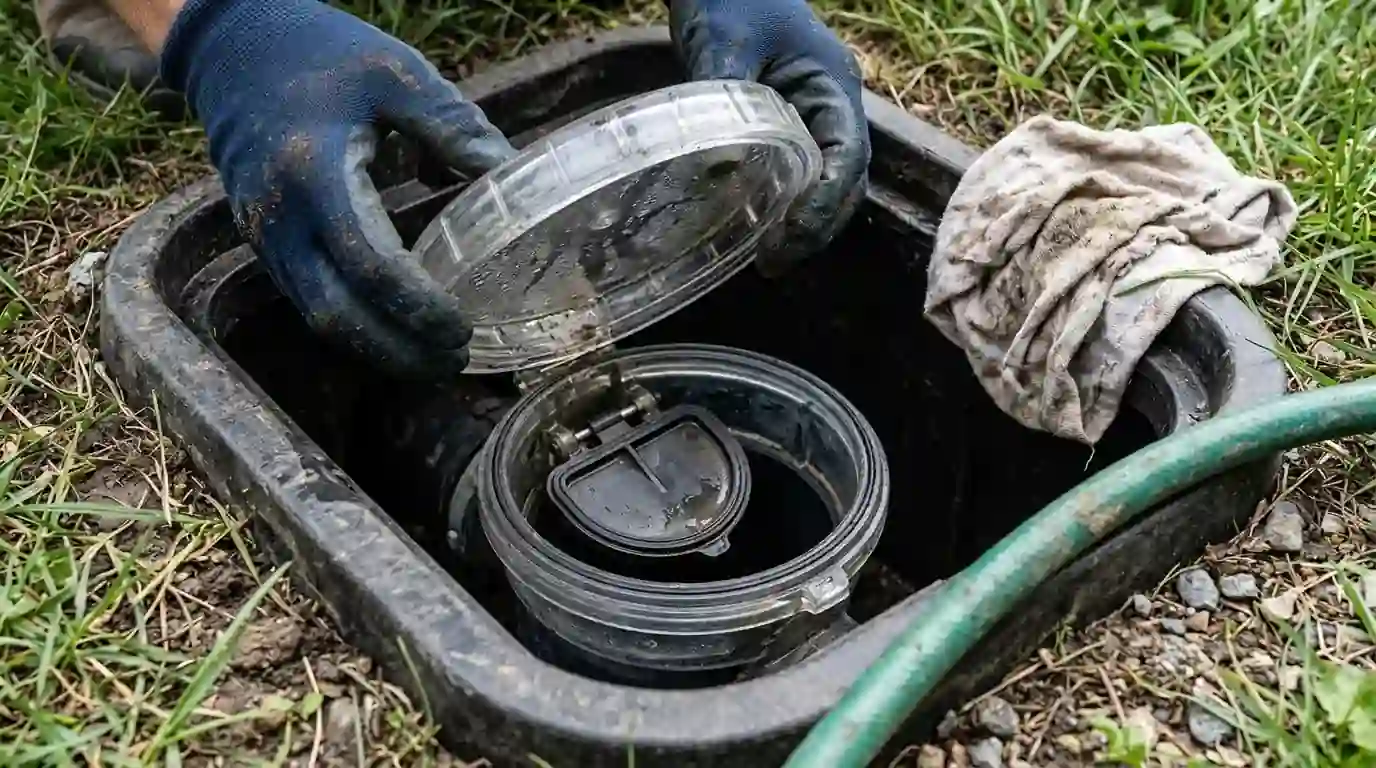
Most residential valves are made of PVC or ABS with a clear or removable top so you can see and clean the flap. Watts, among others, makes common residential models.
When to book backwater valve installation
Sewage came up during a storm
If dirty water rose through the floor drain during heavy rain while nothing in the house was running much, the sewer surcharged and pushed back.
A finished basement with low drains
Finished space with a floor drain, shower or toilet below street level has the most to lose when backflow happens.
Neighbors have had sewer backups
If others on your block have had sewage in the basement after storms, your house shares the same sewer and the same exposure.
A basement bathroom below grade
Basement toilets and showers are low outlets where backflow shows up first, and they're worth protecting.
Gurgling from drains during heavy rain
Drains that bubble or gurgle during storms suggest pressure in the sewer that could become backflow in a bigger event.
You're already opening the main
A sewer repair, replacement or basement remodel is a good time to add a valve while the pipe is exposed.
What a backwater valve installation visit includes
Camera the main line
We confirm the pipe is in good shape, find where the branches join, and check the slope where the valve will sit.
Plan the valve location
We pick a spot that protects the low basement drains without trapping water from upstairs fixtures during a closure.
Pull the permit and open the floor
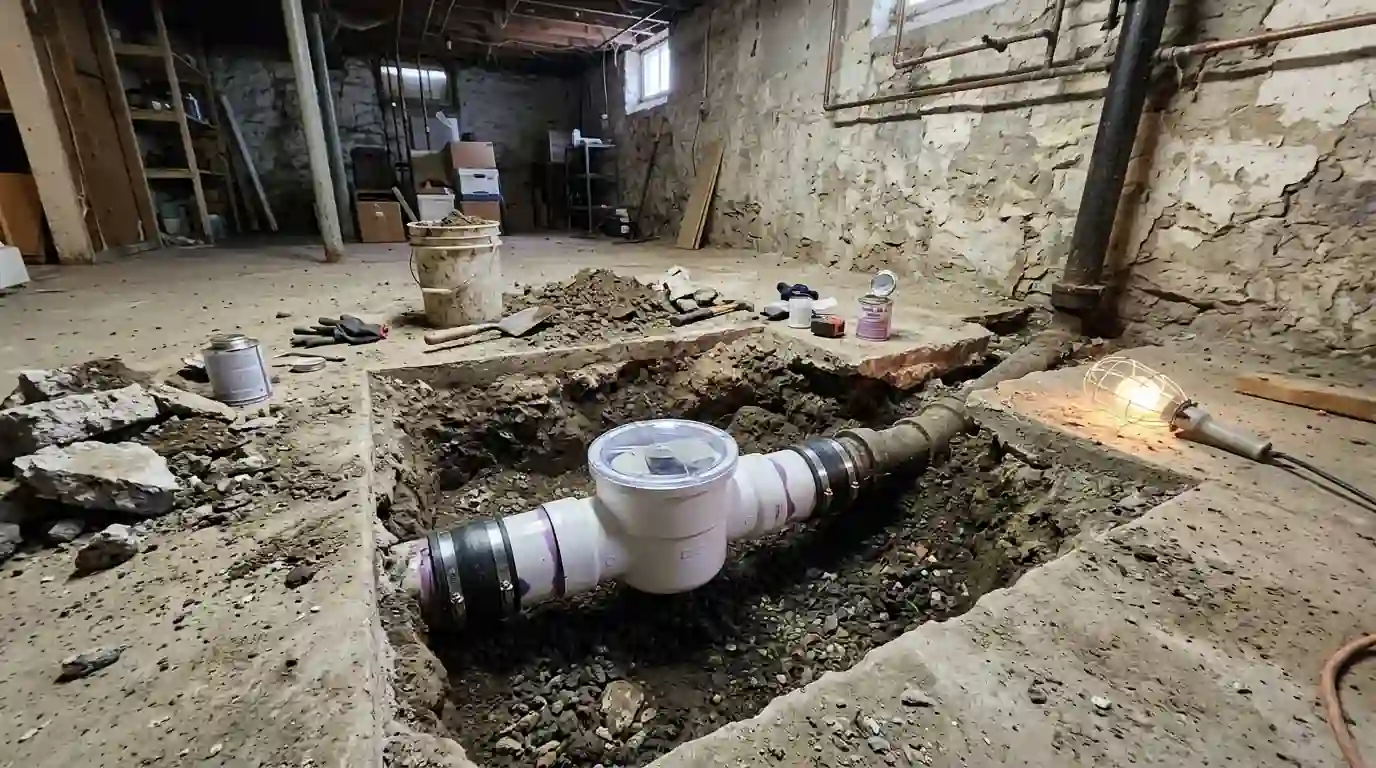
We pull the city plumbing permit, saw cut the slab and dig to expose the main building drain.
Cut in the valve
We remove a section of pipe and set the valve level and in the right direction of flow with proper couplings.
Test, inspect and add access
We run water through the line, test the flap, schedule the inspection, and set an access box over the valve top.
Patch and walk you through it
We backfill, patch the concrete, and show you how to open the cover and check the flap.
Where the valve goes on your main line, and why it matters
A backwater valve has to protect the drains that are below the level where sewer water could rise. Usually that means installing it on the main building drain, after the lowest fixtures connect, inside the basement floor. We break the concrete over the pipe, cut out a section, set the valve level and in the right direction of flow, and add an access box so the top stays reachable.
Placement takes some care. If upstairs fixtures drain through the valve, a storm closure can back them up into the basement. On some homes we arrange it so only the low basement drains run through the valve, while upper floors bypass it. We decide that after the camera shows how your branches join the main.
Is a backwater valve right for your house?
Not every home needs one, and a valve that isn't maintained can cause its own problems. They make the most sense where the risk is real and the stakes are high. A few questions help decide.
If the answers lean yes, we'll check the main line with a camera first. A valve needs a sound pipe and a reasonable slope to work. If the main has broken sections or heavy roots, it makes more sense to fix that at the same time.
- Has sewage ever come up through a floor drain, toilet or shower in the basement?
- Is the basement finished, or do you store things you can't afford to lose?
- Are there plumbing fixtures below the level of the street?
- Have neighbors had storm backups?
- Is your main sewer line due for repair or replacement anyway?
Looking after a backwater valve once it's in
A backwater valve is a moving part in a sewer line, so it needs a look now and then. Paper, grease or a small object can lodge in the flap and hold it open, which defeats the purpose. Or debris can keep it from opening fully, slowing your drains. We suggest opening the access cover once or twice a year, especially before spring thaw.
Checking it is simple. Remove the clear cover or cap, look at the flap, and make sure it swings easily and seats cleanly. If it's dirty, rinse it with a hose. We show you how when we install it. If you'd rather not handle it, we can check it during any other visit.
What backwater valve installation costs in Saint Paul
Typical Saint Paul ranges for installing a residential backwater valve. We confirm the price after the camera shows the main line and where it runs.
| Job | Typical range |
|---|---|
| Backwater valve in an accessible main under the slabIncludes concrete cut and patch | $1,340 to $2,470 |
| Valve installed with a branch reroutedKeeps upstairs fixtures off the valve | $2,180 to $3,270 |
| Valve added during a sewer repair or replacementPipe is already exposed | $687 to $1,190 |
| Valve cleaning and flap checkRecommended once or twice a year | $137 to $243 |
What moves the price
- Depth of the main line under the basement floor
- Whether branches need rerouting around the valve
- Pipe material and condition at the cut
- Finished floors or walls that need to be opened
- Permit and inspection requirements
Typical Saint Paul ranges. We confirm your price after we see the job and before work starts. See every price on one page.
Why storm backflow matters in older Saint Paul homes
Spring snowmelt and heavy summer storms load the sewer system and raise groundwater, and low basements in older homes are where that pressure shows up. Many prewar homes in neighborhoods like Hamline-Midway, Merriam Park and the West Side have floor drains well below street level. When the sewer runs full, those drains are the first outlets backflow can reach.
More owners now finish basements with bedrooms, family rooms and bathrooms, which raises what a single backup can cost. In parts of Maplewood, Roseville and South St. Paul, we also see older basement bathrooms tied directly to the main. A backwater valve, placed correctly and checked a couple times a year, is one of the simpler ways to protect that finished space.
Where we do backwater valve installation
Saint Paul and the surrounding east metro. These are the busiest ZIP codes on our board; the full list has 55 neighborhoods, cities and counties.
Questions about backwater valve installation
Will a backwater valve stop my basement from flooding with groundwater?
No. A backwater valve only stops sewer water from flowing back up your main line. Groundwater that seeps through walls or rises through the floor needs a sump pump and drain tile. Some homes need both. If you're not sure which kind of water you're seeing, we can help you sort it out on a visit.
Can I still use my plumbing when the backwater valve is closed?
Only lightly. While the valve is shut, water from inside your house can't leave, so heavy use can back up at a basement fixture. During a big storm, hold off on laundry, the dishwasher and long showers until the sewer drains down and the valve reopens.
How often does a backwater valve need cleaning?
We suggest opening the cover and checking the flap once or twice a year, ideally before spring thaw and storm season. If debris keeps it from closing, it won't protect you when it counts. Cleaning usually means rinsing the flap and checking that it swings and seals properly.
Does installing a backwater valve need a permit in Saint Paul?
Yes. Cutting a valve into your main sewer line is plumbing work that needs a permit and an inspection. We pull the permit, schedule the inspection, and handle the paperwork, so the installation is on record with the city.
Is it worth adding a backwater valve during a sewer line replacement?
Usually, yes. When the main is already exposed, adding a valve costs much less than opening the floor later. If your basement sits low or is finished, ask us about it when planning a sewer repair or a trenchless replacement.
Brands we work on in Saint Paul homes
- Kohler
- Moen
- Delta
- American Standard
- Rheem
- A. O. Smith
- Bradford White
- Navien
- Rinnai
- InSinkErator
- Zoeller
- Liberty Pumps
- Watts
- Weil-McLain
Call the Saint Paul office, day or night
A real person picks up at any hour. Tell us what you are seeing, and we will tell you what happens next and roughly what it costs.
(651) 215-2087- Phone
- Answered 24 hours a day, 7 days a week
- Office
- 289 E 7th Street, Saint Paul, MN 55101
- Headquarters
- 50666 229th Ave, Bemidji, MN 56601
- Coverage
- Saint Paul and the east metro, see all areas