Battery backup sump pumps in Saint Paul, MN
The storm that knocks out your power is the same storm that fills your sump pit. A backup pump runs when the main pump can't, so one outage doesn't turn into a flooded basement.
- Phone answered 24/7
- Saint Paul office on E 7th Street
Tell us what you see and hear. We explain the visit and the likely cost on the phone. (651) 215-2087
The short answer
A battery backup sump pump is a second pump in the same pit that runs on a charged battery when the power goes out or the main pump fails. Some homes use a water-powered backup instead. We install the second pump, a separate float, its own check valve and the charger, then test a simulated outage. Typical Saint Paul installs run $687 to $1,390.
How a backup pump takes over when the main pump stops
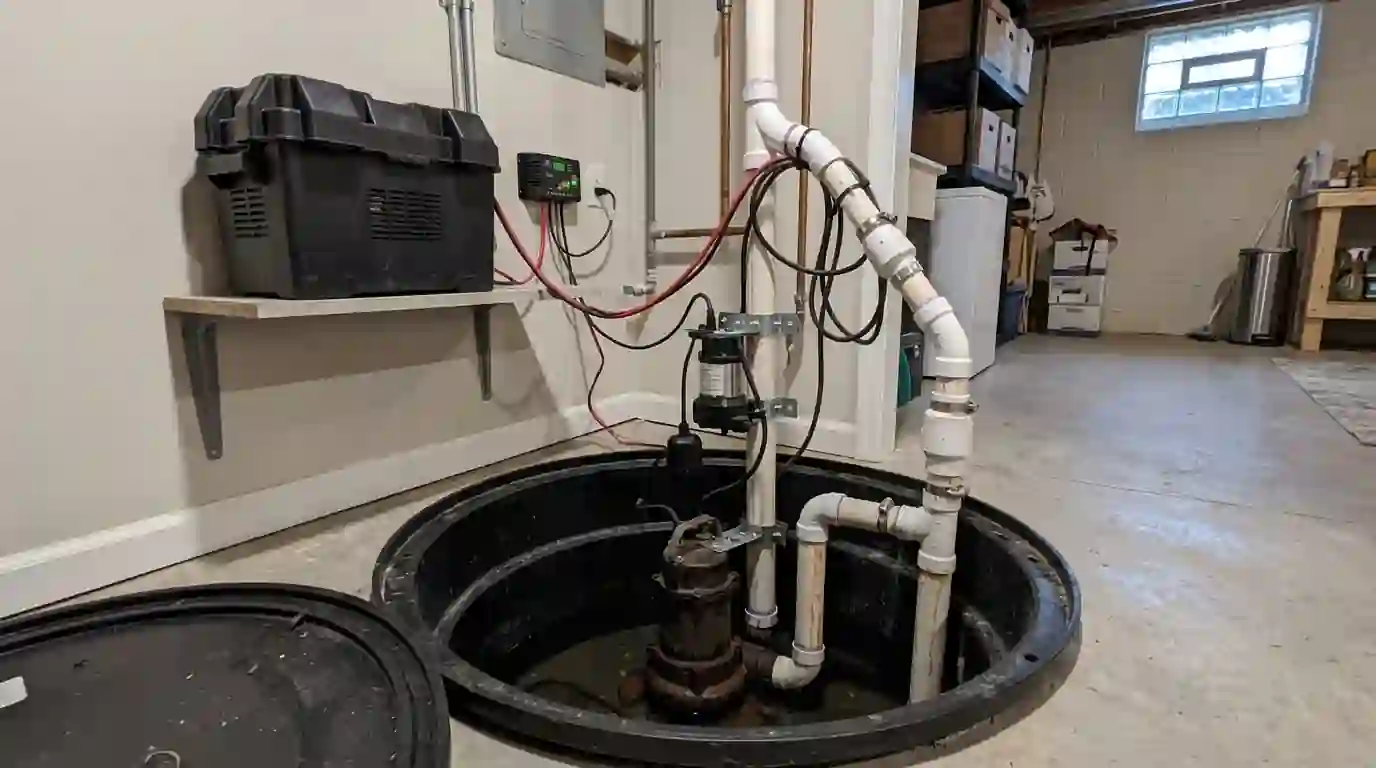
The backup sits in the same basin, a few inches above the main pump, with its own float set higher. In normal weather it never runs, because the main pump keeps the water below its float. If the main pump loses power, jams or burns out, the water rises, the backup float lifts, and the second pump starts pulling water out.
Most systems have an alarm that sounds when the backup kicks on, so you know something is wrong with the primary. That alarm is one of the most useful parts. It turns a silent failure into one you hear about while it's still a small problem.
When to book battery backup sump pumps
Your power goes out in summer storms
If your block loses power a few times a year during thunderstorms, a primary pump alone leaves you exposed right when water comes in.
You have a finished basement
A family room, office or bedroom downstairs means a single pump failure costs far more than the backup would.
You travel or own a cabin
Nobody is home to notice a stuck float or a tripped breaker. A backup with an alarm buys time.
Your pit fills fast in spring
If the main pump cycles every minute or two during snowmelt, the pit can overflow within an hour of a failure.
You've had a sump failure before
One wet carpet is usually enough reason. The backup covers the next one.
Your old backup battery is years old
Batteries lose capacity over time, and a backup that hasn't been tested may not run long enough when it's needed.
What a battery backup sump pumps visit includes
Look at the pit and main pump
We check basin width, the primary pump's condition, and where a second float and discharge can fit.
Choose the backup type
Based on inflow, pressure and power history, we recommend battery, water-powered or a combination system.
Mount the backup pump
The backup goes in above the primary with its own float set higher, clear of the main pump's float.
Plumb a separate check valve
Each pump gets its own check valve so water doesn't recirculate through the idle pump.
Set the battery and charger
The battery sits in a vented box on a shelf, with the charger plugged into a nearby outlet.
Simulate an outage
We unplug the main pump, fill the pit, and watch the backup start, alarm, empty and stop.
Battery or water-powered: which backup fits your house?
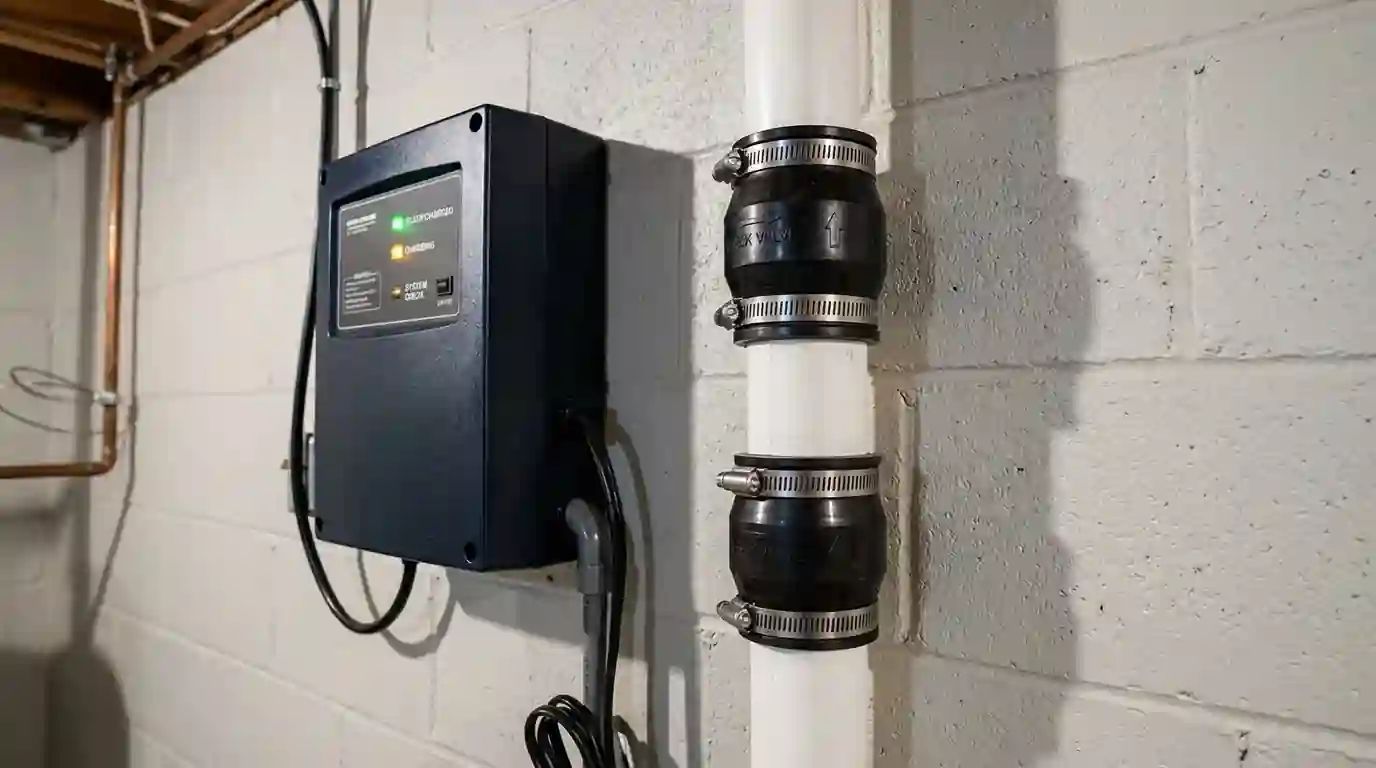
A battery unit uses a deep-cycle battery and a charger that keeps it topped up. It works on any house with a sump pit, but its run time is limited. A water-powered backup uses city water pressure moving through a venturi to pull water out of the pit. It runs as long as the city supply holds, with no battery to replace.
Water-powered units use a fair amount of drinking water to move pit water, and they need good household pressure and a testable backflow device on the supply. Homes on Saint Paul Regional Water Services usually have the pressure to run one. We'll look at your setup and explain the trade-offs.
- Battery backup: works anywhere, run time depends on battery size and how often it cycles
- Water-powered backup: no battery, runs as long as city pressure lasts, uses supply water
- Combination unit: a new primary and battery backup on one pre-built discharge assembly
- Alarm module: audible alert when the backup runs or the battery is low
How long will a battery backup actually run?
It depends on how often the pit fills. A battery might cover a full day or more of light, occasional cycling. During heavy spring inflow, when a pump runs every couple of minutes, that same battery could be drained in several hours. Larger batteries or a second battery extend it, and so does a primary pump that isn't working overtime.
We look at how fast your pit fills during wet weather and size the battery to give a realistic cushion. If your inflow is very heavy, we'll tell you plainly that a battery may not ride out a long outage, and a water-powered unit or a generator may be the better answer.
Keeping a backup ready for years
A backup system you never test is a guess. A few times a year, unplug the main pump and pour a bucket of water into the pit. The backup should start, empty the basin and shut off, and the alarm should sound. Plug the main pump back in when you're done.
Batteries wear out even if the pump rarely runs, usually within a handful of years. Check the charger display monthly, keep the battery off the damp floor, and keep the vent caps clean. When we install a system, we write the battery date on it so you know when it's due.
If you ever hear the alarm while the power is on, treat it as a warning about the main pump, not the backup. It means the primary stopped keeping up, and the backup is draining its battery to cover for it. Give us a ring so we can fix the main pump before the battery runs flat.
What battery backup sump pumps costs in Saint Paul
Typical Saint Paul ranges for backup sump systems. We confirm the price after we've seen the pit and the main pump.
| Job | Typical range |
|---|---|
| Battery backup added to an existing pitPump, battery, charger, check valve | $687 to $1,390 |
| Water-powered backupIncludes supply tie-in and backflow device | $763 to $1,470 |
| New primary and battery backup comboBoth pumps replaced together | $1,170 to $2,340 |
| Replacement backup batteryDeep-cycle battery and testing | $227 to $389 |
What moves the price
- Battery size and how many hours of run time you want
- Basin width and whether it fits two pumps
- Condition of the main pump
- Water pressure and supply access for a water-powered unit
- Outlet location and discharge routing
Typical Saint Paul ranges. We confirm your price after we see the job and before work starts. See every price on one page.
Why Saint Paul homeowners add a backup after the first storm
Summer thunderstorms in the Twin Cities often bring wind that drops trees on power lines, and leafy older neighborhoods like Como Park and St. Anthony Park can lose power for hours. The same storm sends a lot of water toward foundations at once. A primary pump without power just sits there while the basin fills.
In spring, it's the opposite problem. The main pump runs so often during snowmelt in places like Battle Creek and White Bear Lake that it can wear out right in the middle of the season. A backup with an alarm covers both risks, and in a basement that holds a family room or a furnace, it's one of the cheapest bits of insurance you can install.
Where we do battery backup sump pumps
Saint Paul and the surrounding east metro. These are the busiest ZIP codes on our board; the full list has 55 neighborhoods, cities and counties.
Questions about battery backup sump pumps
Can a battery backup sump pump fit in my existing Saint Paul sump pit?
Most pits that are at least the width of a standard basin have room for a backup mounted above the main pump. Very narrow older pits sometimes don't. In that case we can swap the basin for a wider one or install a combination unit with both pumps on one compact assembly.
How often should I replace the battery on a sump pump backup system?
Deep-cycle batteries usually last a few years, even if the pump rarely runs. Check the charger display monthly and test the system a few times a year. If the backup runs weakly during a test, or the battery is past its fourth or fifth year, it's time to replace it before the next storm.
Does a water-powered sump backup work if the city water goes out?
No. A water-powered backup relies on city water pressure. Water service outages are much rarer than power outages, which is why these units work well for many homes. They do use supply water to run, so they aren't the right fit if your pressure is low or you have a private well.
Will a backup sump pump keep up with heavy spring snowmelt?
Backup pumps usually move less water than a full-size primary, so they're meant to hold the line, not outpace a flood. For most homes that's enough. If your pit fills very fast in April, we may suggest a larger battery, a water-powered unit, or upgrading the main pump as well.
Brands we work on in Saint Paul homes
- Kohler
- Moen
- Delta
- American Standard
- Rheem
- A. O. Smith
- Bradford White
- Navien
- Rinnai
- InSinkErator
- Zoeller
- Liberty Pumps
- Watts
- Weil-McLain
Call the Saint Paul office, day or night
A real person picks up at any hour. Tell us what you are seeing, and we will tell you what happens next and roughly what it costs.
(651) 215-2087- Phone
- Answered 24 hours a day, 7 days a week
- Office
- 289 E 7th Street, Saint Paul, MN 55101
- Headquarters
- 50666 229th Ave, Bemidji, MN 56601
- Coverage
- Saint Paul and the east metro, see all areas