Frozen pipe thawing in Saint Paul, MN
A tap that gives a trickle or nothing at all on a subzero morning usually means ice, not a break yet. Thawing it the right way, and fast, is what keeps it from splitting.
- Phone answered 24/7
- Saint Paul office on E 7th Street
Tell us what you see and hear. We explain the visit and the likely cost on the phone. (651) 215-2087
The short answer
Frozen pipe thawing is the controlled warming of a water line that has iced up but not yet cracked. You need it when a faucet suddenly stops or slows to a trickle during a cold snap. We locate the ice, warm the line gradually with safe heat, open fixtures to relieve pressure, and check for damage. Typical Saint Paul thawing visits run $217 to $489.
When frozen pipe thawing cannot wait
One faucet goes dry on a cold morning
If the kitchen tap is dead but the bathroom works, ice is blocking that branch, often where it runs along an outside wall.
A thin trickle instead of full flow
Partial flow means ice is narrowing the pipe. That's the ideal time to call, because the line is still open and usually still intact.
Frost on an exposed pipe
Visible frost or a pipe that feels ice cold in a crawlspace, garage or rim joist area is freezing right now.
Toilet won't refill
A tank that stays empty after a flush in January often points to a frozen supply line in a bathroom over a porch or garage.
Washer fills slowly or not at all
Laundry lines in mudrooms and unheated back entries are some of the first to freeze in older homes.
Whole house dry after a deep cold snap
No water anywhere can mean the service line froze where it enters the basement. Call us before you try anything.
Why the hours before a frozen pipe splits matter
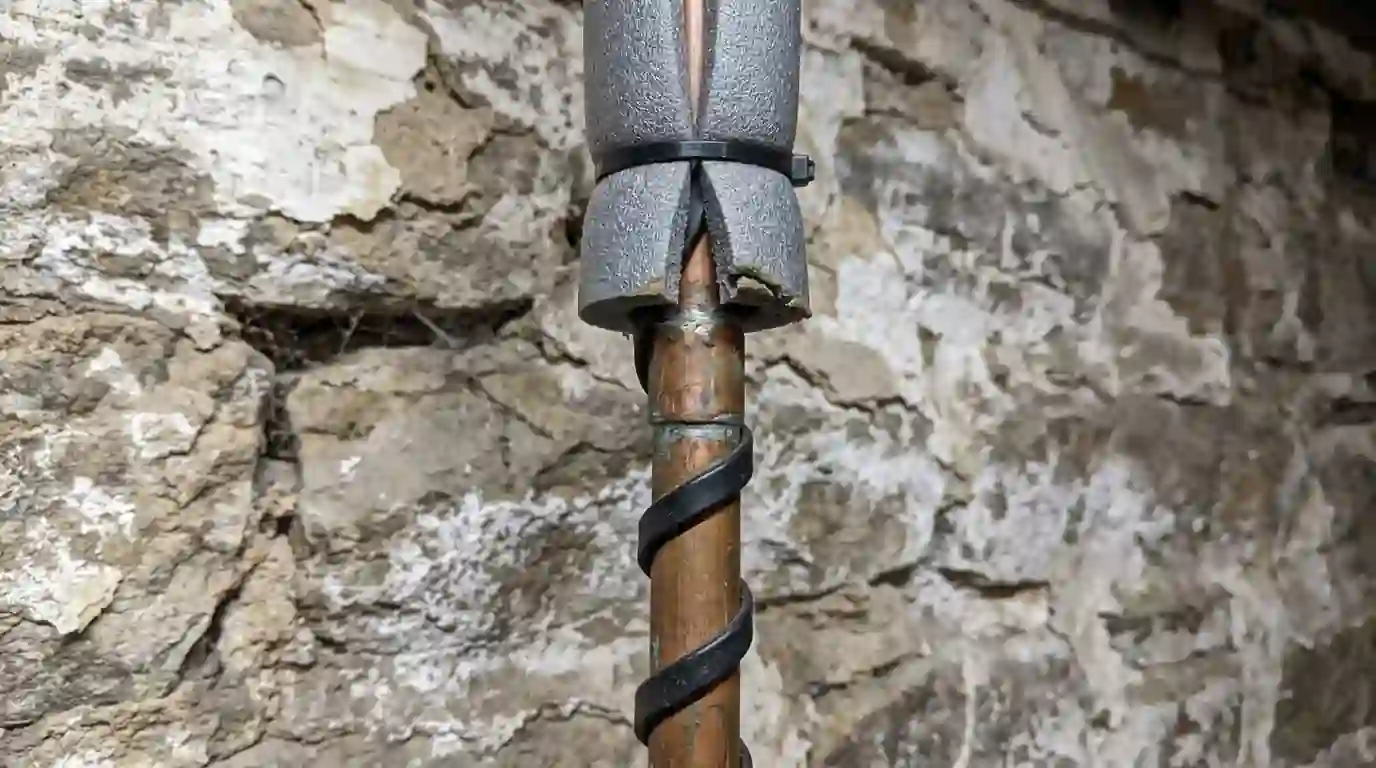
A frozen pipe isn't broken yet. The danger is pressure building between the ice plug and a closed faucet. As more water freezes and expands, it squeezes the trapped water with nowhere to go, and eventually the weakest point gives. That's why the split often shows up a few feet away from where the ice actually is.
Catching it while it's still frozen and intact changes the whole job. Instead of cutting into a wall to replace a ruptured section, we can usually warm the line, get water moving, and protect it. A thaw visit costs a fraction of a burst repair and avoids the water damage that comes with one. If you have a trickle or a dead tap during a cold snap, call then, not after it thaws on its own.
How we handle frozen pipe thawing once we arrive
Pinpoint the ice
We check which fixtures work and which don't, then trace the cold section with a thermal camera and by touch.
Open the outlet
We open the faucet or fixture the line feeds so pressure and meltwater have a safe way out.
Warm the line gradually
We apply low, moving heat from the open end back toward the ice until water starts flowing.
Restore full flow
We run the line at full pressure until the ice clears completely and the flow is normal.
Inspect for damage
We look for bulged or weeping pipe and check the meter to confirm no hidden leak opened up.
Stop the next freeze
We insulate the pipe, seal the draft or add heat tape so the same spot stays open the rest of the winter.
What frozen pipe thawing costs in Saint Paul
These are typical Saint Paul ranges for thawing an intact frozen line. If we find a split, we'll stop and explain the repair price before going further.
| Job | Typical range |
|---|---|
| Thaw an exposed or reachable lineSink, laundry or basement line we can get to directly | $217 to $389 |
| Thaw a line inside a wall or under a floorTargeted space heating, sometimes a small access opening | $343 to $489 |
| Electric thaw of a frozen water service lineMetal line frozen where it enters the house | $427 to $863 |
| Insulation and heat tape after thawingWrap, seal the draft, or install thermostatic heat cable | $137 to $381 |
What moves the price
- How many separate lines froze in the same cold snap
- Whether the ice is in an open basement or behind finished walls
- Pipe material, since metal service lines can be thawed electrically and plastic can't
- Overnight or weekend timing during a deep cold spell
- Whether we find a split that turns the thaw into a repair
Typical Saint Paul ranges. We confirm your price after we see the job and before work starts. See every price on one page.
How we thaw a frozen line without splitting it
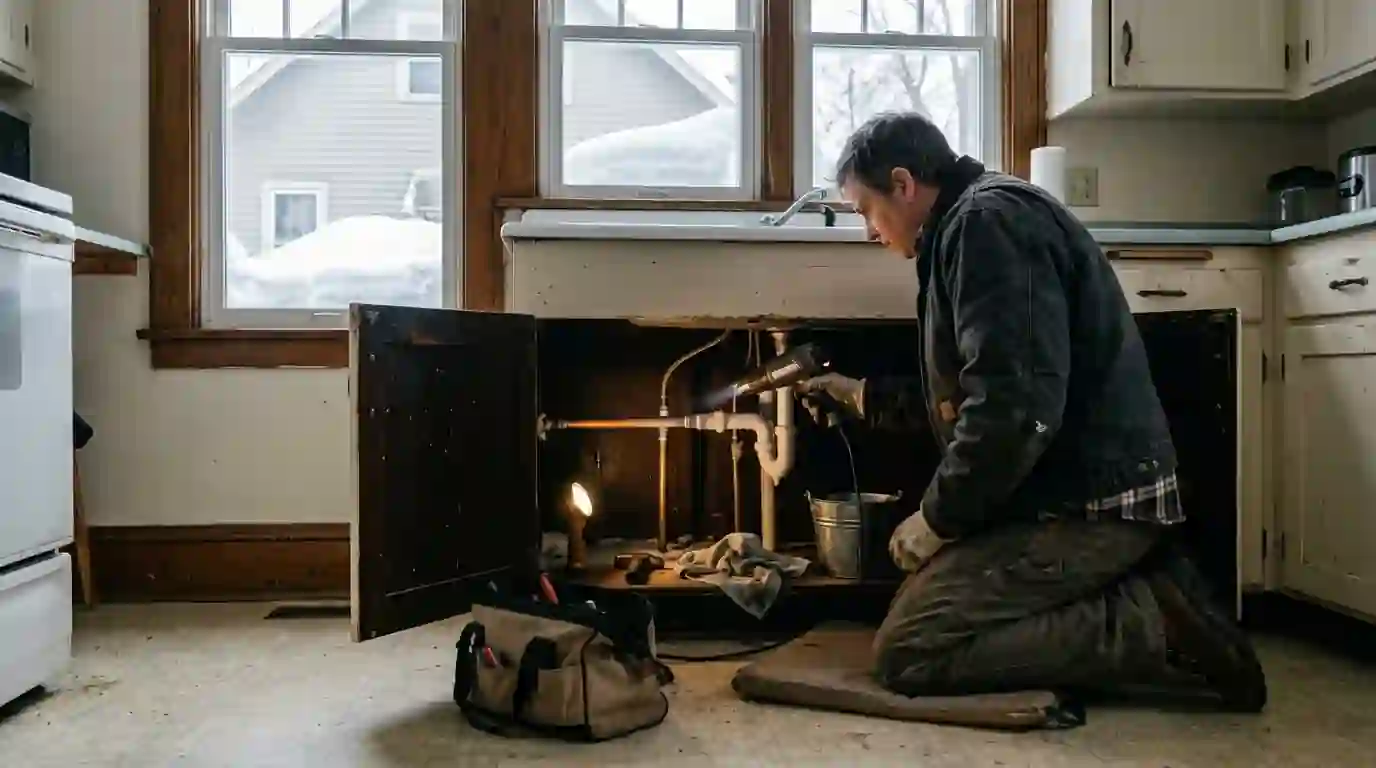
Slow and even is the rule. We start by opening the faucet the line feeds so meltwater and pressure have somewhere to go. Then we work from the open faucet back toward the ice, never from the middle, so steam or water doesn't get trapped between two frozen sections.
For pipes we can reach, we use heat guns on low, heat tape, or warm wraps, moving along the line rather than holding heat in one spot. For pipes inside walls or under floors, we warm the space around them with targeted heaters and open up the cold cavity when that's what it takes. On stubborn metal service lines, an electric pipe thawing machine can warm the pipe from the inside out.
We never use an open flame. Torches can overheat solder joints, scorch framing in old balloon frame walls, and turn ice into steam pressure that splits the pipe anyway.
- Open the downstream faucet first to relieve pressure
- Warm from the open end back toward the ice
- Low, moving heat from heat guns, wraps or space heaters
- Electric thawing for buried or hard to reach metal lines
- No torches or open flame, ever
What you can safely try before we arrive
Open the cabinet doors under a sink on an outside wall so room heat reaches the pipe. Turn the faucet on a little so you'll know when water starts moving. Raise the thermostat a few degrees and point a fan or space heater, kept well away from anything that can burn, toward the cold wall or cabinet.
A hair dryer on a pipe you can see and reach is fine, as long as you keep it moving and stay away from standing water. Skip torches, propane heaters in enclosed spaces, and anything that heats one spot hard. And if you see a bulge, a split, or water starting to drip as things warm up, shut off the main valve right away and tell us when you call.
Checking the line after the water flows again
Getting water to flow is only half the visit. Ice can stretch copper without opening a split, and a weakened stretch can fail on the next cold night. Once the line thaws, we run water at full pressure, check the length we can see for bulges or weeping, and watch the meter with everything off to make sure nothing is leaking inside a wall.
Then we look at why it froze. Most of the time it's a draft through a rim joist, a pipe on the cold side of the insulation, or a crawlspace vent left open. We can seal and insulate the problem spot the same visit, so you're not calling us again next week.
Which Saint Paul pipes freeze first in a cold snap
When the temperature stays below about 20 degrees F for a few days, the calls start in a predictable order. First come kitchen sinks on the back wall of older bungalows, then laundry in mudrooms and three season porches, then bathrooms over garages or built onto additions. In Como Park, Macalester-Groveland and Battle Creek, so many houses have added rooms that weren't insulated like the original structure.
Then there are the hidden lines: a pipe that runs through a cold rim joist next to a basement window, a line feeding an outdoor faucet that was never drained, or the water service itself where it comes through a foundation wall that's exposed to wind. Our Lowertown office keeps us close to downtown and the east side, so on a hard freeze morning we can reach a lot of homes quickly.
Where we do frozen pipe thawing
Saint Paul and the surrounding east metro. These are the busiest ZIP codes on our board; the full list has 55 neighborhoods, cities and counties.
Questions about frozen pipe thawing
How long does it take to thaw a frozen pipe in a Saint Paul house?
An exposed basement or sink line often flows again within 30 to 60 minutes of gentle heat. A line inside an exterior wall or under a floor can take a couple of hours. A frozen service line coming into the house may need an electric thawing machine. We stay until water flows normally and we've checked the line for damage.
Should I leave a frozen pipe alone and wait for it to thaw on its own?
We don't recommend it. As a pipe slowly thaws, pressure can build against the remaining ice and split it, and if you're at work, a split line can run for hours before anyone notices. Calling while the pipe is still frozen gives us the strongest chance to warm it safely and keep it intact.
Can a frozen PEX line be thawed the same way as copper?
Mostly yes, with gentle moving heat from the open end back toward the ice. PEX tolerates freezing better than copper, but its brass fittings can crack. The one difference is that electric thawing machines only work on metal pipe, so a frozen plastic service line needs other methods, such as warm water circulation.
How do I keep a pipe from freezing again after you thaw it?
Seal the draft that chilled it, insulate the pipe, and keep cabinet doors open on outside walls during deep cold. For a line that keeps freezing, thermostatic heat cable or rerouting the pipe inward are the lasting fixes. We'll point out exactly which applies to your line before we leave.
Brands we work on in Saint Paul homes
- Kohler
- Moen
- Delta
- American Standard
- Rheem
- A. O. Smith
- Bradford White
- Navien
- Rinnai
- InSinkErator
- Zoeller
- Liberty Pumps
- Watts
- Weil-McLain
Call the Saint Paul office, day or night
A real person picks up at any hour. Tell us what you are seeing, and we will tell you what happens next and roughly what it costs.
(651) 215-2087- Phone
- Answered 24 hours a day, 7 days a week
- Office
- 289 E 7th Street, Saint Paul, MN 55101
- Headquarters
- 50666 229th Ave, Bemidji, MN 56601
- Coverage
- Saint Paul and the east metro, see all areas