A general home inspection covers a lot of ground, but it usually stops at the floor drain. The sewer lateral that carries everything from the house to the city main runs underground, out of sight, and it's one of the more expensive pieces of a house to fix. In older Saint Paul neighborhoods, that pipe may be clay tile or cast iron that's been in the ground a very long time.
A sewer scope is a camera inspection of that line, done before you close. It takes about an hour, costs a small fraction of what a sewer repair does, and gives you real information to use in your offer. This guide covers when a scope is worth it, what the camera can find, and how to use the results.
The short version
- A standard home inspection usually doesn't look inside the sewer lateral.
- Older homes with clay or cast iron laterals and big trees benefit most from a scope.
- The camera can show roots, scale, sags, offsets, cracks and past repairs.
- Scope results give you something concrete for repair requests or credits.
- Many problems can be managed or fixed without digging up the whole yard.
Why the sewer line is easy to miss during a home purchase
Sewer problems hide well. A vacant house with nobody running water can seem fine during showings, even if the line has roots or a sag. A seller may have had the line cleared recently without that showing up in the disclosure. And a basement with fresh paint can hide old water stains around the floor drain.
Meanwhile, the line itself can be in rough shape. Clay pipe joints let roots in. Cast iron rusts and scales inside. Older lines can shift, sag or crack as the soil settles. Once you own the house, the private side of that line, from the house out to the city main, is usually yours to maintain and repair.
Which houses benefit most from a sewer scope
Age is the biggest factor. A large share of Saint Paul houses were built before World War II, and many still have original clay or cast iron laterals. A newer home with PVC drain pipe is lower risk, though not zero. Mature trees in the front yard, especially big maples or elms near the line, add to the risk.
History matters too. A home that sat empty for months, had a recent basement remodel near the floor drain, or shows signs of past water in the basement deserves a closer look. So does any house where the seller disclosed prior sewer cleaning or backups.
- Homes built before the 1970s, and especially before World War II
- Large trees in the front yard or near the street
- A history of drain clogs or basement backups
- Recently finished basements near the floor drain
- Houses that sat vacant for a long stretch
- Any sign of past water around the floor drain
What the camera can actually find
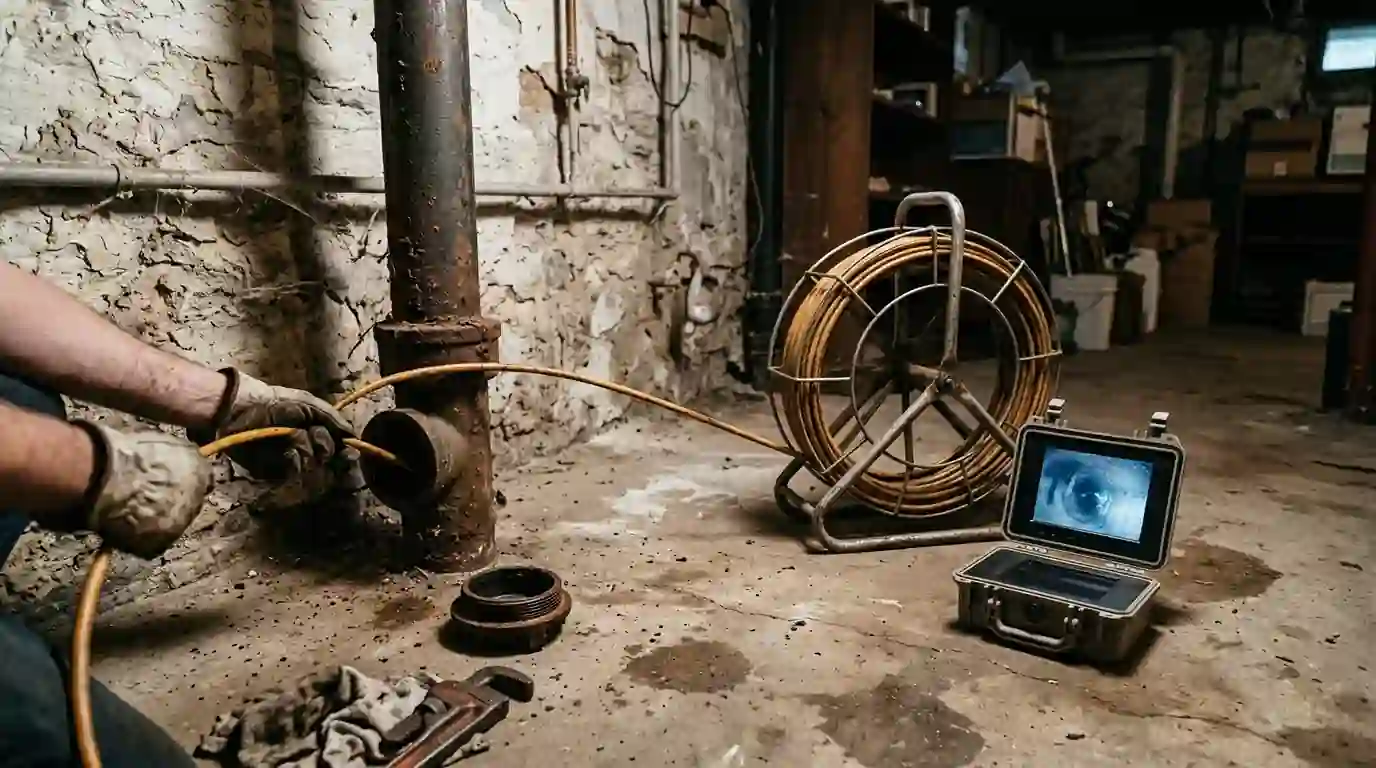
A sewer camera on a flexible cable goes in through a cleanout, a pulled toilet or another access point and travels out toward the street. It records video along the way, and many cameras also track distance so we can note how far out a problem sits. The video shows the pipe material, the condition of joints, and anything inside.
Common findings include roots at clay joints, heavy scale in cast iron, a belly where the pipe sags and holds water, offset joints where sections have shifted, cracks, and fully broken sections. Sometimes the camera finds an older repair, a change in pipe material partway out, or a spot where a previous owner had the line patched.
- Root intrusion at clay pipe joints
- Scale and corrosion inside cast iron
- Bellies or sags holding standing water
- Offset or separated joints
- Cracks, holes or collapsed sections
- Changes in pipe material or past repairs
What a scope day looks like
Ask the seller's agent for access well ahead, since the house needs working water and an accessible cleanout. We pick the cleanest entry point, often a basement cleanout near the floor drain or at the base of the main stack. If the line is badly clogged, we may need to clear it first, which also tells you something about its condition.
We run the camera to the city main, or as far as it can go, and talk through what we see as we go. Afterward, you get the video and written notes on what we found and where. Typical Saint Paul ranges for a pre-purchase inspection with written notes run about $289 to $463. Access and line length move the price.
How to use the results in your purchase
If the line looks good, you've spent a modest amount to rule out a costly surprise, and you have a baseline video for future comparisons. If we find minor roots or scale, you'll know to plan regular cleaning. That might not change your offer, but it changes your budget.
If the scope shows broken pipe, a major belly or heavy root intrusion, that's information to bring to your agent. Buyers often ask for a repair, a price reduction or a credit at closing. A clear video and notes from the scope make that conversation much more concrete than "the drain seemed slow."
What repairs might the scope point to?
Not every problem means digging up the yard. Roots in an otherwise sound clay line can be cleared and managed with periodic cleaning or hydro jetting. A single broken section can often be repaired with a small excavation. A line with widespread damage may be a candidate for trenchless replacement, such as pipe bursting or lining.
The video tells us which route makes sense. If you're buying in Saint Paul or the east metro and want a scope before closing, call (651) 215-2087. The line is answered 24/7, and we'll do our part to fit inside your inspection window. Earlier in the window is easier, since it leaves time to clear a clogged line or come back with a different access point.
Need a hand with this? Call (651) 215-2087. The line is answered 24/7.