Sump pump installation in Saint Paul, MN
If groundwater seeps across your basement floor every spring, or your old pump is past its years, a properly sized sump pump with a clean discharge line keeps the floor dry.
- Phone answered 24/7
- Saint Paul office on E 7th Street
Tell us what you see and hear. We explain the visit and the likely cost on the phone. (651) 215-2087
The short answer
Sump pump installation means setting a new pump in a basin, either replacing a worn pump or digging a new pit where water collects. We size the pump to the inflow and the lift, add a check valve, run the discharge outside and away from the foundation, and test the float. A typical Saint Paul replacement runs $437 to $889, and a new pit costs more.
How we size a sump pump for your basement
Bigger isn't automatically better. A pump that is too strong for a small pit turns on and off every few seconds, which burns out the switch. One that is too weak runs constantly and still loses ground in April. We look at how fast water comes into the pit during wet weather, how high the water has to be lifted to clear the rim joist, and how far it travels once it's outside.
For most Saint Paul houses that ends up as a one third or one half horsepower submersible. Homes with deep basements, long discharge runs or heavy spring inflow sometimes need more. We'd rather explain the reasoning on site than guess over the phone.
What sump pump installation costs in Saint Paul
Typical Saint Paul ranges for sump pump work. We set the price after we've seen the pit, the pump and the discharge route.
| Job | Typical range |
|---|---|
| Replace an existing pump in a good pitPump, check valve and testing | $437 to $889 |
| New basin in an existing pitLarger liner, lid and pump | $617 to $1,170 |
| Cut slab and install a new pit and pumpConcrete, basin, pump, discharge | $1,840 to $3,260 |
| New discharge line to the yardIncludes freeze relief fitting | $287 to $693 |
What moves the price
- Pump size and construction (cast iron or thermoplastic)
- Whether the pit can be reused
- Slab thickness and how far from a wall the pit sits
- Length of the discharge run and wall penetration
- Tie-in to existing drain tile
- Finished basement walls or flooring in the way
Typical Saint Paul ranges. We confirm your price after we see the job and before work starts. See every price on one page.
How sump pump installation goes, start to finish
Check the water problem
We look at where water enters, the pit condition, the old pump, and the route to the outside wall.
Pick the pump and basin
We match horsepower and style to the inflow and lift, and decide if the pit can stay or needs to be replaced.
Set the pump
The old pump comes out, the basin gets cleaned, and the new pump sits level on a firm base with the float clear of the walls.
Plumb the discharge
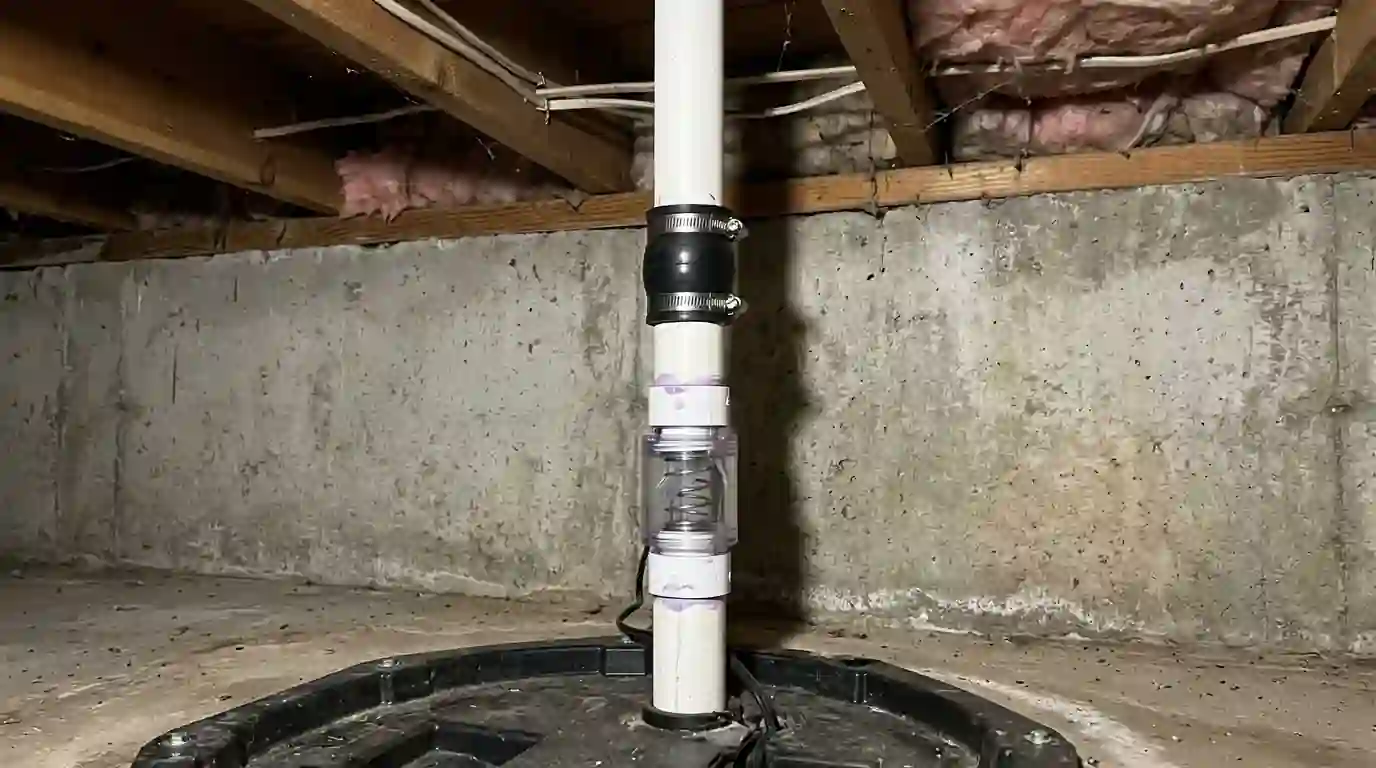
We install the check valve, a union for later service, and rigid pipe through the rim joist to an outdoor extension.
Fill and test
We run water into the pit until the float trips, watch a full cycle, and confirm no backflow from the line.
Walk you through it
You see how to test the float yourself, and we point out what to watch for in spring.
Submersible or pedestal: which pump fits your pit?
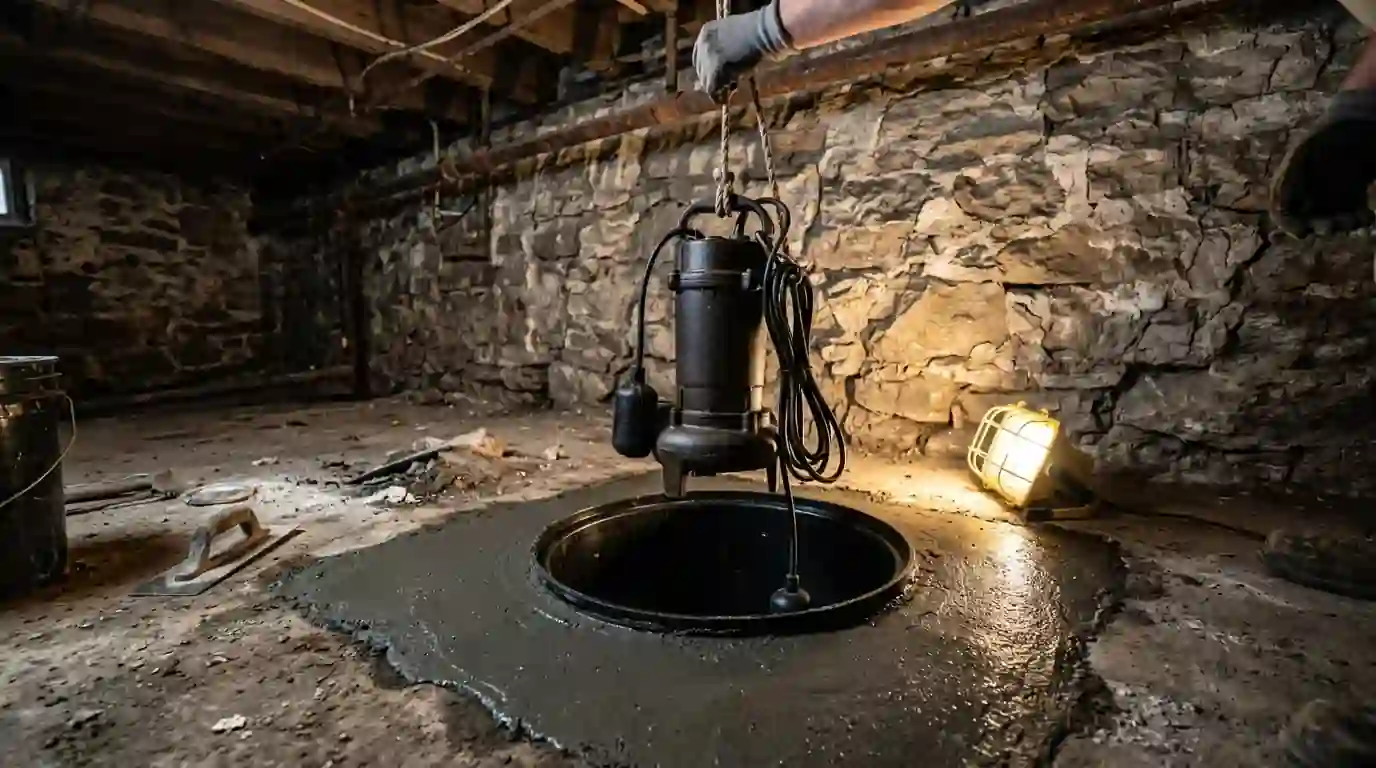
A pedestal pump sits on a column with the motor above the water. It's easy to reach and fits narrow, shallow pits common in older basements. A submersible sits at the bottom of the basin, runs quieter, and moves more water, but it needs a pit wide enough for the float to swing freely.
We install both, including cast iron submersibles from brands like Zoeller and Liberty Pumps. The choice usually comes down to pit size, noise in a finished room, and how much water you're dealing with. If your current pit is too small for the pump you need, we can set a larger basin.
- Pedestal: suits narrow pits, simple to service, louder
- Submersible: quieter, handles more volume, needs room for the float
- Vertical float switch: good for tight basins where a tethered float would snag
- Sealed lid: cuts noise, odor and moisture in finished basements
What goes into digging a new sump pit
When a basement has never had a pump, we pick the low spot where water shows up first, often near a corner or along the wall that faces uphill. We cut the slab, dig out enough soil for a perforated basin, set it on a bed of rock, and patch the concrete around it so the floor stays level.
If the house has a perimeter drain tile, we tie it into the basin so water is collected before it reaches the floor. Without drain tile, the pit still catches water rising from below the slab. It's dusty, loud work for a few hours, so we cover what we can and clean up before we leave.
Where should the discharge water go?
The water has to leave the house and stay gone. We run rigid pipe up through the rim joist with a check valve above the pump, so water in the line doesn't fall back into the pit each cycle. Outside, the line extends far enough from the foundation that the water drains away instead of circling back.
Sump water shouldn't go into a floor drain or a laundry tub, since it adds clear water to the sewer system. In winter, outdoor discharge lines can freeze shut. We add a freeze relief fitting near the wall so the pump has an escape path if the buried line ices up.
Signs it is time for sump pump installation
Water on the floor after snowmelt
A damp band along the wall or a puddle near the floor drain each April means groundwater is finding its way in with nowhere to go.
Your pump is ten or more years old
Pumps wear out quietly. If you can't remember when it went in, replacing it before spring beats replacing it during a storm.
You're finishing the basement
Carpet, drywall and furniture raise the cost of one wet day. A new or upgraded pump belongs in the plan before the walls go up.
The pit has no lid or a cracked liner
Open pits let debris in and moisture out into the room. A sealed basin with a fitted lid keeps both under control.
Discharge dumps right at the foundation
If the pump empties onto the ground next to the house, the same water soaks back in and the pump keeps cycling.
The pump runs nonstop in wet weather
A pump that can't keep up during heavy rain is undersized for the inflow or lifting too high for its rating.
Sump pumps in Saint Paul basements, from river flats to clay suburbs
A large share of Saint Paul houses were built before World War II, and many of those basements were never meant to stay dry. Fieldstone and block walls in Dayton's Bluff, the West Side and Payne-Phalen let groundwater through slowly, and floors were often poured without drain tile. When spring snowmelt lands on frozen ground, that water heads straight for the lowest point, which is your basement.
Newer homes in Woodbury, Cottage Grove and Maplewood usually came with a sump basin, but the original builder pump rarely lasts past fifteen years. Those suburbs also have heavier soils in places, which hold water against the foundation longer after a big rain. Either way, the fix starts with a pump that matches how much water your house actually sees.
Where we do sump pump installation
Saint Paul and the surrounding east metro. These are the busiest ZIP codes on our board; the full list has 55 neighborhoods, cities and counties.
Questions about sump pump installation
How long does a sump pump installation take in a Saint Paul basement?
A straight swap in a good pit usually takes one to two hours. Replacing the basin adds an hour or two. Cutting a new pit through the slab, setting the basin and running a new discharge line is most of a day. We'll give you a time estimate once we've seen the basement.
What horsepower sump pump does a typical Saint Paul house need?
Most homes do well with a one third or one half horsepower submersible. The right size depends on how fast water enters the pit in spring and how high it has to be lifted to get outside. Deep basements and long discharge runs push it up. We size it on site rather than guess.
Can a new sump pump drain into my basement floor drain or laundry sink?
It shouldn't. Sump water is groundwater, and sending it into the sanitary sewer adds clear water the treatment system isn't meant to carry. It can also overload the house drain during a storm. We route the discharge outside through the rim joist and away from the foundation.
Should I add a sump pump before finishing my basement?
If water has ever shown up on that floor, yes. Finishing materials turn a small seep into an expensive cleanup. It's much easier to cut a pit and run a discharge line before framing and drywall. We can also leave room for a battery backup unit later.
Do I need a permit for sump pump installation in Saint Paul?
A like-for-like pump swap usually doesn't, but new pits, new discharge routing or changes to drain tile can. Rules differ by city. When a permit applies to the work we're doing, we pull it and schedule any inspection as part of the job.
Brands we work on in Saint Paul homes
- Kohler
- Moen
- Delta
- American Standard
- Rheem
- A. O. Smith
- Bradford White
- Navien
- Rinnai
- InSinkErator
- Zoeller
- Liberty Pumps
- Watts
- Weil-McLain
Call the Saint Paul office, day or night
A real person picks up at any hour. Tell us what you are seeing, and we will tell you what happens next and roughly what it costs.
(651) 215-2087- Phone
- Answered 24 hours a day, 7 days a week
- Office
- 289 E 7th Street, Saint Paul, MN 55101
- Headquarters
- 50666 229th Ave, Bemidji, MN 56601
- Coverage
- Saint Paul and the east metro, see all areas