Home buyer plumbing inspection in Saint Paul, MN
A general home inspection looks at a lot of things for a short time. Our plumbing walkthrough spends that time on the pipes, heater, drains and gas lines, so you know what you're buying before you sign.
- Phone answered 24/7
- Saint Paul office on E 7th Street
Tell us what you see and hear. We explain the visit and the likely cost on the phone. (651) 215-2087
The short answer
A home buyer plumbing inspection is a plumber's walkthrough of a house you're under contract on. We check supply pipe material, the service line at the meter, water heater age, drains, gas piping, fixtures and shutoff valves, then explain what's sound and what needs money soon. It takes about one to two hours. Typical Saint Paul range: $247 to $389, with a sewer camera run as an add-on.
What we look at during the walkthrough
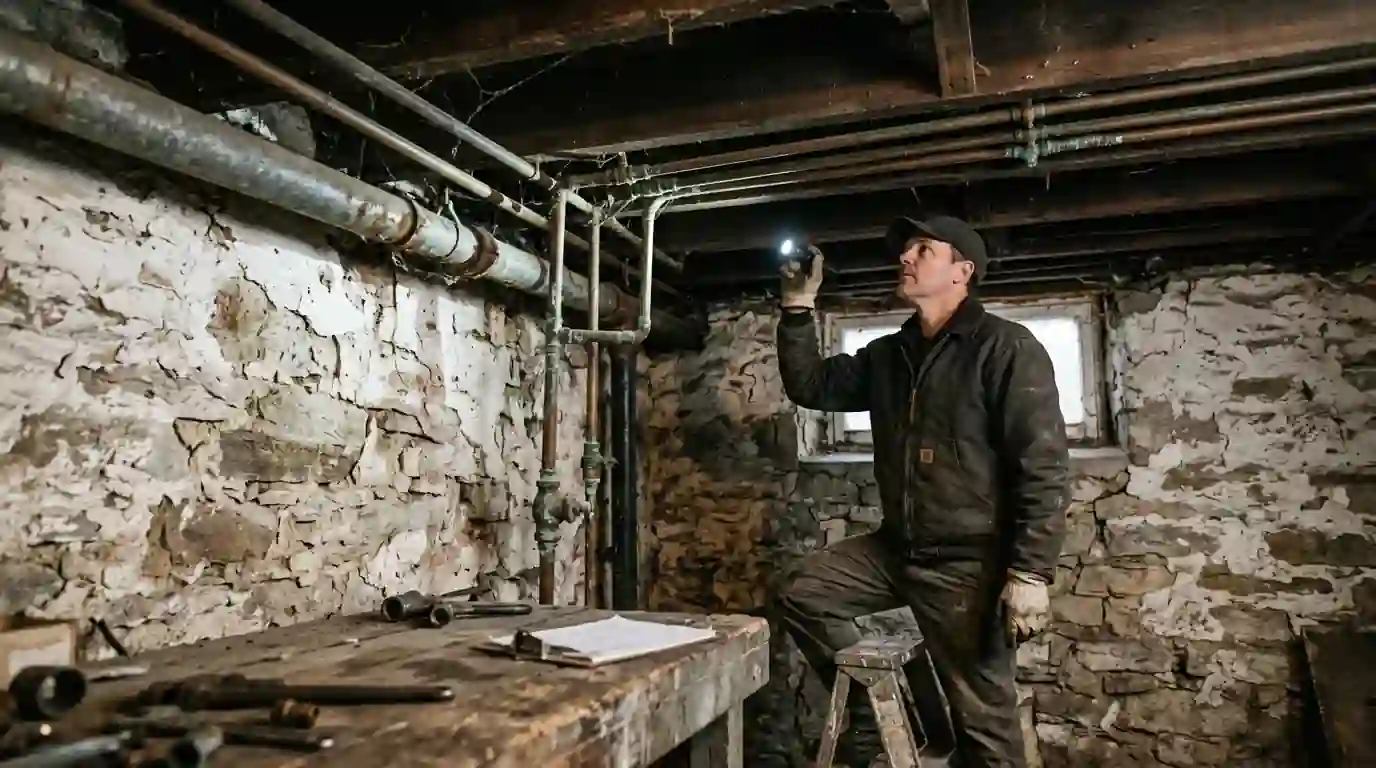
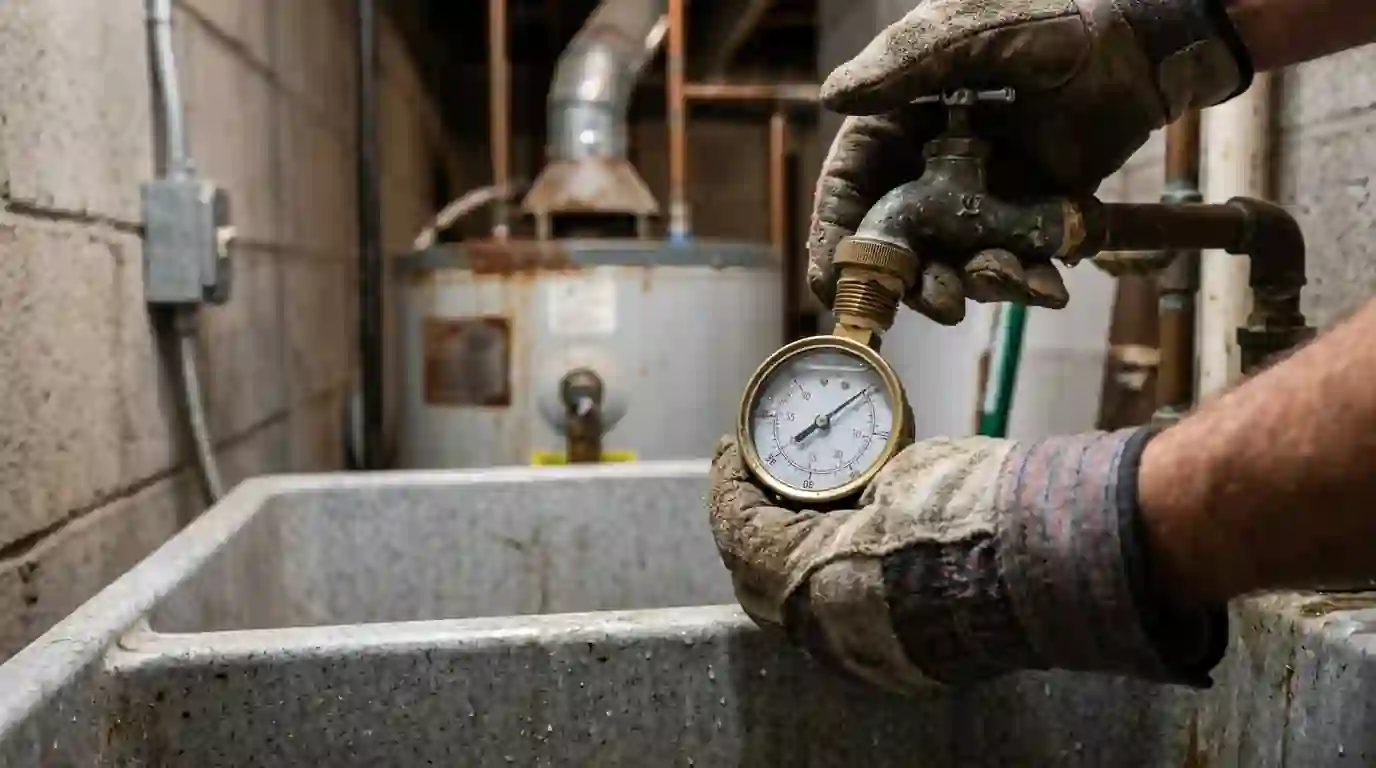
We start where the water comes in. At the meter we check the service line material, since a lead or galvanized line from the street changes your budget in a big way. Then we follow the supply piping through the basement, noting where copper, galvanized steel, PEX or older patches show up, and we run a pressure reading on a basement fixture.
From there we move to the water heater, the main drain stack, the floor drain, any sump pit and every fixture in the house. We open each faucet, flush each toilet, fill tubs and watch them drain, and look under sinks for slow drips, old stains and mismatched repairs. Gas piping and appliance connectors get a visual check for corrosion, sagging runs and missing shutoffs.
- Service line material at the meter and the main shutoff
- Supply pipe type through the house and visible leaks
- Water heater age, venting, relief valve and drain pan
- Drain stack, floor drain, sump pit and ejector pump
- Gas piping, appliance connectors and shutoff valves
- Every fixture tested for flow, drainage and seal
When to book home buyer plumbing inspection
The house was built before the 1960s
Older Saint Paul homes often mix galvanized, copper and cast iron from several decades of repairs, and that mix is where trouble tends to hide.
The listing says the home was recently flipped
Fresh drywall and new fixtures can cover rushed plumbing work, so it's worth seeing what sits behind the access panels and under the sinks.
Your inspector flagged plumbing for follow-up
General inspection reports often say to have a plumber look further, and our walkthrough answers those notes with specifics and price ranges.
The water heater label is hard to read or missing
Age drives replacement timing, and we can usually decode the serial number to tell you roughly how old the tank is.
There's a finished basement with a bathroom
Below-grade bathrooms may rely on an ejector pump or a drain that sits close to the sewer, and both deserve a careful look.
You smell gas or see old flexible gas connectors
Older uncoated brass connectors and loose fittings show up on dryers and ranges in many older homes, and they are worth replacing early.
What a home buyer plumbing inspection visit includes
Talk through the house and your plans
We ask about the home's age, what the general inspector noted, and whether you plan to remodel, so we know where to focus.
Check the meter and main shutoff
We identify the service line material, test that the main valve actually closes, and take a water pressure reading.
Trace the supply and drain piping
We follow visible pipe through the basement and crawl areas, noting materials, old patches, corrosion and active drips.
Test the water heater and gas piping
We estimate the heater's age, check venting and the relief valve, and look over gas lines and appliance connectors.
Run every fixture
Each faucet, toilet, tub and shower gets tested for flow, drainage and leaks, along with the floor drain and sump pit.
Go over findings with you
We walk you through what's urgent, what to budget for, and what's fine, and hand over written notes if you chose that option.
Why a general home inspection isn't enough for older plumbing
A general inspector covers the roof, electrical, structure, heating and plumbing in a single visit, so each system gets a limited slice of time. That's how the job is built, and it's useful. But it also means a corroded galvanized branch, a slow leak inside a vanity, or a water heater near the end of its life can be noted briefly or missed.
Our walkthrough only looks at plumbing and gas piping, and we bring the tools to test rather than guess. We read actual water pressure, check the main shutoff to see if it still closes, and look at drain flow under real use. When we find something, we tell you what fixing it usually involves and what it typically costs in Saint Paul, which is the part buyers really need.
That price context gives you something concrete to bring to the seller or to set aside for your first year in the house.
Should you add a sewer camera run to the inspection?
Our walkthrough covers everything you can see and test from inside the house. The buried sewer lateral running out to the street is a separate job, because looking at it means feeding a camera through a cleanout and recording the full length of the pipe. We offer it as an add-on on the same visit, and for most older houses we'd suggest it.
In Saint Paul the owner is usually responsible for that pipe all the way to the city main, and clay or cast iron laterals under older yards often carry roots, offsets or cracks. A camera run is the only way to see them before you own them. If you'd like more detail on how that works, our sewer camera inspection page walks through it step by step.
What you get when we're done
Before we leave, we walk you through what we found, room by room, with the issues sorted by urgency. Some items are true problems that need a repair soon. Others are aging parts you'll want to budget for in the next few years. Plenty of things are simply fine, and we'll say so plainly rather than padding the list.
If you choose the written option, you'll get notes and photos you can share with your agent, your lender or the seller. Each item lists what we saw, where it is in the house, and a typical Saint Paul price range for the fix. Those ranges are a planning tool, not a final price, since the actual repair cost is confirmed when the work is scoped.
If anything is a safety concern, such as a gas smell or a water heater vent that isn't drafting, we tell you right away instead of saving it for the notes.
How to fit a plumbing walkthrough into a tight inspection window
Most purchase agreements give buyers a short window for inspections, so timing matters. Call us as soon as your offer is accepted and we'll find a slot that works with your agent and the listing agent. Many buyers book us the same day as the general inspection, which keeps access simple and lets both reports land at once.
If the house has been vacant, the water may be shut off at the main or the heater may be drained. Ask the listing agent to have water and gas on before we arrive. We can't test what isn't running, and a dry house hides leaks that only show up once the pipes are under pressure again.
What home buyer plumbing inspection costs in Saint Paul
Typical Saint Paul ranges for a home buyer plumbing inspection. Your price is confirmed when you call and we know the size and type of the house.
| Job | Typical range |
|---|---|
| Plumbing walkthrough with verbal findingsSingle-family house, one visit | $247 to $389 |
| Walkthrough with written notes and photosShareable with agent or seller | $317 to $493 |
| Condo or townhouse walkthroughUnit plumbing only | $173 to $291 |
| Sewer camera run added on the same visitRecorded and located | $189 to $327 |
What moves the price
- Size of the house and number of bathrooms
- Whether the written notes and photos are included
- Adding a sewer camera run or a second building like a garage apartment
- Access to the basement, crawlspace and mechanical room
- Evening or weekend timing to fit an inspection deadline
Typical Saint Paul ranges. We confirm your price after we see the job and before work starts. See every price on one page.
What older Saint Paul houses tend to reveal before closing
A large share of Saint Paul homes were built before World War II, and their plumbing has usually been changed piece by piece. In a Macalester-Groveland or Como Park bungalow, it's common to find original galvanized steel feeding the upstairs bath, copper added in the basement decades later, and a cast iron stack that has never been touched. Each material ages differently, so the walkthrough looks at all of it.
Saint Paul Regional Water Services has been replacing lead service lines across its area, so we always check the line at the meter and tell you what we see. In Dayton's Bluff and the North End, older hot-water boilers are still common, and we look at their plumbing connections too. Out in Roseville or Maplewood, postwar homes bring their own list, including aging water heaters and original shutoff valves that no longer close.
Where we do home buyer plumbing inspection
Saint Paul and the surrounding east metro. These are the busiest ZIP codes on our board; the full list has 55 neighborhoods, cities and counties.
Questions about home buyer plumbing inspection
How long does a home buyer plumbing inspection take in a Saint Paul house?
Most single-family homes take about one to two hours on site. A small bungalow with one bathroom goes faster, while a larger house with a finished basement, two or three baths and a boiler takes longer. Adding a sewer camera run usually adds 45 minutes to an hour. We leave time at the end to walk you through what we found.
Do I need to be there for the home buyer plumbing walkthrough?
It helps but isn't required. If you can make it, you'll see the issues in person and can ask questions on the spot, including where the main shutoff is. If you can't, your agent can let us in, and we'll call you afterward to go over the findings. The written option with photos is useful when you can't attend.
Will the plumbing inspection tell me if the house has a lead service line?
We check the service line where it enters the house at the meter and tell you what material we see there. That's a good indicator, though the buried part under the yard may differ from what shows in the basement. If it looks like lead or galvanized, we'll explain your options, including Saint Paul Regional Water Services replacement work in the area.
Can the buyer plumbing walkthrough be done if the water is shut off?
We can look at pipe materials and the water heater with the water off, but we can't test fixtures, drains, pressure or leaks. For a full walkthrough, ask the listing agent to have the water and gas turned on before the visit. If the house was winterized, it may need to be refilled and checked first, which we can do.
What does a home buyer plumbing inspection cost compared with fixing what it finds?
The walkthrough typically runs $247 to $389 in Saint Paul. Common findings, like a water heater near the end of its life, a failing main shutoff or a stretch of corroded galvanized pipe, can run from a few hundred to several thousand dollars to repair. Knowing about them before closing gives you room to plan or talk with the seller.
Jobs that often go with home buyer plumbing inspection
Brands we work on in Saint Paul homes
- Kohler
- Moen
- Delta
- American Standard
- Rheem
- A. O. Smith
- Bradford White
- Navien
- Rinnai
- InSinkErator
- Zoeller
- Liberty Pumps
- Watts
- Weil-McLain
Call the Saint Paul office, day or night
A real person picks up at any hour. Tell us what you are seeing, and we will tell you what happens next and roughly what it costs.
(651) 215-2087- Phone
- Answered 24 hours a day, 7 days a week
- Office
- 289 E 7th Street, Saint Paul, MN 55101
- Headquarters
- 50666 229th Ave, Bemidji, MN 56601
- Coverage
- Saint Paul and the east metro, see all areas