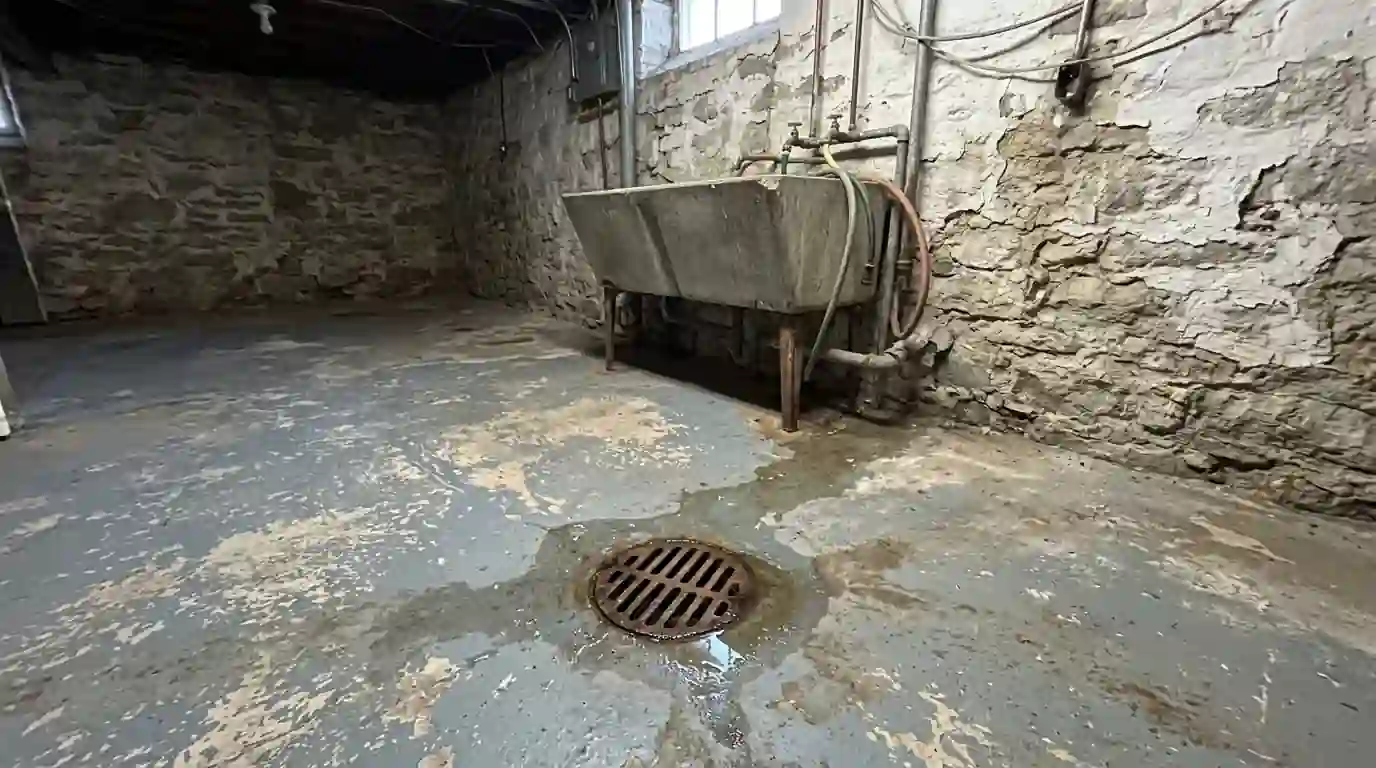
The floor drain in an older Saint Paul basement is usually the lowest opening in the whole plumbing system. That makes it the first place trouble shows up. When water or worse starts coming up through that grate, it's rarely a problem with the drain itself. It's a sign of what's happening downstream, in the main sewer line, or outside the house in the soil.
Knowing which cause you're dealing with saves time and money. A clogged trap is a small fix. A root-filled clay sewer lateral is a bigger one. Groundwater pushing up after a thaw is a different problem again. This guide explains the common causes, what each one looks like, and what you can safely check before you call us.
The short version
- The floor drain is the lowest opening in the house, so it shows downstream clogs first.
- Clear water during storms points to groundwater; gray or sewage water points to a main line clog.
- Stop using water and avoid contact with sewage when the drain backs up.
- A camera inspection after clearing shows roots, scale, sags or breaks.
- Backwater valves, sump pumps and regular cleaning help stop repeat backups.
How a basement floor drain is connected
In most older Saint Paul houses, the basement floor drain ties into the main building drain under the slab, which then runs out through the foundation as the sewer lateral to the city main. Some floor drains also connect to the drain tile around the foundation. Every fixture upstairs drains through that same main line on its way out.
Because the floor drain sits lower than every sink, tub and toilet in the house, water backing up in the main line finds that grate first. That's why a toilet flush upstairs or a washing machine draining can send water bubbling up in the basement. The floor drain is the overflow point, not the source.
The most common causes of a floor drain backup
A blockage in the main sewer line is the big one. In older homes, that line is often clay tile or cast iron, and tree roots love the joints in clay pipe. Roots creep in, catch grease, wipes and paper, and slowly close the pipe. Cast iron rusts and scales on the inside, narrowing the opening until it catches everything that goes by.
Other causes are closer to home. Lint from a washer that drains into a laundry tub can collect in the floor drain trap. Sand and silt wash in from basement floors. In some homes, a heavy spring rain or snowmelt raises groundwater around the foundation, and water seeps up through the floor drain or the cracks around it.
- Tree roots growing into a clay sewer lateral
- Scale and rust narrowing a cast iron building drain
- Grease, wipes and paper caught in the main line
- Lint, sand or debris in the floor drain trap
- Groundwater pushing up during snowmelt or heavy rain
- A sagging or broken section of the sewer lateral
How to read what's coming up the drain
Clear water that shows up during a rainstorm or a fast spring thaw, with nothing running in the house, usually points to groundwater or a drain tile issue. Gray water with lint or soap scum that appears when the washer drains points to a slow main line or a clogged floor drain trap. That's a clog that hasn't fully closed the line yet.
Water with toilet paper or a sewage smell means the main line is blocked, and everything from upstairs is backing up through the lowest opening. That's when you stop using water in the house. Avoid contact with sewage, keep kids and pets out of the basement, and don't run a shop vacuum through it without gloves and boots.
What you can check safely before calling
First, stop using water: no flushing, no laundry, no showers. That keeps more water from backing up. Then check whether the problem is the whole house or one area. If an upstairs toilet drains fine but the basement floor drain fills when the washer runs, the clog may be in the laundry branch or the floor drain trap rather than the main line.
If the grate comes off easily and the water is clear, you can look for lint or debris sitting in the trap and pull it out with a gloved hand. Leave the rest alone. Don't pour chemical drain cleaner into a floor drain; it rarely reaches a main line clog, it sits in the basement, and it's harmful to anyone who has to clear the line later.
- Stop running water in the house right away
- Note when the backup happens: rain, laundry, flushing
- Check if upstairs drains are slow too
- Remove visible lint or debris from the grate with gloves
- Skip chemical drain cleaners entirely
How we find and clear the real problem
On a visit, we start by clearing the line so the house is usable again, usually through the main cleanout near the floor drain or where the stack meets the floor. Typical Saint Paul ranges for clearing a main sewer line during a backup run about $289 to $567, depending on access, how far out the clog sits and what it's made of.
Then we look inside with a sewer camera. That shows whether we're dealing with roots, scale, a belly where the pipe sags, or a break. For roots in a clay lateral, regular cleaning or hydro jetting can keep the line open, but a broken section or heavy root intrusion often points to repair or trenchless replacement. We show you the footage so you can see what we see.
How to keep it from happening again
Small habits help: keep grease out of the kitchen sink, don't flush wipes even if the package says flushable, and put a lint trap on the washer discharge hose if it drains to a laundry tub. Pour a bucket of water into the floor drain every few months so the trap stays full and blocks sewer gas.
If heavy rains or a city main backup have sent water up the floor drain before, a backwater valve can stop sewage from coming back into the house. For homes with roots in the lateral, a camera inspection every year or two lets you clean before it closes. For groundwater issues, a working sump pump and good drainage outside the foundation make the biggest difference.
If water is rising right now, call (651) 215-2087. The line is answered 24/7.
Need a hand with this? Call (651) 215-2087. The line is answered 24/7.