If you live in an older Saint Paul house with radiators, you already know boilers aren't silent. A little ticking as pipes warm up is normal. But a loud bang that shakes the floor, a steady gurgle in the walls, or a hiss you didn't hear last winter can mean something's wrong. The trick is knowing which sounds are routine and which need attention.
The first question is what kind of system you have. Steam boilers and hot-water boilers make different noises for different reasons. This guide explains how to tell them apart, then walks through the common sounds, what usually causes each one, what you can safely check, and when to call us.
The short version
- Find out if your boiler is steam or hot water before trying to read the noise.
- Banging in steam systems usually comes from trapped water and radiator pitch.
- Gurgling in hot-water systems usually means air that needs bleeding.
- Kettling points to scale or poor flow inside a hot-water boiler.
- A discharging relief valve, gas smell or water on the floor means shut down and call.
Is your boiler steam or hot water?
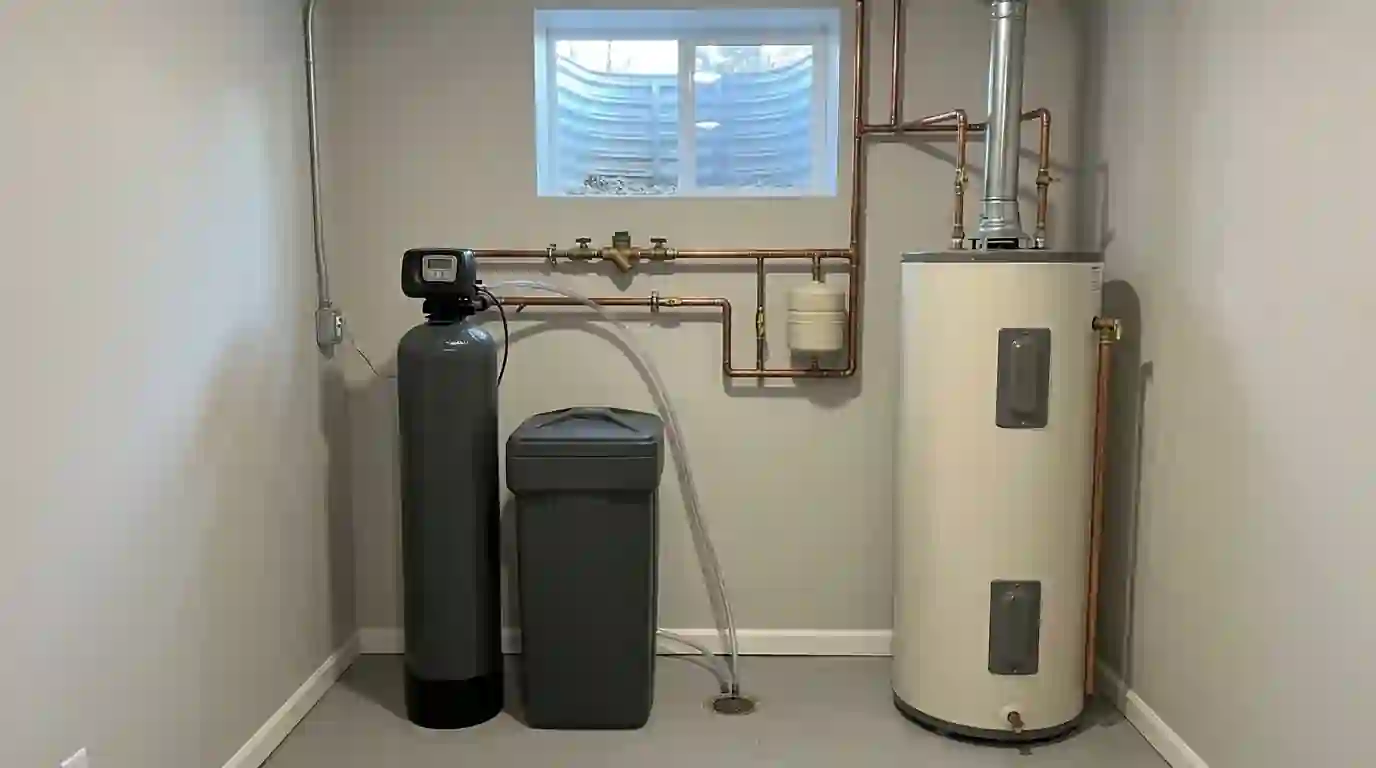
Look at the boiler itself. A steam boiler has a sight glass on the side, a small glass tube showing the water level, and a pressure gauge that reads in very low numbers, often under 2 psi. A hot-water boiler has no sight glass, a combination pressure and temperature gauge usually reading around 12 to 20 psi, and an expansion tank somewhere nearby.
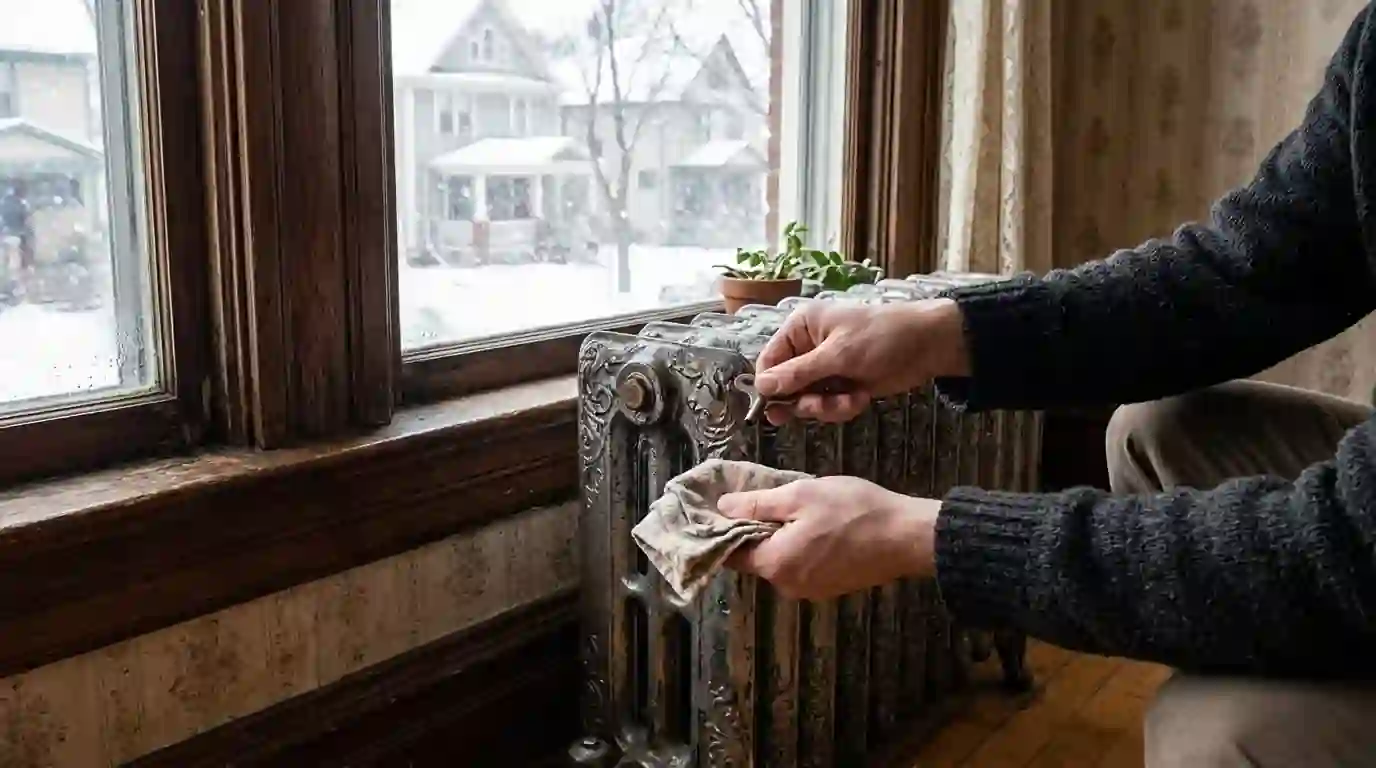
Radiators give clues too. Steam radiators usually have one pipe connection and a small air vent on the side. Hot-water radiators usually have two pipe connections and a bleed valve near the top. Many prewar Saint Paul homes started with steam, and some were converted to hot water later, so it's worth checking rather than assuming.
Banging and knocking in steam systems
Loud banging in a steam system is usually water hammer. Steam travels through the pipes, meets a pocket of trapped water, and slams it against an elbow or valve. It's the most common steam complaint we hear, and it often starts after someone adjusts a radiator, a pipe hanger shifts, or the house settles enough to change the pitch of a pipe.
Steam radiators need to tilt slightly back toward their supply pipe so condensed water can drain back to the boiler. If a radiator has tipped the wrong way, water pools and the steam hammers it. A one pipe radiator's valve should be either fully open or fully closed; a half open valve traps water too. An overfilled boiler can also push water into the pipes.
- Radiator pitched the wrong way, trapping water
- One pipe radiator valve left partly open
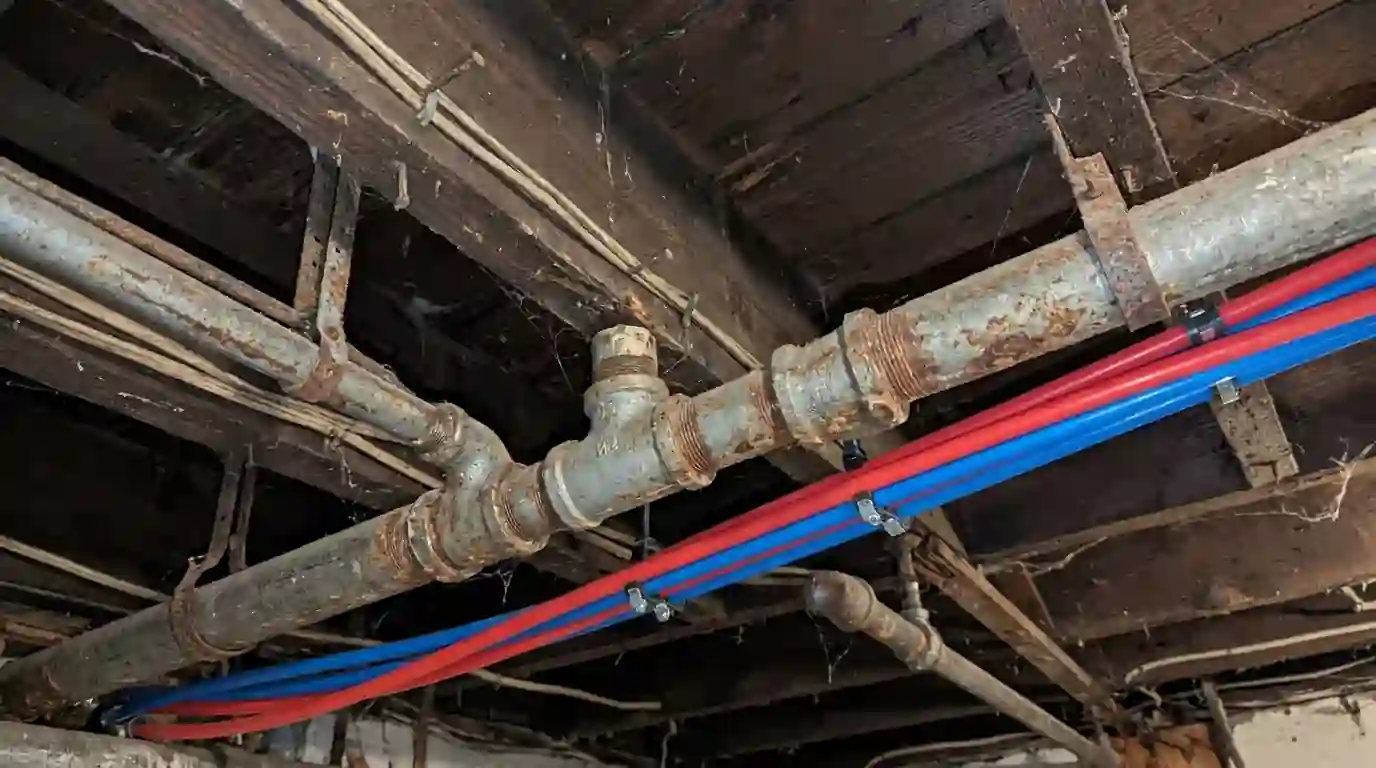
- Sagging pipe or loose hanger in the basement
- Boiler water level set too high
- Clogged return lines or failed main vents
Gurgling and trickling in hot-water systems
In a hot-water system, gurgling usually means air in the pipes. Air enters with fresh water, through a small leak, or when the system has been drained for work. It collects at high points, usually upstairs radiators or baseboard, and you'll hear trickling or bubbling as water pushes past it. Rooms with air-bound radiators often stay cool even when the boiler runs.
Bleeding radiators helps. With the boiler running and the radiators warm, open the bleed valve at the top of each upstairs radiator with a radiator key, holding a rag underneath. Close it once water comes out steadily. Then check the boiler pressure gauge; if it dropped below the normal range, the system may need water added, and on most setups that's a job to leave to us.
Hissing, whistling and kettling sounds
A soft hiss from steam radiator vents as the system warms up is normal. That's air being pushed out ahead of the steam. A vent that keeps hissing after the radiator is hot, spits water, or whistles loudly is failing and should be replaced. That's a quick part swap, but it matters because a stuck vent can leave a radiator cold.
Kettling is a rumbling or popping inside a hot-water boiler, a lot like a kettle about to boil. It's usually caused by scale or sludge on the heat exchanger, where water flashes to steam in hot spots. It can also mean poor water flow from a failing circulator pump. Kettling shortens boiler life and wastes fuel, so it's worth a service visit.
- Steady hiss after radiator is hot: failing air vent
- Water spitting from a vent: overfilled boiler or bad vent
- Popping or rumbling in a hot-water boiler: scale or poor flow
- Hiss from a pipe joint or valve: possible leak
- Whistling from the burner area: call us to check combustion
Sounds that mean you should shut it down
Some noises go past annoying. If the relief valve on the boiler is discharging water or steam, the pressure is too high, and the boiler should be turned off at its switch and checked right away. A loud bang from the burner area when the boiler fires, or a roaring burner with a yellow, lazy flame, points to a combustion problem.
If you smell gas anywhere near the boiler, don't touch switches. Leave the house, call Xcel Energy or 911 from outside, and then call us. For any sound paired with water on the floor, a pressure gauge in the red, or a burning smell, turn the boiler off and call (651) 215-2087. The line is answered 24/7, and we work on both steam and hot-water systems.
What a service visit looks like for a noisy boiler
We start by listening, since the location and timing of a sound narrows the cause fast. On steam systems, we check water level, the low water cutoff, main vents and radiator pitch, and we look for sagging pipe in the basement. On hot-water systems, we check pressure, the expansion tank, the circulator pump and air separation.
Many noise problems are inexpensive fixes like re-pitching a radiator, replacing a vent or bleeding air. Typical Saint Paul ranges for a diagnostic visit with minor adjustment run about $167 to $289. A circulator pump or expansion tank replacement costs more. Older boilers from makers like Weil-McLain or Burnham often have plenty of life left once the noise is sorted out.
Need a hand with this? Call (651) 215-2087. The line is answered 24/7.