A sump pump can sit quietly for months through a Minnesota winter, then get asked to run every few minutes for days once the snow starts melting. Spring snowmelt and heavy rain push groundwater toward basements all over Saint Paul and the east metro, and the pump is often the only thing standing between that water and your finished floor.
The trouble is that a pump that's been idle since fall can stick, a float can hang up on a cord, and a discharge line can still be frozen solid at the yard end. The time to find that out is a dry afternoon in March, not at 2 a.m. during a thunderstorm. Here's the check we'd walk through at home, step by step.
The short version
- Test your sump pump in late winter, before snowmelt and spring rain arrive.
- Pour a bucket of water in the pit and watch the float, pump and shutoff.
- Listen for a check valve thunk and look for a pit that refills right away.
- Clear the frozen or buried end of the discharge line outside.
- Add or test a battery backup if your basement is finished or the pit runs often.
Why late winter is the right time to test
In Saint Paul the ground stays frozen well into spring, and then it thaws from the top down. Melting snow can't soak into frozen soil, so it runs along the surface toward foundations and finds its way down the outside of basement walls. Add an early April rain on top of a deep snowpack and the drain tile around your house can fill fast.
Testing in late February or March gives you time to fix a problem before the pump is under real load. Parts are easy to get, the basement is dry, and you aren't making decisions with water rising around your ankles. If your pump hasn't run since October, this check matters even more.
The 20 minute check, step by step
Start by making sure the pump has power. Many sump pumps plug into a piggyback switch, with the float plug in back and the pump plug in front. Confirm both are seated and that the outlet is live. If the pump is on a GFCI outlet that tripped over the winter, the pump will sit dead without any warning.
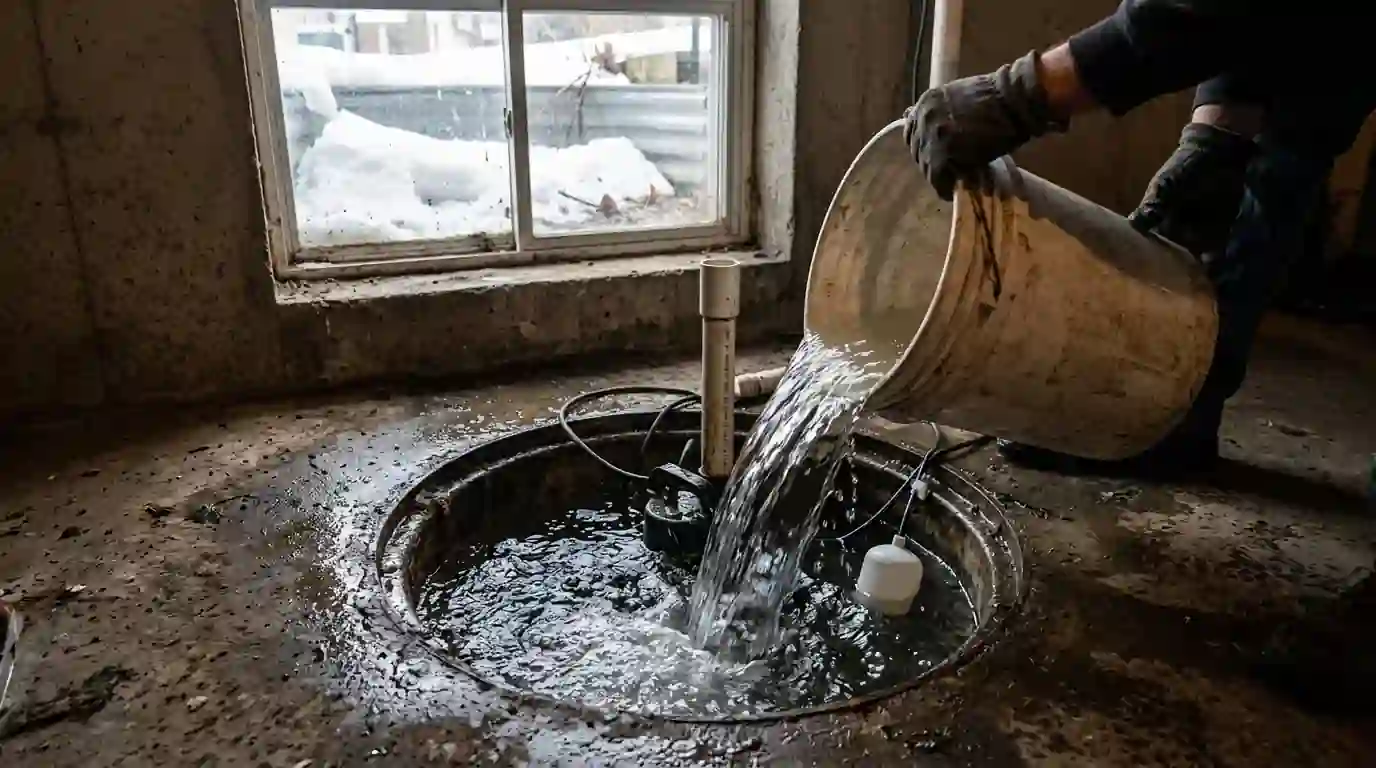
Next, slowly pour a five gallon bucket of water into the pit. The float should rise, the pump should kick on within a few seconds, and the water level should drop quickly and smoothly. When the pump shuts off, the water should stay down rather than flowing back into the pit. Repeat it once more to be sure.
- Pump and float switch both plugged in, outlet live
- Float rises freely and isn't touching the pit wall or the cord
- Pump starts within a few seconds of the float lifting
- Water drains out fast with no grinding or rattling
- Pump shuts off cleanly and water doesn't run back into the pit
- Discharge line is clear outside and pointed away from the house
What the pit itself tells you
With a flashlight, look into the pit before you add water. A layer of silt, gravel or bits of debris on the bottom can clog the pump intake or jam the float. A little sediment is normal in older Saint Paul basements, but if the pump sits in a pile of muck, it's working harder than it should and may overheat during a long run.
Look at the pit liner too. Old clay tile or bare concrete pits can crumble, letting soil wash in. Many homes have a basin with no lid, and a missing lid lets debris, toys or even small animals fall in. A sealed lid also keeps basement humidity down and cuts radon entry, which is worth having in Minnesota.
Check valve and discharge line problems to look for
The check valve sits on the pipe just above the pump. Its job is to stop water in the discharge line from falling back into the pit when the pump shuts off. If you hear a loud thunk when the pump stops, or the pit refills right away, the valve may be sticking or failing, and the pump ends up moving the same water over and over.
Then go outside and follow the discharge line to where it drains. In a Minnesota March, the last few feet are often still frozen or buried under a plowed snowbank. A blocked outlet means the pump runs but nothing leaves the pipe. Make sure the end drains onto ground that slopes away from your foundation, so the water doesn't circle right back to the pit.
Many homeowners add a small freeze relief fitting near the house so water can escape if the line ices up. That's worth asking about if your line freezes most winters.
Signs your pump needs repair or replacement
Sump pumps don't last forever. A pump that hums but doesn't move water, one that runs constantly even when the pit is low, or one that trips the breaker is telling you something. Rust on the housing, a burnt smell or loud grinding all suggest the motor or bearings are on their way out.
Age matters too. Many sump pumps give years of good service, but a pump that ran hard through several wet springs can wear out faster. If yours is an older unit and you aren't sure when it was put in, the spring check is a good time to decide if you'd rather replace it on a calm day than in the middle of a storm.
- Humming with no water moving
- Running nonstop or cycling on and off every few seconds
- Tripping the breaker or GFCI outlet
- Grinding, rattling or a burning smell
- Visible rust or cracks on the pump body or float
Do you need a battery backup for spring storms?
The worst time for a power outage is during the same thunderstorm that's filling your pit. A battery backup pump sits beside the main pump and takes over when the power drops or the main pump fails. For a finished basement, or a house where the pit runs often each spring, a backup is cheap protection compared with new carpet and drywall.
If you already have a battery backup, test it too. Unplug the main pump, pour in water and make sure the backup starts. Check the battery date; many batteries need replacing every few years. Typical Saint Paul ranges for adding a battery backup to an existing pit run about $687 to $1,390, depending on the pump, battery size and pit space. We confirm the price after we see the setup.
When to call us instead of waiting
If the pump fails the bucket test, the float sticks, the check valve slams or the discharge stays frozen after you clear the snow, give us a ring before the melt starts. We can clear the line, swap a float or check valve, clean the pit, or replace the pump if it's done. Typical repairs such as a float or check valve run about $163 to $319.
And if water is already rising in the pit and the pump won't start, call (651) 215-2087 right away. The line is answered 24/7, every day of the year. Keep the pump unplugged while you wait if you see any water near the outlet.
Need a hand with this? Call (651) 215-2087. The line is answered 24/7.