Most water heater decisions start the same way: a cold shower, a puddle by the tank, or a rumble from the basement that wasn't there last month. Then comes the question every homeowner asks us. Is this thing worth fixing, or is it time for a new one? The honest answer depends on a few facts you can check yourself before anyone shows up.
This guide covers how to read the age of your tank, which failures are cheap and sensible to repair, which ones mean the tank is finished, and how typical Saint Paul costs compare. We'll also cover the things that make replacement a bigger job in older houses, like venting, gas lines and the city permit.
The short version
- Check the serial number to learn the tank's real age before deciding.
- Part failures like thermocouples, elements and valves are usually worth fixing on younger tanks.
- A leak from the tank body or rusty hot water means the tank is finished.
- Weigh the repair cost against age, and lean toward replacement on tanks past ten years.
- Older homes may need venting, gas line or expansion tank updates along with a new heater.
How old is your water heater, really?
Start with the label on the side of the tank. The serial number usually encodes the month and year it was made, often as a letter for the month and two digits for the year, or the first four digits as year and week. The exact format varies by maker, and a quick search of the brand plus "serial number date" will usually decode it.
Age is the single biggest factor. A standard tank water heater in Saint Paul often lasts somewhere around 8 to 12 years, sometimes longer with regular flushing. A tank inside that range with a simple part failure is usually worth fixing. A tank well past it is living on borrowed time, even if it still makes hot water today.
Problems that are usually worth repairing
Plenty of water heater problems come down to one part that wears out. On a gas tank, the thermocouple or flame sensor, the pilot assembly or the gas control valve can all fail without anything wrong with the tank itself. On an electric tank, heating elements and thermostats are the common culprits, and they're straightforward to replace.
A leaking temperature and pressure relief valve, a drain valve that drips, or a loose fitting on the supply lines are also routine fixes. If the tank is younger than about eight years and the steel shell is dry, repairing it nearly always makes sense. Typical Saint Paul repair visits for these parts run about $187 to $467, depending on the part and the heater.
- Pilot won't stay lit or burner won't light on a gas tank
- No hot water or lukewarm water on an electric tank
- A dripping relief valve or drain valve
- A leak at a pipe fitting above the tank, not from the tank
- Hot water that runs out faster than it used to on a younger tank
Signs the tank itself is done
Water seeping from the bottom of the tank, from under the jacket, or from a rusty seam means the inner steel tank has corroded through. There is no repair for that. The same goes for rusty hot water from the heater only, which often means the tank is rusting from the inside. Check by running hot and cold separately into a white bucket.
Loud popping and rumbling can come from sediment that's built up on the bottom. A flush helps if the tank is younger, but a heavily scaled older tank often keeps making noise, wastes energy and runs hotter at the base, which speeds up corrosion. When an old tank both rumbles and leaks, replacement is the clear call.
- Water pooling under the tank with no leaking fitting above it
- Rust colored hot water while the cold runs clear
- Rust or bubbling on the tank seams or around the base
- Heavy rumbling on a tank already past ten years
- Repeated repairs in the past year or two
A simple rule for weighing cost against age
One rule of thumb homeowners find helpful: multiply the age of the tank by the repair cost. If the number is getting close to the price of a new heater, put the money toward replacement. A $243 thermocouple job on a five year old tank is easy. A $467 gas valve on a 13 year old tank is a much harder sell.
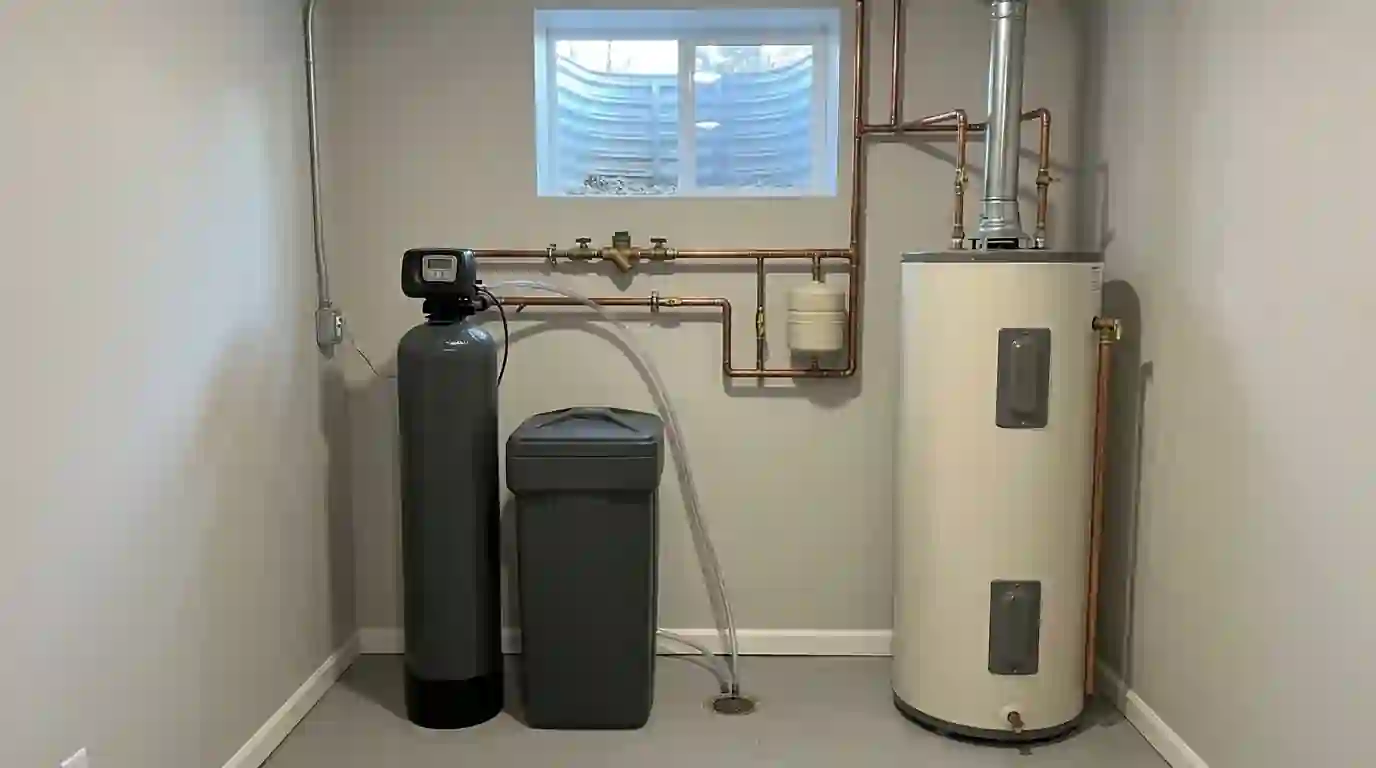
Typical Saint Paul ranges for a new 40 to 50 gallon gas tank, installed with the permit, run about $1,690 to $2,870. Electric tanks of the same size usually fall a little lower. Tankless units cost more up front. What moves the price: tank size and fuel, venting changes, gas line or electrical updates, expansion tank needs, access to the basement, and haul away of the old unit.
What makes replacement bigger in older Saint Paul houses?
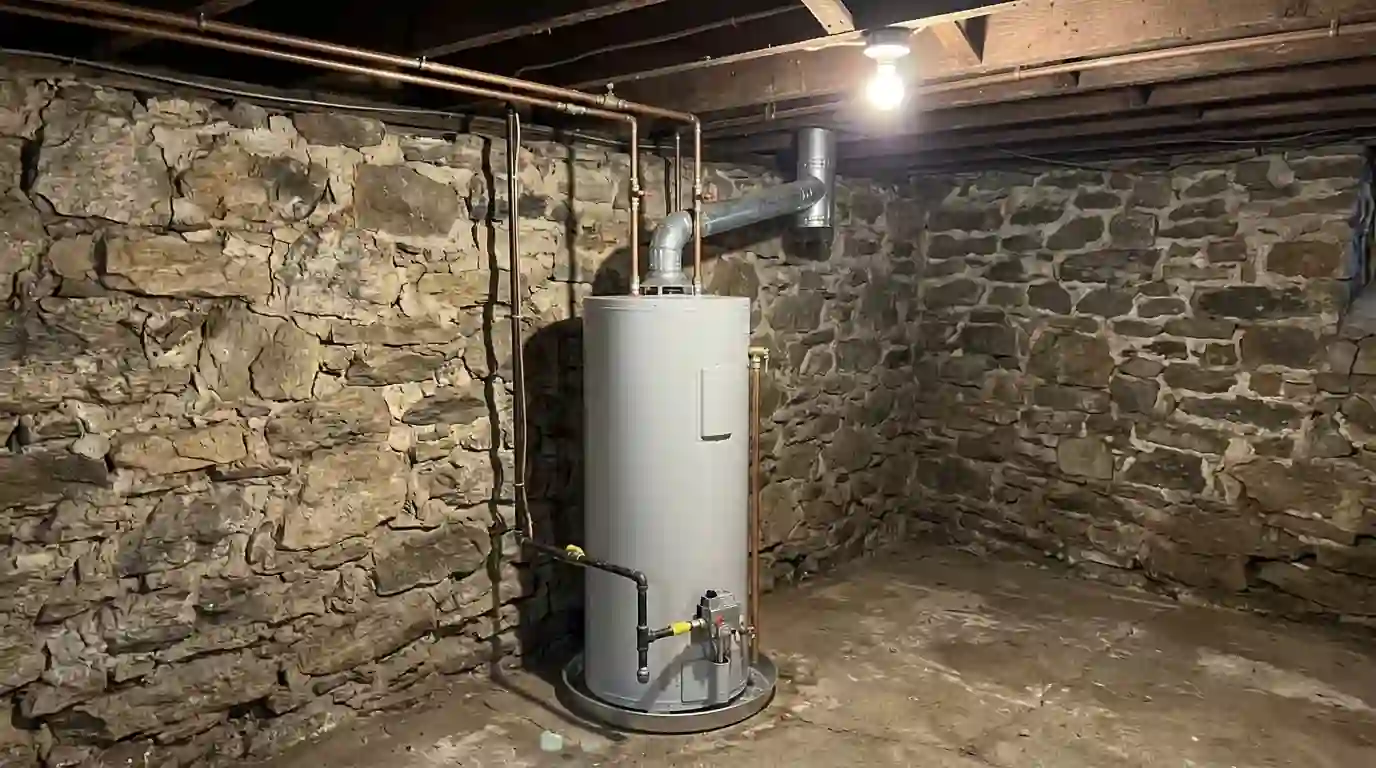
In a lot of prewar homes, the water heater vents into an old masonry chimney it once shared with a furnace or boiler. When the furnace gets replaced with a high efficiency model that vents out the side wall, the water heater can end up alone in a chimney that's too large for it, and the venting may need a liner or a different setup.
Older homes may also have undersized gas piping, no expansion tank, or galvanized supply pipe right at the heater that's ready to fail once it's disturbed. We look at all of that on the visit and spell out what's needed before any work starts. Water heater replacement needs a city plumbing permit in Saint Paul, and we pull it as part of the job.
If you smell gas near the heater, leave the house first and call Xcel Energy or 911 from outside, then call us.
Should you switch to tankless or a bigger tank?
If you're replacing anyway, it's a good time to ask if the old setup still fits your household. A family that runs out of hot water every morning may do better with a larger tank or a tankless heater. A couple in a small house may be happy with a smaller tank and a lower energy bill.
Tankless units from brands like Navien or Rinnai save floor space and don't run out of hot water, but they need the right gas line size, proper venting and periodic descaling, especially with harder water in parts of the east metro. A standard tank from Rheem, A. O. Smith or Bradford White is still the simplest swap. We'll lay out both options with typical ranges when we visit.
Need a hand with this? Call (651) 215-2087. The line is answered 24/7.