The service line is the pipe that carries water from the city main under the street into your house. In a lot of older Saint Paul homes, that pipe was made of lead, especially in houses built before World War II. Lead lines can go decades without leaking, which is exactly why so many are still in the ground and nobody in the house knows about them.
You can usually find out in about five minutes with a coin, a refrigerator magnet and a flashlight. This guide shows where to look, how lead compares to galvanized steel, copper and plastic, and what to do if your test points to lead. Saint Paul Regional Water Services has been replacing lead lines across its service area, so knowing what you have is a useful first step.
The short version
- Test the pipe between the foundation wall and the water meter, not the pipes after it.
- Lead scratches soft and shiny silver, and a magnet won't stick to it.
- Galvanized steel stays gray when scratched, and a magnet sticks to it.
- SPRWS customers can check the utility's lookup, then compare it with a test at home.
- Drink cold, flushed water and use a filter rated for lead until the line is replaced.
Where to find the service line in your basement
Start at the water meter. In most Saint Paul houses it sits in the basement, usually on the wall facing the street. Follow the pipe on the street side of the meter back to where it comes up through the floor or out of the foundation wall. That short stretch, before the meter and the main shutoff valve, is the part you want to test.
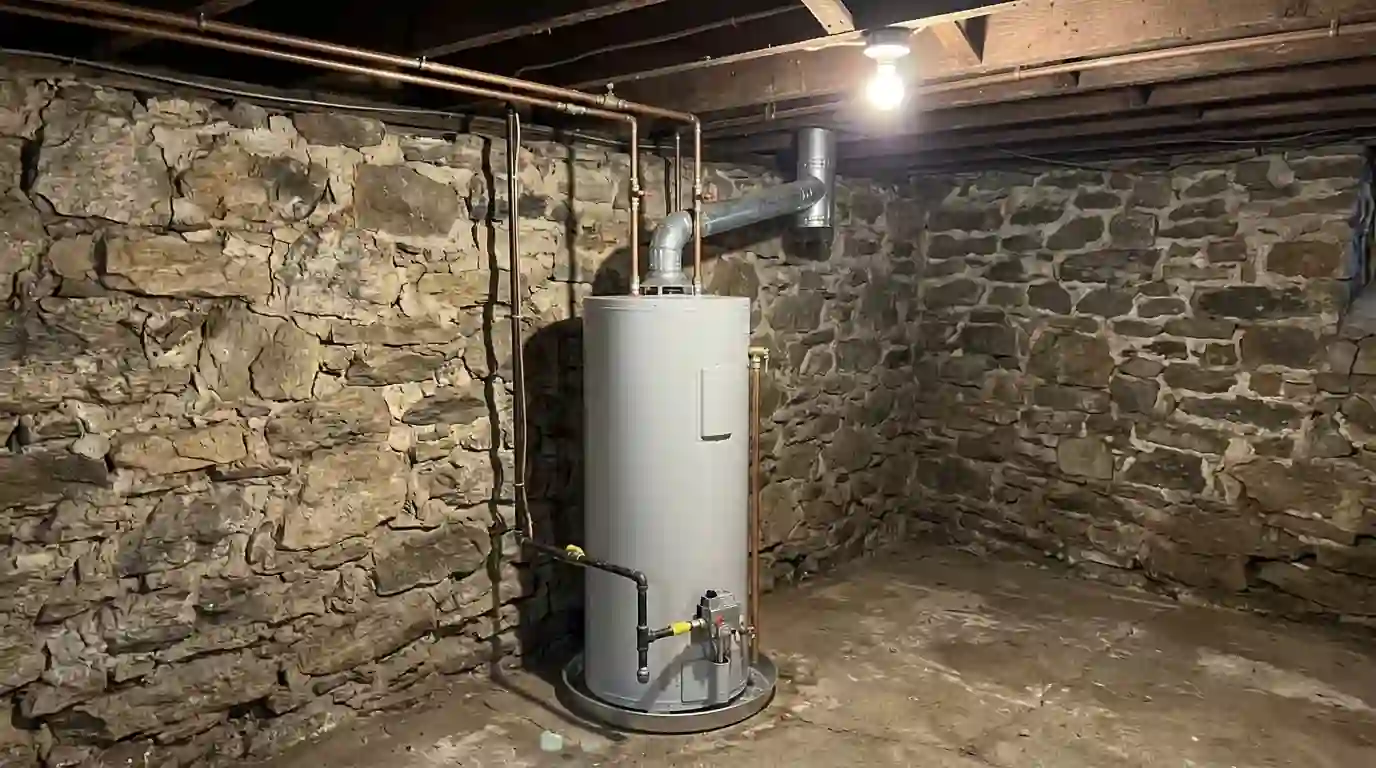
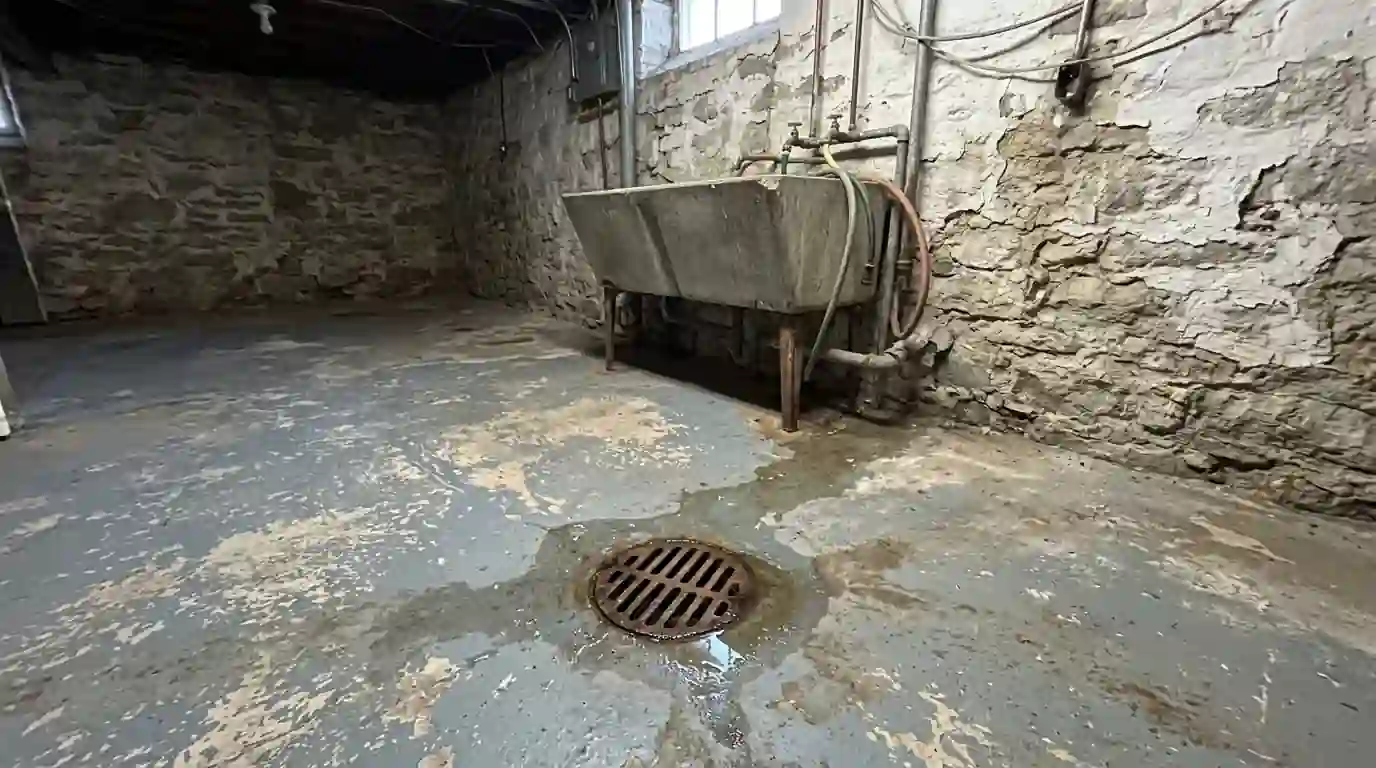
Don't test the pipes after the meter. Plenty of houses have copper or plastic running through the basement but still have a lead line underground, because the inside plumbing was updated and the service was left alone. Bring a flashlight, since the entry point is often tucked behind a furnace, a shelf or a laundry sink, and clear any boxes so you can reach the bare pipe.
The scratch test and the magnet test, step by step
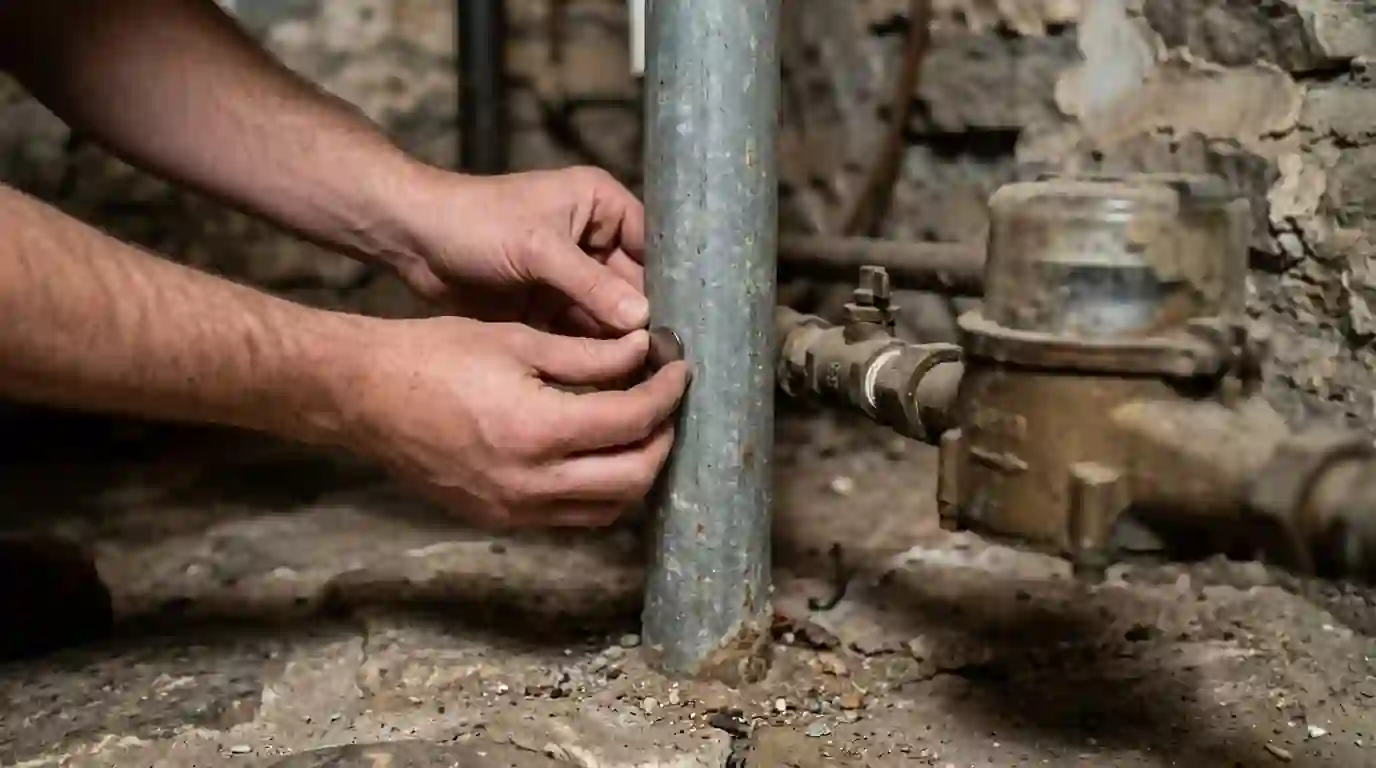
Take a coin or a flat key and gently scratch a small patch on the pipe, the way you'd scratch a lottery ticket. You aren't trying to dig in, just remove the dull surface layer. Then hold an ordinary refrigerator magnet against the bare pipe. Between what the scratch reveals and whether the magnet grabs, you can tell the four common materials apart.
Lead pipe often has a few other tells. It tends to look wider and a little lumpy where it enters the house, and the joint near the meter may have a bulb-shaped wiped seam rather than a threaded or soldered fitting. Lead is soft enough that a key marks it easily. Don't hammer, cut or sand the pipe to get a better look; a light scratch is all you need.
- Lead: dull gray outside, scratches to a soft, shiny silver, and a magnet will not stick
- Galvanized steel: gray and hard, the scratch stays dull gray, and a magnet sticks firmly
- Copper: scratches to the color of a new penny, and a magnet will not stick
- Plastic: white, black or blue pipe that's obvious on sight, so no scratch test is needed
What if the results are mixed or unclear?
Sometimes the test doesn't give a clean answer. A pipe may be painted, wrapped in old insulation, or caked in mineral crust. A line can also be made of more than one material, like copper at the basement wall that changes to lead somewhere under the yard, or galvanized pipe that was once joined to a short lead connector near the street main.
If you get a silver scratch but you aren't sure, treat it as possible lead until someone confirms it. Galvanized lines that ever sat downstream of lead can collect lead particles inside them, so they deserve attention too. We can confirm the material at the entry point during a short visit, and we'll tell you plainly what we see and what it means for your house.
How the SPRWS lead replacement work fits in
Saint Paul Regional Water Services supplies water to Saint Paul and several neighboring suburbs, and it has been working through lead service line replacements across its service area. If you're a SPRWS customer, the utility offers a lookup where you can check what its records show for your address. Records aren't always complete, so a scratch test at home is still worth doing.
The details of the program, including what the utility covers and how scheduling works, come from SPRWS, so check with them directly before you plan anything. If your water comes from a different city, ask that utility what it knows about your line. Either way, comparing your test with the records is the fastest way to a clear picture.
If you'd rather replace the private side on a timeline that suits you, or the records and your test disagree, give us a ring. We confirm the material, pull the city permit, replace the private side of the line, and set a new main shutoff valve inside the foundation wall.
Simple ways to lower lead exposure while you wait
Until a lead line is replaced, a few daily habits help. Use only cold water for drinking, cooking and mixing infant formula, since hot water pulls more lead from pipes. If the water has been sitting for several hours, run the cold tap until it feels noticeably colder before you drink it. That flushes out the water that sat in the line overnight.
Boiling water does not remove lead. It can actually concentrate it as water evaporates. If you have young children or someone pregnant in the house, a filter rated to reduce lead on the kitchen tap is a sensible step while you sort out replacement, as long as you change the cartridge on schedule.
- Drink and cook with cold water only
- Flush the cold tap after water sits for several hours
- Use a filter rated to reduce lead and change cartridges on time
- Clean faucet aerators every few months
- Ask your doctor about a blood lead test for young children if you're worried
What a lead line replacement involves on our end
When we replace a lead line, we confirm the material first, then pull the city permit. Depending on the yard, the new line can often be pulled through with a trenchless method that needs only small pits at each end, rather than a long open trench across the lawn and garden. Inside, we set a new main shutoff valve and tie into your existing plumbing.
Typical Saint Paul ranges for the private side run about $3,870 to $6,240 for a trenchless pull and $4,960 to $8,940 when an open trench is needed. Depth, distance from the street, trees, driveways and the condition of the foundation entry all move the price. We confirm the cost after we see the job, and you can call (651) 215-2087 any hour.
Need a hand with this? Call (651) 215-2087. The line is answered 24/7.